Quick answer
Fasting before a blood test means no food or drink except plain water, usually for 8 to 12 hours (MedlinePlus). Quest says a fast typically lasts 8 hours; Labcorp OnDemand asks for 12 hours before its lipid panel and comprehensive metabolic panel. Tests that truly depend on fasting are fasting glucose, insulin and panels that include glucose, such as the BMP and CMP. HbA1c, TSH, a CBC, vitamin D and ApoB do not need a fast. Take your usual medicines unless your doctor says otherwise, skip the coffee until after the draw, and drink water.
Which blood tests need fasting
| Test | Fast? | How long | Notes |
|---|---|---|---|
| Fasting glucose | Yes | 8 hours minimum | The ADA defines fasting as no calories for at least 8 hours |
| Insulin | Yes | 8 to 12 hours | Needed for HOMA-IR; MedlinePlus lists it as a fasting test |
| BMP and CMP | Usually | 10 to 12 hours | Because they include glucose; Labcorp OnDemand asks 12 hours for its CMP |
| Lipid panel | Often not | 9 to 12 hours if asked | Non-fasting is accepted for routine checks; fast if triglycerides were 400 mg/dL or more |
| Iron panel | Often | 12 hours, morning | MedlinePlus: your provider may ask for a 12-hour fast |
| Liver function tests | Sometimes | As the lab asks | MedlinePlus: often only when run as part of a CMP |
| Renal function panel | Sometimes | As the lab asks | Includes glucose on many labs |
| HbA1c | No | Reflects the last 2 to 3 months, so one meal does not move it | |
| CBC | No | ||
| TSH and free T4 | No | Stop high-dose biotin first if your lab asks | |
| Vitamin D | No | MedlinePlus: no special preparation | |
| Testosterone | No | Morning draw | Levels peak in the morning; timing matters more than food |
| Lp(a) and ApoB | Usually not | MedlinePlus: depends on the lab; often run with a lipid panel |
If a test is not on this list, ask the lab or your doctor at least a day before. Quest warns that asking on the morning of the draw can mean a rescheduled appointment.
How long to fast
Sources agree on a window of about 8 to 12 hours, and longer is not better. MedlinePlus notes that fasting when you have not been told to can itself change results.
From MedlinePlus, Quest, the ADA 2026 Standards, Cleveland Clinic and Labcorp OnDemand test pages, checked 30 September 2026.
Cleveland Clinic suggests 10 to 12 hours for most fasting blood work and booking the first slot of the morning so most of the fast happens while you sleep.
Water, coffee, gum and medicines
| During the fast | Allowed? | Why |
|---|---|---|
| Plain water | Yes, and encouraged | Hydrated veins are easier to draw from (Quest) |
| Sparkling, lemon or flavored water | No | May contain sugar or sweeteners (MedlinePlus) |
| Black coffee or tea | No | Caffeine is a diuretic and can affect results (Cleveland Clinic) |
| Chewing gum, even sugar-free | No | MedlinePlus lists gum as off-limits |
| Smoking or vaping | No | MedlinePlus lists smoking as off-limits |
| Exercise | No | MedlinePlus; hard exercise also raises AST and CK |
| Alcohol | No, often for longer | Raises triglycerides and GGT; some labs ask for 24 hours or more |
| Prescription medicines | Yes, unless told otherwise | Quest and Cleveland Clinic: keep taking them with water |
| Diabetes medicines | Ask first | Fasting on insulin or some tablets can cause low blood sugar |
| Biotin (vitamin B7) supplements | Ask the lab | The FDA warns biotin can give falsely high or low results on some tests |
What eating actually changes
Food is absorbed into the blood within hours, which is why glucose and insulin need a fast. For cholesterol the effect is smaller than most people think. A 2016 joint consensus from the European Atherosclerosis Society and the European Federation of Clinical Chemistry found that after a normal meal, triglycerides rise by about 26 mg/dL on average, total and LDL cholesterol fall by about 8 mg/dL, and HDL does not change. The 2018 AHA/ACC cholesterol guideline accepts a non-fasting panel for routine risk checks and asks for a fasting repeat when non-fasting triglycerides are 400 mg/dL or higher. See the lipid panel guide for how LDL is calculated.
| Marker | Typical change after a normal meal | Fast needed? |
|---|---|---|
| Triglycerides | Up about 26 mg/dL | Only if the result will be compared with fasting cut-offs, or was 400+ |
| LDL cholesterol | Down about 8 mg/dL | No for routine checks |
| HDL cholesterol | No change | No |
| Glucose | Rises for hours | Yes |
| HbA1c | No change | No |
Tests where timing matters more than food
Some tests do not care about breakfast but do care about the clock or the calendar. Getting these wrong is a more common cause of a misleading result than a missed fast.
| Test | Best time | Why |
|---|---|---|
| Testosterone | Morning, about 7 to 10 a.m. | Levels are highest in the morning; the AUA asks for two early morning results before diagnosing low testosterone |
| Cortisol | Morning, or the time your doctor sets | Follows a daily rhythm, peaking soon after waking |
| Iron panel | Morning | MedlinePlus: usually done in the morning, often after a 12-hour fast |
| Progesterone | About 7 days before your expected period | Confirms ovulation only in the second half of the cycle |
| hs-CRP | When you have been well for 2 weeks | Any infection or injury pushes it up |
Worked example: planning an 8 a.m. draw
Say your doctor orders a CMP and lipid panel for 8 a.m. Tuesday and asks for a 12-hour fast.
- Monday 7:30 p.m.: finish dinner by 8 p.m. Skip the glass of wine; alcohol can push triglycerides up.
- After 8 p.m.: water only. No gum, tea or evening snack.
- Tuesday 6:30 a.m.: take your usual blood pressure tablet with water. If you take insulin or a sulfonylurea, follow the plan your doctor gave you.
- 7:00 a.m.: drink a glass or two of water. No coffee, no workout.
- 8:00 a.m.: draw. You have fasted 12 hours. Eat the snack you brought straight after.
If the test were only an HbA1c, TSH and CBC, you could have breakfast first. Quest even says to eat before a test that does not need fasting.
If you ate by mistake
Tell the person drawing your blood. MedlinePlus says you may need to reschedule so the results are accurate. For a lipid panel alone, many clinicians will run it anyway and mark it non-fasting; for glucose or insulin, rebook. A black coffee with sugar counts as eating.
Fasting and at-home kits
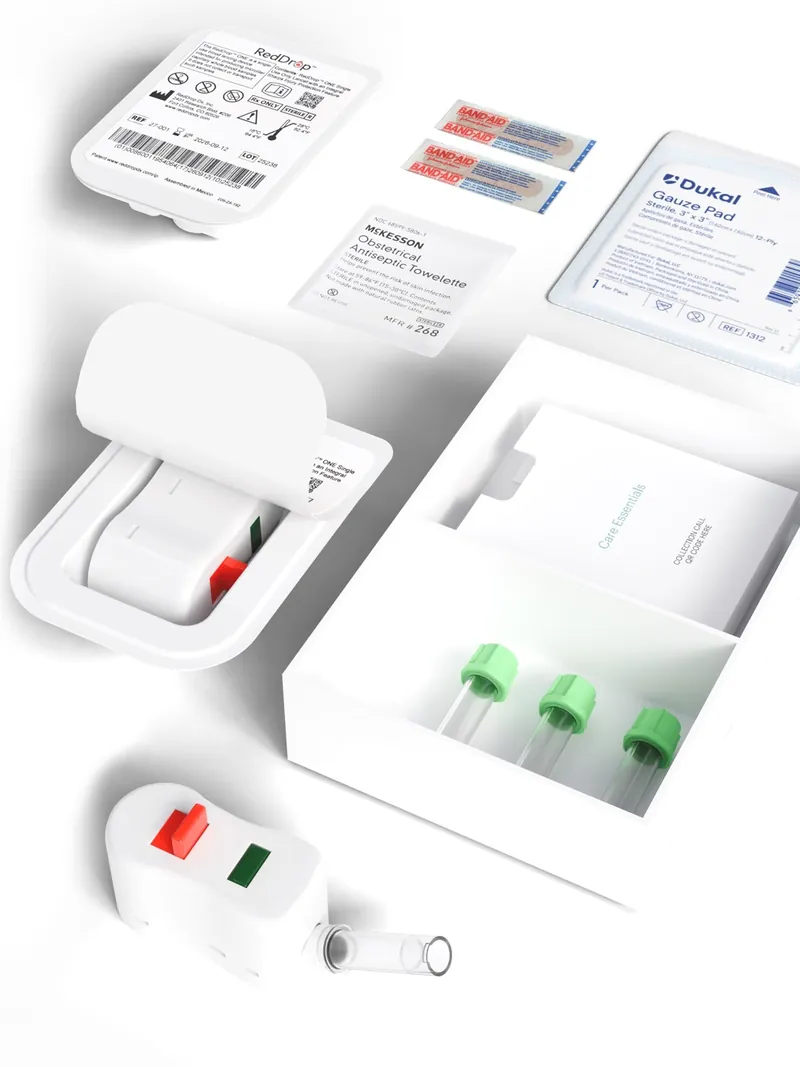
Home kits follow the same chemistry. SiPhox's current EasyDraw panels do not measure glucose or insulin; they use HbA1c and C-peptide instead, and the instructions we read do not set a fasting rule. Triglycerides and calculated LDL still move a little with meals, and cortisol and testosterone follow the clock, so collect at the same time of day with the same fasting window every time to keep trends comparable. Our EasyDraw guide covers the collection steps.
Do you need to fast? Decision table
| If you are testing | Fast? | Where |
|---|---|---|
| Fasting glucose or insulin (HOMA-IR) | Yes, 8 to 12 hours | A lab draw; see our insulin resistance test guide |
| A full CMP with electrolytes | Yes, 12 hours at Labcorp | Labcorp OnDemand CMP, $49 |
| Cholesterol only | Usually no | Labcorp lipid panel $59 (it asks 12 hours) or a home kit |
| Thyroid, CBC or vitamin D | No | Any lab or home kit |
| Heart risk and blood sugar trends without a fasting glucose | Keep conditions the same each time | SiPhox Longevity Essentials: HbA1c, ApoB, Lp(a), lipids |
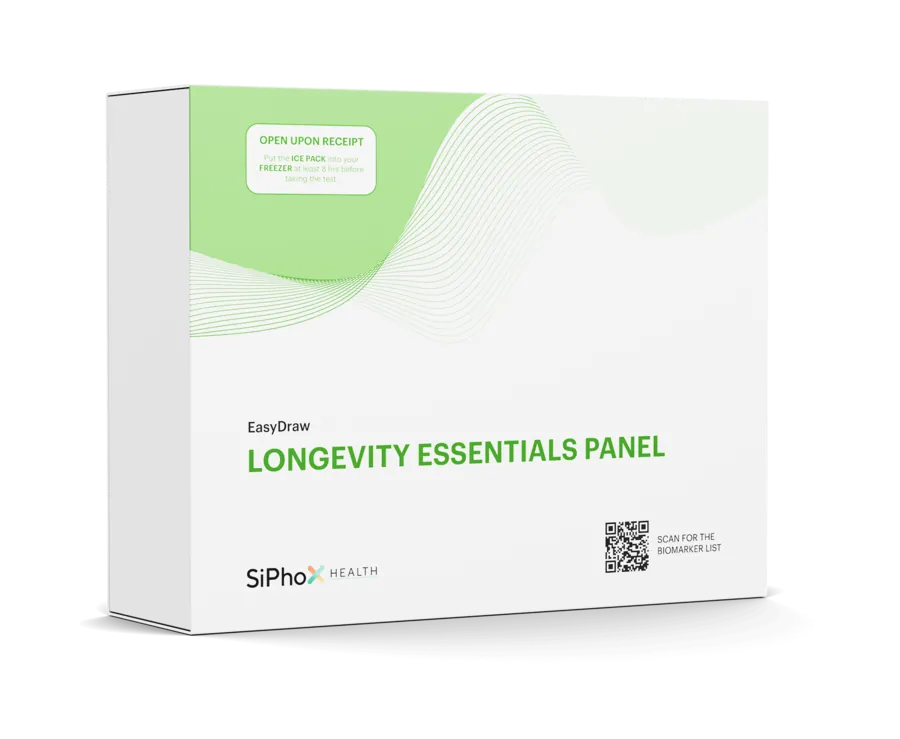
Longevity Essentials
The default panel: heart, metabolic, hormone and inflammation markers in one draw.
Check price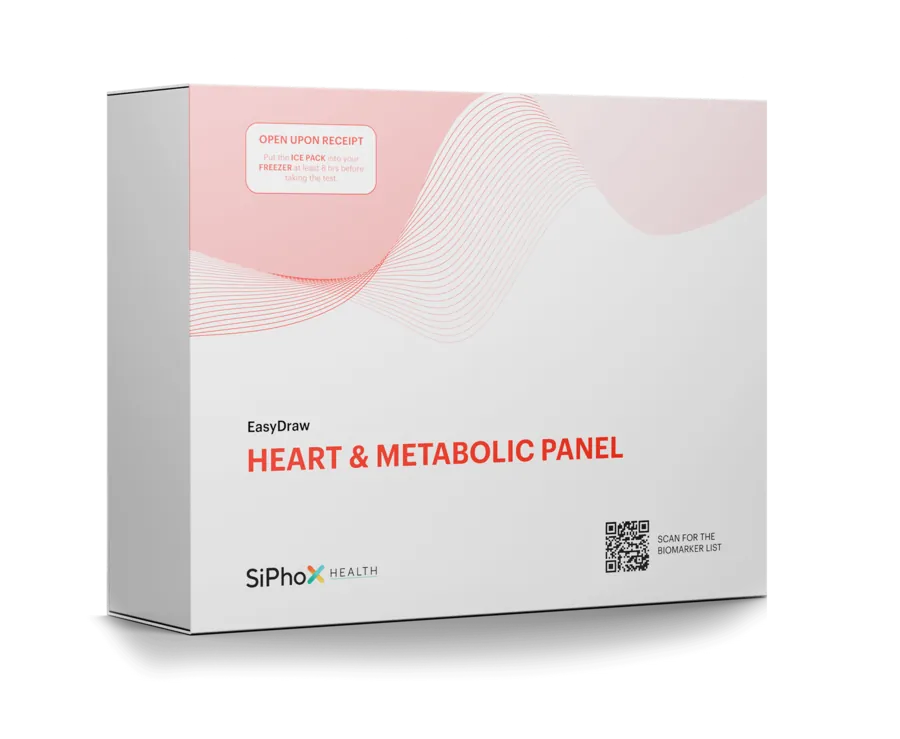
Heart & Metabolic
Lipids plus kidney and liver function: the panel for cardiovascular and metabolic risk.
Check price
Frequently asked questions
Can I drink water before a fasting blood test?
Yes. Plain water is allowed and helps, because hydrated veins are easier to draw from. Avoid sparkling, flavored or lemon water.
Can I drink black coffee before a fasting blood test?
No. Cleveland Clinic and MedlinePlus both say water only. Caffeine is a diuretic and coffee can affect some results. Have it after the draw.
How many hours should I fast for a cholesterol test?
Most people no longer need to fast for a routine lipid panel. If your lab asks, 9 to 12 hours is typical; Labcorp OnDemand asks 12. Fast if a previous non-fasting triglyceride result was 400 mg/dL or more.
Does an A1C test require fasting?
No. HbA1c reflects average blood sugar over 2 to 3 months, so a recent meal does not change it.
Is a thyroid test a fasting test?
No. TSH and free T4 do not require fasting. Tell the lab if you take biotin, which can interfere with some thyroid tests.
Should I take my medicine before a fasting blood test?
Usually yes, with water, unless your doctor tells you otherwise. Ask first if you take insulin or other diabetes medicines, because fasting can cause low blood sugar.
Sources
- MedlinePlus: Fasting for a blood test
- Quest Diagnostics: Fasting for lab tests
- Cleveland Clinic: What you should know about fasting before a blood test
- Labcorp OnDemand: Comprehensive metabolic panel (price and fasting)
- Labcorp OnDemand: Cholesterol test (lipid panel), price and fasting
- American Diabetes Association. 2. Diagnosis and classification of diabetes: Standards of Care in Diabetes 2026
- Nordestgaard BG et al. Fasting is not routinely required for determination of a lipid profile: EAS and EFLM joint consensus. Eur Heart J 2016
- Grundy SM et al. 2018 AHA/ACC guideline on the management of blood cholesterol. Circulation 2019
- MedlinePlus: Iron tests
- MedlinePlus: Insulin in blood
- MedlinePlus: Vitamin D test
- MedlinePlus: Lipoprotein (a) blood test
- MedlinePlus: Hemoglobin A1C (HbA1c) test
- FDA: Biotin may interfere with lab tests (safety communication)
- SiPhox Health: EasyDraw collection instructions