Quick answer
A kidney function test answers two questions: how well your kidneys filter (eGFR, calculated from blood creatinine, and sometimes cystatin C) and whether they leak protein (urine albumin-to-creatinine ratio, ACR). BUN adds context. US labs now use the 2021 CKD-EPI equation, which dropped the race term. KDIGO grades filtering from G1 (90 or more) to G5 (under 15 mL/min/1.73 m²) and protein leak from A1 (under 30 mg/g) to A3 (over 300). Creatinine and BUN come on every CMP; the urine test is separate.
The kidney function tests and normal ranges
| Test | Sample | Typical normal | What it shows |
|---|---|---|---|
| Creatinine | Blood | 0.6 to 1.3 mg/dL (MedlinePlus) | Muscle waste cleared by the kidneys; rises as filtering falls |
| eGFR | Calculated | 60 or more mL/min/1.73 m² | Estimated filtering from creatinine, age and sex |
| BUN | Blood | 6 to 20 mg/dL (MedlinePlus) | Protein waste; also moves with hydration and diet |
| BUN:creatinine ratio | Calculated | Roughly 10 to 20 | High with normal creatinine points to causes outside the kidney |
| Cystatin C | Blood | Under about 1.0 mg/L | Filtering marker not tied to muscle mass |
| Urine ACR | Urine | Under 30 mg/g (MedlinePlus) | Albumin leaking through damaged filters |
| Urinalysis | Urine | No protein, blood or glucose | Screen for protein, blood and infection |
How eGFR is calculated (CKD-EPI 2021)
Measuring filtering directly takes an injected tracer and timed samples, so labs estimate it. The National Kidney Foundation and the American Society of Nephrology recommend the 2021 CKD-EPI creatinine equation, published by Inker and colleagues in the New England Journal of Medicine, which estimates GFR without a race coefficient:
eGFR = 142 x min(Scr/K, 1)A x max(Scr/K, 1)-1.200 x 0.9938age x 1.012 (if female), where Scr is serum creatinine in mg/dL, K is 0.7 for women and 0.9 for men, and A is -0.241 for women and -0.302 for men.
The same paper published a combined creatinine and cystatin C equation, which was more accurate than either marker alone. Age matters in the formula: at the same creatinine, eGFR falls about 0.6% per year of age.
Our arithmetic with the 2021 CKD-EPI creatinine equation (Inker et al., NEJM 2021). Rounded to whole numbers.
Worked example: same creatinine, different eGFR
Three people all have a creatinine of 1.1 mg/dL, inside the 0.6 to 1.3 range printed on most reports:
| Person | eGFR (2021 CKD-EPI) | KDIGO category | What it means |
|---|---|---|---|
| Man, 50 | 82 | G2 | Mildly decreased; not kidney disease without other signs of damage |
| Woman, 50 | 61 | G2 | Just above the 60 line |
| Woman, 70 | 54 | G3a | Below 60: if it stays there 3 months with or without albuminuria, it meets the CKD definition |
A "normal" creatinine can hide a low eGFR in a smaller or older person. The 70-year-old woman's next steps with her doctor: repeat creatinine, add cystatin C to confirm, and check urine ACR, because albumin in the urine changes the risk category a lot.
KDIGO stages chart
| GFR category | eGFR | Description |
|---|---|---|
| G1 | 90 or more | Normal or high |
| G2 | 60 to 89 | Mildly decreased |
| G3a | 45 to 59 | Mildly to moderately decreased |
| G3b | 30 to 44 | Moderately to severely decreased |
| G4 | 15 to 29 | Severely decreased |
| G5 | Under 15 | Kidney failure |
KDIGO combines the GFR category with the albuminuria category (A1 under 30 mg/g, A2 30 to 300, A3 over 300) to grade risk:
| A1: ACR under 30 | A2: 30 to 300 | A3: over 300 | |
|---|---|---|---|
| G1 and G2 | Low risk (if no other markers of damage) | Moderately increased | High |
| G3a | Moderately increased | High | Very high |
| G3b | High | Very high | Very high |
| G4 and G5 | Very high | Very high | Very high |
KDIGO suggests testing more often as risk rises, from about once a year at the low-risk end to 4 or more times a year at the highest.
When creatinine misleads
- Muscle mass: bodybuilders run high creatinine (falsely low eGFR); frail older adults and amputees run low (falsely high eGFR). Cystatin C is less affected.
- Creatine supplements and a big cooked-meat meal can raise creatinine for a day or so.
- Dehydration raises creatinine and BUN together, often with a high BUN:creatinine ratio.
- Hard exercise the day before can nudge creatinine up.
- One value is not a diagnosis: KDIGO requires abnormal results for more than 3 months.
KDIGO 2024 recommends cystatin C when a creatinine-based eGFR may be unreliable or a diagnosis depends on it. Our cystatin C page has the ranges.
How to prepare
| Before the test | Why | Tip |
|---|---|---|
| Drink normally | Dehydration raises creatinine and BUN | A glass or two of water that morning |
| Skip creatine for a few days | It raises blood creatinine without any change in filtering | Tell the lab or your doctor if you use it |
| Avoid a large cooked-meat meal the night before | Cooked meat adds creatinine | A normal dinner is fine |
| No hard workout the day before | Muscle breakdown can nudge creatinine up and add protein to urine | Rest day before the draw |
| First-morning urine for ACR if asked | Standing and exercise can raise urine albumin | Follow the lab kit instructions |
| Fast only if the panel includes glucose | Creatinine itself does not need fasting | Ask the lab |
Who should be tested
KDIGO focuses testing on people at higher risk: those with diabetes, high blood pressure or cardiovascular disease, among others. People on medicines that affect the kidneys, and people on GLP-1 treatment who want to watch kidney and liver markers (see GLP-1 blood tests), also track eGFR over time. High uric acid and a raised HbA1c often travel with falling kidney function; our prediabetes blood test and heart disease risk guides cover those.
Kidney markers on SiPhox panels
| Marker | Heart & Metabolic | Ultimate 360 | GLP Optimization | Thyroid Focus | Kidney, Liver and Lp(a) kit |
|---|---|---|---|---|---|
| Creatinine | Yes | Yes | Yes | Yes | Yes |
| eGFR | Yes | Yes | Yes | Yes | Yes |
| BUN | Yes | Yes | Yes | No | Yes |
| BUN:creatinine ratio | Yes | Yes | Yes | No | Yes |
| Cystatin C | No | No | No | No | No |
| Urine albumin-to-creatinine ratio | No | No | No | No | No |
| Covered | 4 of 6 | 4 of 6 | 4 of 6 | 2 of 6 | 4 of 6 |
Heart & Metabolic, Ultimate 360 and GLP Optimization all report creatinine, eGFR, BUN and the BUN:creatinine ratio; Thyroid Focus has creatinine and eGFR. The one-off $85 Kidney, Liver and Lp(a) kit adds albumin and glucose. No SiPhox panel measures cystatin C or urine ACR, so they suit trend tracking of creatinine-based eGFR rather than staging kidney disease. The liver function test guide covers the liver half of the same panels.
Which test to choose
| If you want | Test | Choose |
|---|---|---|
| A kidney check with diabetes or high blood pressure | eGFR plus urine ACR | Your doctor (usually covered by insurance) |
| To confirm a borderline eGFR | Repeat creatinine plus cystatin C | Your doctor or a lab |
| A quick one-off look | Creatinine, eGFR, BUN on a CMP | Labcorp OnDemand CMP, $49 |
| To track eGFR every 3 to 6 months with heart and liver markers | Creatinine, eGFR, BUN, BUN:creatinine | SiPhox Heart & Metabolic |
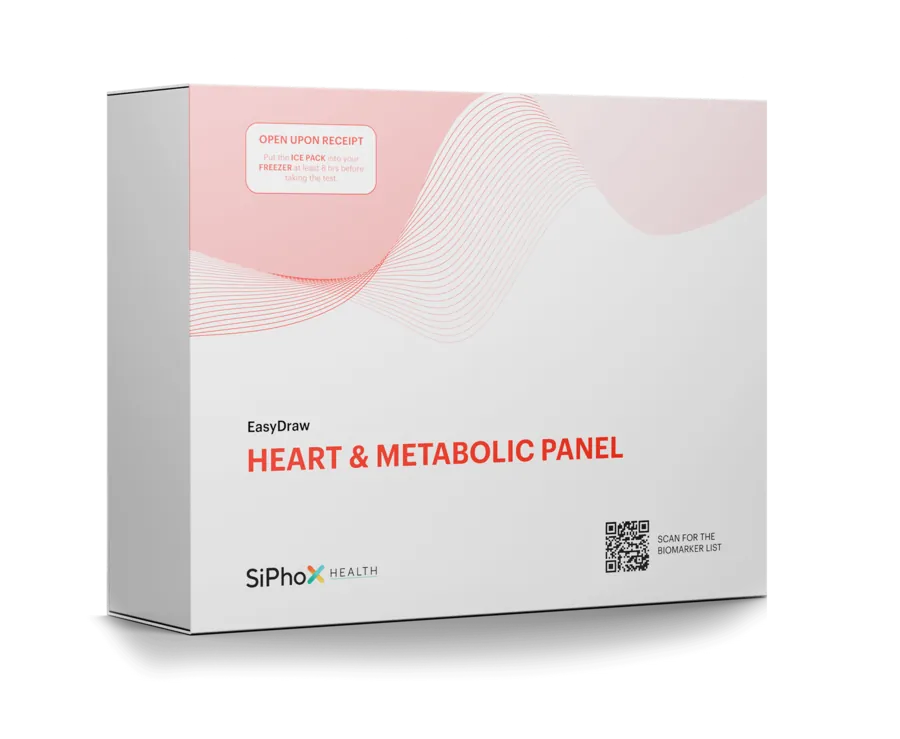
Heart & Metabolic
Lipids plus kidney and liver function: the panel for cardiovascular and metabolic risk.
Check price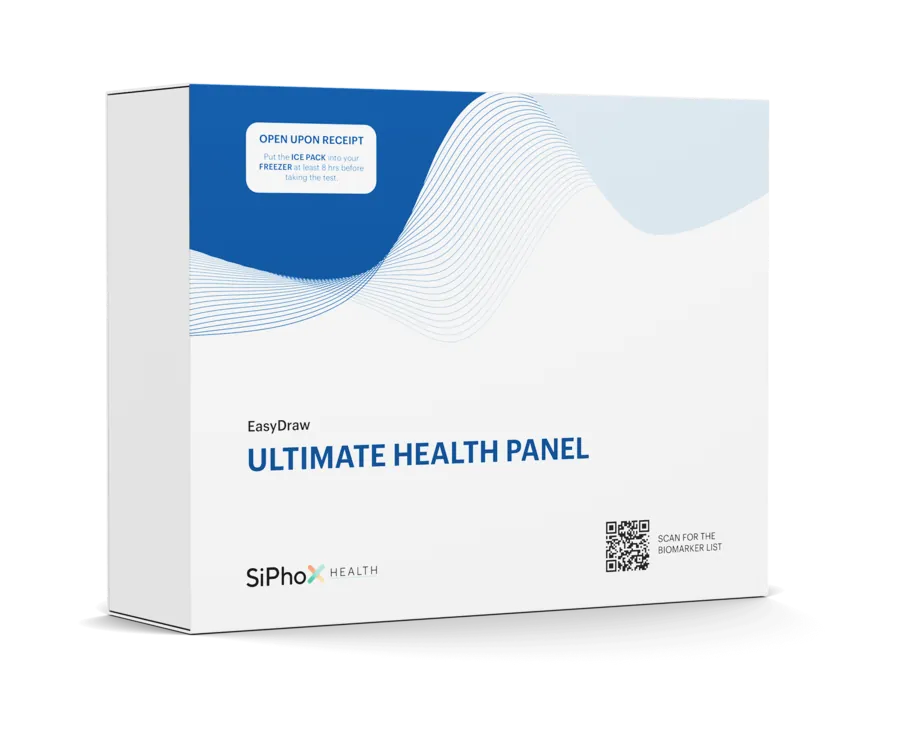
Ultimate 360
Everything on the four core panels plus iron studies, B12 and folate, GGT and PSA.
Check price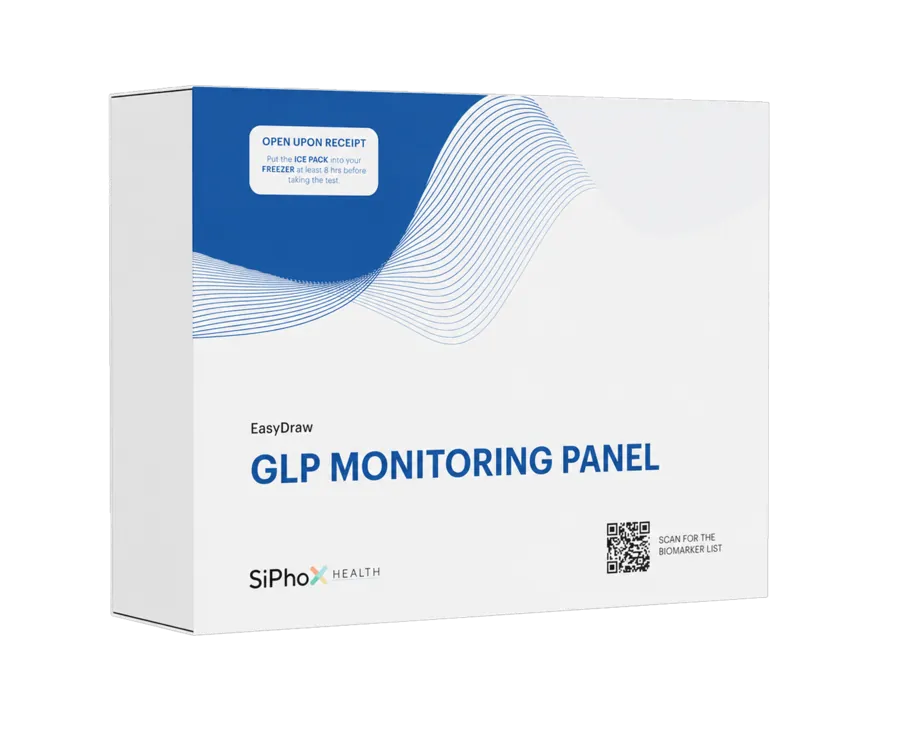
GLP Optimization
Built for people on GLP-1 medication: metabolic, liver, kidney, nutrient and iron markers.
Check price
Frequently asked questions
What is a normal kidney function test result?
For most adults, an eGFR of 60 mL/min/1.73 m² or more, creatinine around 0.6 to 1.3 mg/dL, BUN 6 to 20 mg/dL and a urine albumin-to-creatinine ratio under 30 mg/g. Ranges vary by lab.
What is the difference between creatinine and eGFR?
Creatinine is measured in your blood. eGFR is calculated from creatinine, age and sex to estimate how much blood your kidneys filter per minute.
What eGFR is considered kidney disease?
Under 60 mL/min/1.73 m² for more than 3 months, or signs of damage such as a urine ACR of 30 mg/g or more at any eGFR, meets the KDIGO definition.
Do you need to fast for a kidney function test?
Creatinine and eGFR usually do not need fasting. A renal function panel sometimes does because it includes glucose; follow your lab. Avoid a large meat meal and hard exercise the day before.
Can I test kidney function at home?
Yes, for creatinine, eGFR and BUN: SiPhox Heart & Metabolic, Ultimate 360 and GLP Optimization include them. Urine ACR and cystatin C need a lab.
Sources
- MedlinePlus: Creatinine test
- MedlinePlus: Glomerular filtration rate (GFR) test
- MedlinePlus: BUN (blood urea nitrogen) test
- MedlinePlus: Microalbumin creatinine ratio (urine ACR)
- MedlinePlus Medical Encyclopedia: Comprehensive metabolic panel, normal values
- National Kidney Foundation: CKD-EPI creatinine equation (2021)
- Inker LA et al. New creatinine- and cystatin C-based equations to estimate GFR without race. N Engl J Med 2021
- KDIGO 2024 clinical practice guideline for the evaluation and management of chronic kidney disease
- SiPhox Health: Heart & Metabolic panel page
- SiPhox Health: Ultimate 360 panel page
- SiPhox Health: Kidney, Liver and Lp(a) panel (12 markers, checked 30 Sep 2026)
- SiPhox Health panel comparison