The short answer on GLP-1 lab monitoring
GLP-1 receptor agonists are prescribed for type 2 diabetes and weight management. A useful blood test on GLP-1 treatment tracks five things: blood sugar (HbA1c), lipids, kidney function, liver function, and nutrients that can run low when you eat much less (iron, B12, folate, vitamin D, protein). A common pattern is a baseline before starting, a check about 3 months in or after a dose change, then every 3 to 6 months, but your prescriber decides. SiPhox's GLP Optimization panel measures 46 of these markers at home for $199 plus $25 shipping.
Why lab monitoring matters on GLP-1 medication
These medicines reduce appetite and slow stomach emptying, so people often eat far less. That is the point, but it has knock-on effects that blood tests can pick up:
- Less food means fewer nutrients. A 2025 joint advisory from four obesity and nutrition societies (ACLM, ASN, OMA and TOS) calls for baseline screening, attention to protein intake, and preventing nutrient deficiencies during GLP-1 therapy.
- Weight loss includes some muscle. In the STEP 1 trial's body-scan substudy, lean mass fell by roughly 10% alongside a roughly 19% fall in fat mass. Blood tests cannot measure muscle, but protein markers and a body scan together give some picture.
- Stomach side effects can dehydrate you. MedlinePlus drug information for one medicine in this class lists kidney problems, pancreatitis and gallbladder problems among the serious warnings. Vomiting and diarrhea can strain the kidneys, which shows up in creatinine and eGFR.
- Other markers usually improve. HbA1c, triglycerides and liver enzymes often fall as weight comes down, and seeing that trend is motivating.
What to monitor on GLP-1 medication, and why
| Area | Markers | Why | On SiPhox GLP panel |
|---|---|---|---|
| Blood sugar | HbA1c, C-peptide | Tracks diabetes control or prediabetes; C-peptide shows insulin production | Yes |
| Kidney | eGFR, creatinine, BUN | Dehydration from stomach side effects can reduce kidney function | Yes |
| Liver | ALT, AST, GGT, ALP, bilirubin | Fatty liver often improves with weight loss; bilirubin and ALP are part of a gallbladder workup if symptoms appear | Yes |
| Lipids | ApoB, LDL, HDL, triglycerides | Heart risk usually improves; confirms the trend | Yes (no Lp(a)) |
| Iron | Ferritin, iron, TIBC, saturation, hemoglobin | Lower intake of iron-rich foods; fatigue is common | Yes |
| B vitamins | B12, folate | Smaller portions and less meat can lower intake | Yes |
| Vitamin D | 25-OH vitamin D | Relevant to bone health during weight loss | Yes |
| Protein status | Albumin, total protein | Rough check on nutrition; not a sensitive marker of protein intake | Yes |
| Thyroid | TSH, free T4 | Thyroid function affects weight and energy | Yes |
| Hormones | Testosterone, SHBG, estradiol | Sex hormones and SHBG shift with weight and insulin levels | Yes |
| Inflammation | hs-CRP | Often falls with weight loss | Yes |
Reference ranges and units differ by lab, so compare against the ranges printed on your report, and read our iron test guide for what ferritin and saturation mean together.
Reading the kidney number
Kidney function is the result most worth watching when stomach side effects are heavy. The National Kidney Foundation reads eGFR in stages: 90 or higher is in the normal range, and a value under 60 for three months or more signals chronic kidney disease.
Source: National Kidney Foundation. Stage 1 (90 or above) and stage 5 (under 15) are open-ended and not drawn. One low reading, especially when dehydrated, is not a stage; your doctor looks at results over at least 3 months.
If eGFR falls after a bout of vomiting or diarrhea, contact your prescriber; only a repeat test, taken well hydrated, shows whether the change lasts. Compare results taken the same way each time.
How often to test on GLP-1 medication
There is no single official schedule for every marker, and your prescriber sets yours. A common approach looks like this:
| When | What | Why |
|---|---|---|
| Before starting | Full baseline: A1C, lipids, kidney, liver, iron, B12, vitamin D | So later changes mean something |
| About 3 months in, or after a dose increase | A1C, kidney, liver, iron and B12 | A1C needs about 3 months to reflect change; catches early nutrient drops |
| Every 3 to 6 months while losing weight | Same core set | Tracks trends during the fastest change |
| Once stable | Once or twice a year | Maintenance |
| Anytime | Whatever your doctor orders | Severe stomach pain, persistent vomiting or signs of dehydration need prompt medical care, not a mail-in test |
For people with diabetes, the American Diabetes Association recommends A1C at least twice a year when goals are met and every 3 months when therapy changes. Our at-home A1C test guide explains why testing more often than that adds little.
Preparing for a blood test on GLP-1 medication
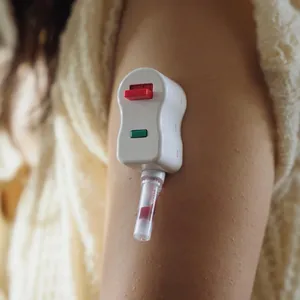
- Hydrate well the day before and the morning of the test. Dehydration concentrates the blood and can push creatinine and hemoglobin up, and it also makes an at-home draw harder. SiPhox asks for about 16 oz of water 20 to 60 minutes before the EasyDraw draw.
- Pick a consistent day in your dosing week. Most of these markers do not swing with each injection, but side effects often peak a day or two after a dose. Testing on the same weekday each time keeps results comparable.
- Avoid testing during a bout of vomiting or diarrhea unless your prescriber asks for it. Results then reflect the illness, not your usual state, and you may need urgent care rather than a mail-in kit.
- Note what you ate. A1C does not need fasting, but lipids are easier to compare if you test the same way each time.
- List your supplements. Iron, B12 and vitamin D supplements change those results. Biotin can interfere with some hormone and thyroid tests, according to the FDA.
Common result changes on GLP-1 medication
These are patterns worth discussing with your prescriber, not rules. Reference ranges vary by lab.
| You see | Often reflects | Next step |
|---|---|---|
| HbA1c, triglycerides, ALT falling | Better glucose control and less liver fat as weight comes down | Share the trend at your next visit |
| Creatinine rising, eGFR falling | Possible dehydration, especially with stomach side effects | Contact your prescriber promptly |
| Ferritin or iron saturation falling | Lower intake of iron-rich foods | Ask about diet changes or supplements |
| B12 or folate low | Smaller portions, less meat or fortified grains | Ask about diet or supplements; metformin also lowers B12 |
| Albumin or total protein low | Can reflect poor intake or illness | Review protein intake with your care team |
| Bilirubin or ALP high with upper-right belly pain | Possible gallbladder problem | Seek medical care; do not wait for a retest |
The SiPhox GLP Optimization panel
GLP Optimization is an upgraded SiPhox panel: +$75 on the standard $124 membership price, so $199 plus $25 shipping, or $224 per test all-in. SiPhox's landing page shows the same $199. It lists 46 markers ("40+" in its headline):
| Area | Biomarkers |
|---|---|
| Metabolic | HbA1c, Estimated average glucose, C-peptide, Albumin, Total protein, Morning cortisol |
| Heart | ApoB, Total cholesterol, HDL cholesterol, Calculated LDL cholesterol, Triglycerides, VLDL cholesterol, Triglycerides:HDL ratio, LDL-C:HDL-C ratio, LDL-C:ApoB ratio, Total cholesterol:HDL ratio |
| Inflammation | hs-CRP |
| Liver | ALT, AST, ALP, GGT, Total bilirubin, Direct bilirubin, AST:ALT ratio |
| Kidney | BUN, Creatinine, eGFR, BUN:creatinine ratio |
| Thyroid | TSH, Free T4, TSH:T4 ratio |
| Hormones | SHBG, Total testosterone (men), Free testosterone (calculated), % free testosterone, Estradiol (sensitive) |
| Nutrition | Vitamin D (25-OH), Vitamin B12, Folate, Ferritin, Iron, TIBC, UIBC, Iron saturation |
| Blood | Hemoglobin, Hematocrit (calculated) |
Compared with Heart & Metabolic, the GLP panel adds the full iron set (iron, TIBC, UIBC, saturation), B12, folate, vitamin D, GGT, albumin, free T4 and sex hormones, and drops Lp(a) and cortisol in favor of morning cortisol. For most people on GLP-1 treatment, the iron and B vitamin markers are the main reason to pay the extra $75.
The panel page also mentions in-app body-composition scanning, symptom check-ins and a "GLP tolerance score". An Advanced GLP Assessment add-on is listed for +$50. As with every SiPhox panel, there is no included doctor review, so share results with your prescriber.
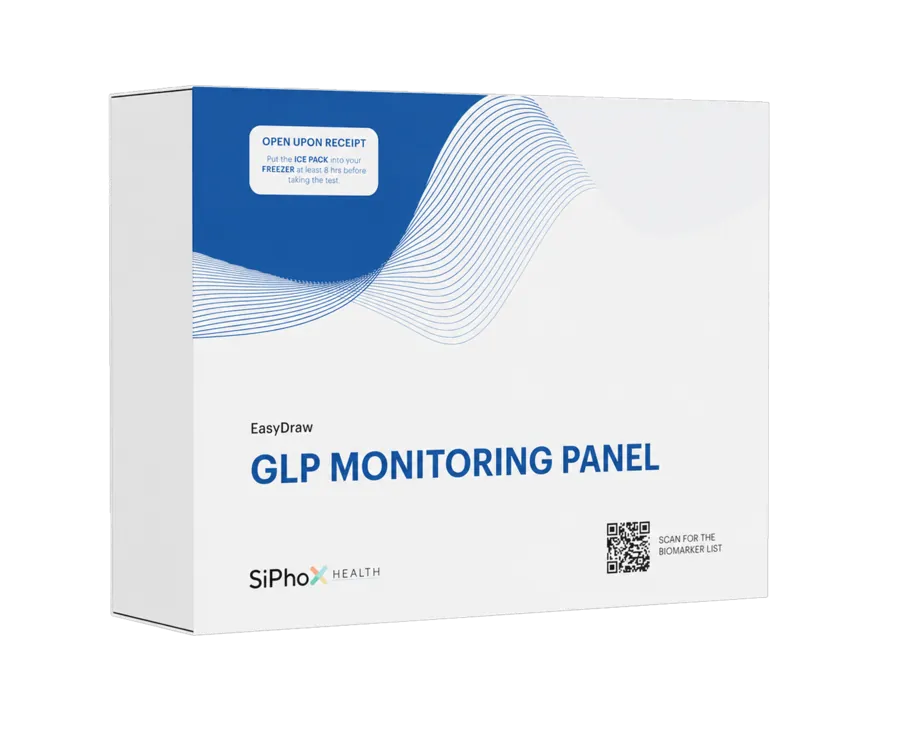
GLP Optimization
Built for people on GLP-1 medication: metabolic, liver, kidney, nutrient and iron markers.
Check price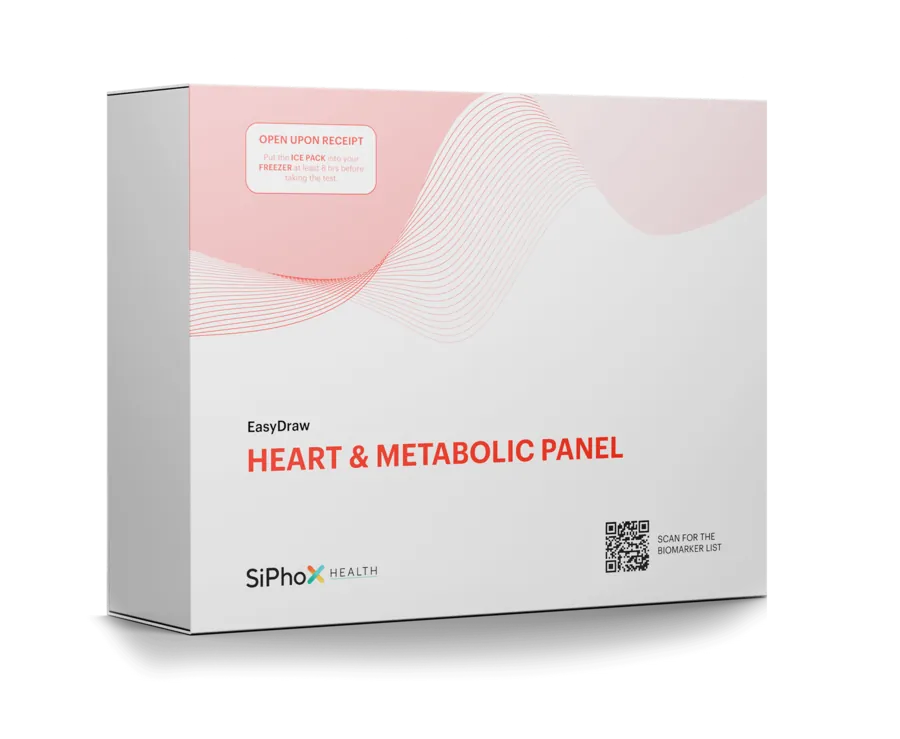
Heart & Metabolic
Lipids plus kidney and liver function: the panel for cardiovascular and metabolic risk.
Check price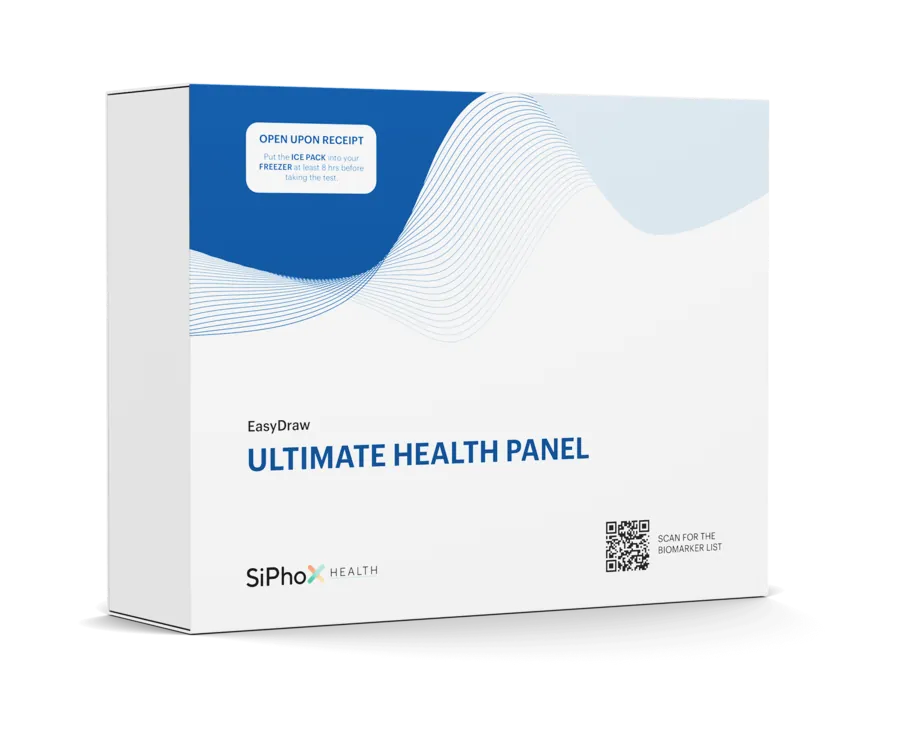
Ultimate 360
Everything on the four core panels plus iron studies, B12 and folate, GGT and PSA.
Check priceIf cost matters, the standard Heart & Metabolic panel at $124 covers A1C, C-peptide, lipids, ApoB, kidney and liver markers, but not iron studies, B12, folate or vitamin D. Alternating it with GLP Optimization is one way to cut the yearly cost. Quarterly GLP Optimization testing costs $896 a year with shipping. See our HSA and FSA guide for paying pre-tax.
Our arithmetic from SiPhox list prices checked 29 Sep 2026, $25 shipping included: 4 x $224; 2 x $224 + 2 x $149; 4 x $149; 2 x $224.
Say your prescriber wants a baseline, a check at 3 months, then checks every 3 months while you lose weight. A plan that keeps the iron and B vitamin markers at the points where nutrient drops are most likely looks like this: GLP Optimization at baseline ($224), GLP Optimization at 3 months ($224), Heart & Metabolic at 6 months ($149), and GLP Optimization at 9 months ($224). That is $821 for the year and 46 + 46 + 28 + 46 = 166 marker results, about $4.95 each. Running GLP Optimization every time costs $896. If your prescriber already orders labs through insurance, use those first and fill only the gaps, such as ferritin or B12, at home.
Which monitoring route to choose
| If you | Choose | Why |
|---|---|---|
| Have severe belly pain, persistent vomiting or signs of dehydration | Urgent medical care | Not a job for a mail-in test |
| Take insulin or a sulfonylurea | Your own glucose monitoring, plus your prescriber's labs | Low blood sugar needs real-time readings; EasyDraw panels have no glucose |
| Get labs ordered through insurance | Your prescriber's lab | Usually cheaper; add home tests only for gaps |
| Want A1C, lipids, kidney and liver at home on a budget | SiPhox Heart & Metabolic | 28 markers, $149 with shipping; no iron, B12 or vitamin D |
| Want iron, B12, folate and vitamin D checked with everything else | SiPhox GLP Optimization | 46 markers, $224 with shipping, built for GLP-1 users |
What an at-home panel does not cover
- Lipase and amylase (pancreas enzymes) are not on SiPhox panels. Pancreatitis is diagnosed from symptoms and urgent tests, not routine screening.
- Calcitonin is not included. The thyroid tumor warning for this medication class is handled through your medical history before prescribing.
- Fasting glucose is not measured on EasyDraw panels; HbA1c is used instead. People on insulin or sulfonylureas need their own glucose monitoring for low blood sugar.
- Muscle mass needs a body scan, not a blood test.
Never start, stop or change a GLP-1 dose based on a home blood test. Share the results with the clinician who prescribes your medication, and get urgent care for severe abdominal pain, persistent vomiting or signs of dehydration.
Frequently asked questions
What blood tests should I get on GLP-1 medication?
Typically HbA1c, a lipid panel, kidney function (creatinine and eGFR), liver enzymes, and nutrients that can drop with lower intake: ferritin and iron, B12, folate and vitamin D. Your prescriber may add others.
How often should labs be checked on GLP-1 medication?
A common pattern is a baseline before starting, a recheck around 3 months or after a dose increase, then every 3 to 6 months while losing weight. Your prescriber sets the actual schedule.
Can GLP-1 medication affect kidney function?
The medication class carries a warning about kidney problems, mainly from dehydration caused by vomiting or diarrhea. Creatinine and eGFR on a blood test show how the kidneys are coping. Report persistent stomach symptoms to your prescriber.
How much is the SiPhox GLP Optimization panel?
$199 per test plus $25 shipping, which is the standard $124 membership price plus a $75 upgrade. It covers 46 markers.
Do GLP-1 medications cause vitamin deficiencies?
Eating much less can reduce intake of iron, B12, folate, vitamin D and protein. A 2025 joint advisory from four obesity and nutrition societies recommends screening and preventing deficiencies during treatment.
Sources
- Nutritional priorities to support GLP-1 therapy for obesity: joint advisory (ACLM, ASN, OMA, TOS), Am J Clin Nutr 2025
- STEP 1 trial: once-weekly semaglutide in adults with overweight or obesity, N Engl J Med 2021
- MedlinePlus drug information: semaglutide injection (warnings and monitoring)
- NIDDK (NIH): Prescription medications to treat overweight and obesity
- American Diabetes Association: Standards of Care in Diabetes 2026, Diabetes Care 49 (Supplement 1)
- NIDDK (NIH): The A1C test and diabetes
- National Kidney Foundation: Estimated glomerular filtration rate (eGFR)
- MedlinePlus: Liver function tests
- MedlinePlus: Ferritin blood test
- MedlinePlus: Vitamin B test
- FDA: Biotin interference with lab tests
- SiPhox Health: GLP Optimization panel (checked 29 Sep 2026)
- SiPhox Health: Heart & Metabolic panel (checked 29 Sep 2026)
- SiPhox Health: EasyDraw collection instructions