The short answer on at-home A1C tests
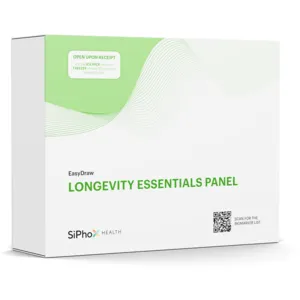
If you have diabetes and want a number today, a 5-minute meter kit (about $52 for two tests at one online pharmacy) gives a result at the kitchen table. If you want a lab-grade number, or you are checking for prediabetes, use a mail-in kit analyzed by a certified lab: Everlywell's HbA1c test is $49, or a lab visit through Quest is $39. For HbA1c as part of a wider metabolic check, SiPhox Longevity Essentials and Heart & Metabolic both include HbA1c and C-peptide for $124 plus $25 shipping.
What HbA1c shows
HbA1c is the share of your hemoglobin with glucose attached. Because red blood cells live about three months, the NIDDK explains, A1C reflects your average blood sugar over the past 3 months, with the most recent 30 days counting most. That makes it steadier than a single glucose reading and means you do not need to fast.
These cut-offs are the same ones used in the American Diabetes Association Standards of Care. A diagnosis of diabetes needs confirmation, usually a repeat test, and a lab method certified to the NGSP standard. The NIDDK says point-of-care A1C devices should not be used for diagnosis.
Sources: CDC, NIDDK and the ADA Standards of Care (normal below 5.7%, prediabetes 5.7% to 6.4%, diabetes 6.5% or above). The normal band is drawn from 4% and the diabetes band to 10% for display only; the diabetes range has no upper limit.
Some labs outside the US report HbA1c in mmol/mol (the IFCC unit) rather than percent. On that scale 5.7% is 39 mmol/mol and 6.5% is 48 mmol/mol. Our lab unit converter handles the switch.
A1C and estimated average glucose
Many reports, including SiPhox's, convert A1C into an estimated average glucose (eAG) in mg/dL, the same unit a glucose meter uses. The conversion comes from the ADAG study formula used by the American Diabetes Association: eAG = 28.7 x A1C minus 46.7.
| A1C | Estimated average glucose | Category |
|---|---|---|
| 5.0% | 97 mg/dL | Normal |
| 5.7% | 117 mg/dL | Prediabetes |
| 6.0% | 125 mg/dL | Prediabetes |
| 6.5% | 140 mg/dL | Diabetes range |
| 7.0% | 154 mg/dL | Diabetes range |
| 8.0% | 183 mg/dL | Diabetes range |
| 9.0% | 212 mg/dL | Diabetes range |
Your meter or continuous glucose monitor average may not match eAG exactly, because A1C also depends on how long your red blood cells live. Treat eAG as a translation of A1C, not a separate measurement.
Who should check their A1C
The American Diabetes Association Standards of Care recommend screening all adults from age 35, and earlier for adults with overweight or obesity plus at least one other risk factor. Common risk factors:
- A parent or sibling with type 2 diabetes.
- High blood pressure, low HDL cholesterol or high triglycerides.
- A history of gestational diabetes or polycystic ovary syndrome.
- Physical inactivity, or a previous A1C in the prediabetes range.
- Taking medication that affects blood sugar, including GLP-1 treatment and some steroids, where your prescriber will set the schedule.
Many people with prediabetes do not know they have it, because it rarely causes symptoms; a blood test is the only way to find it. If your result is normal and you have no risk factors, the ADA suggests repeating screening at least every 3 years. With prediabetes, a yearly check is typical. People already diagnosed follow the schedule in the section on how often to test below.
5-minute meters vs mail-in A1C kits
Point-of-care meters
Kits such as A1CNow give a result in about 5 minutes from a finger-prick drop. They suit people already diagnosed who want a between-visit check. The American Diabetes Association's consumer guide lists the home A1C kits on the market. Drawbacks: per-test cost adds up, and results can differ from a lab by a few tenths of a percent, which matters near the 5.7% and 6.5% lines.
Mail-in lab kits
You collect blood at home, by finger prick, dried spot card or upper-arm device, and a CLIA-certified lab runs it. Results take a few days to 10 days. The advantage is a lab analyzer and, with bigger panels, the context around the number: lipids, kidney function and inflammation.
Lab visit
Quest sells a stand-alone HbA1c test for $39. It is the cheapest lab-grade number if you are near a patient service center.
How to take a mail-in A1C test
- No fasting needed for A1C itself. If the panel includes lipids or C-peptide, follow the kit's instructions and keep your routine the same each time.
- Get blood flowing. Warm hands (finger prick) or a warm arm (upper-arm device) matter more than anything else. For SiPhox, drink about 16 oz of water, do some light exercise, and use the heat pack for 4 minutes.
- Collect without heavy squeezing. Let drops fall or let the device fill; squeezing can damage cells.
- Ship promptly. SiPhox kits go cold and overnight from a staffed FedEx location, Monday to Thursday before 4 p.m.
- Record anything unusual, such as a recent illness, blood donation or transfusion, since those affect A1C.
At-home A1C tests and prices compared
| Test | Price | HbA1c | C-peptide | Other markers | Result time |
|---|---|---|---|---|---|
| SiPhox Heart & Metabolic | $124 + $25 | Yes | Yes | Lipids, ApoB, Lp(a), hs-CRP, kidney, liver | 7 to 10 days |
| SiPhox Longevity Essentials | $124 + $25 | Yes | Yes | Lipids, ApoB, Lp(a), hormones, vitamin D | 7 to 10 days |
| SiPhox GLP Optimization | $199 + $25 | Yes | Yes | 46 markers incl. iron, B12, kidney, liver | 7 to 10 days |
| Everlywell HbA1c Test | $49 | Yes | No | None | Days |
| Everlywell Heart Health Test | See Everlywell | Yes | No | Lipid panel | Days |
| A1CNow-type meter (2 tests) | About $52 | Yes | No | None | 5 minutes |
| Quest HbA1c (lab visit) | $39 | Yes | No | None | Days |
| Rythm Health | $79 + shipping | No (fructosamine) | No | 25+ incl. ApoB, hs-CRP | Under 48 hours after lab receipt |
Prices checked September 29, 2026. Note that SiPhox's EasyDraw panels do not include fasting glucose or fasting insulin; SiPhox uses HbA1c and C-peptide instead. Glucose is one of the markers that upper-arm capillary samples measure less reliably, which is a reasonable reason to leave it off.
Our arithmetic from prices checked 29 Sep 2026: 4 x $26 per meter test (about $52 for two), 4 x $39 at Quest, 4 x $49 at Everlywell, and $124 + 3 x $149 at SiPhox with shipping. SiPhox returns 28 markers each time; the others return A1C only.

Heart & Metabolic
Lipids plus kidney and liver function: the panel for cardiovascular and metabolic risk.
Check price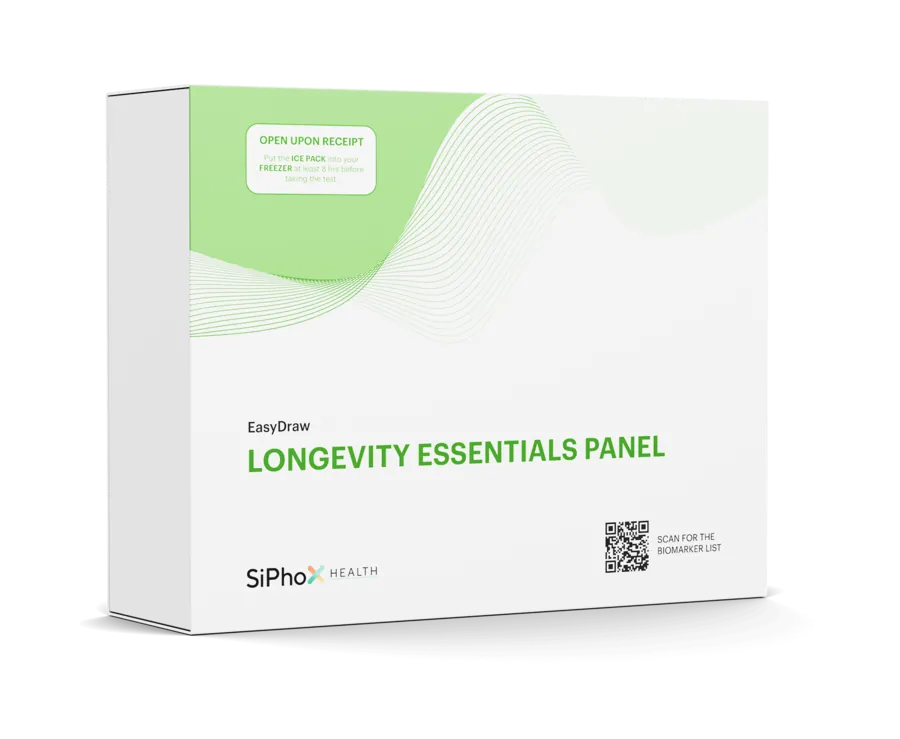
Longevity Essentials
The default panel: heart, metabolic, hormone and inflammation markers in one draw.
Check price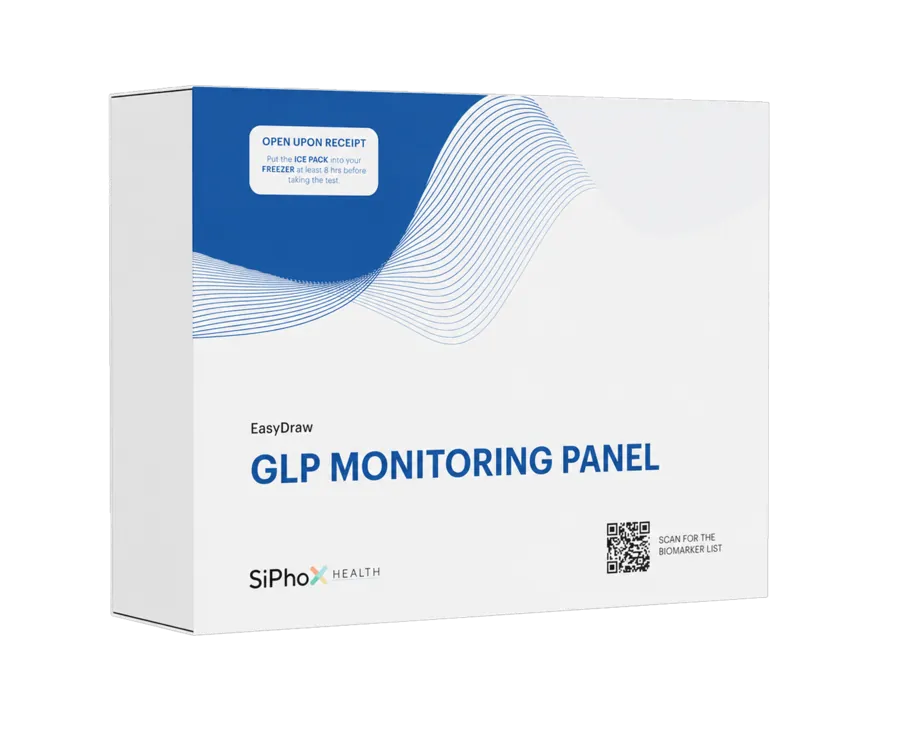
GLP Optimization
Built for people on GLP-1 medication: metabolic, liver, kidney, nutrient and iron markers.
Check priceWhich A1C test to choose
| If you want | Choose | Why |
|---|---|---|
| A diagnosis | Your doctor, NGSP-certified lab test | Diabetes needs a confirmed lab result, usually repeated |
| A between-visit check, already diagnosed | A1CNow-type meter | About $26 a test, result in 5 minutes |
| A cheap one-off prediabetes check | Quest HbA1c or Everlywell kit | $39 at a lab, $49 by mail |
| A1C while on GLP-1 medication | SiPhox GLP Optimization | Adds iron, B12, kidney and liver markers, $224 with shipping |
| A1C with the markers that explain it, at home | SiPhox Heart & Metabolic | HbA1c, C-peptide, triglyceride to HDL ratio, ApoB, kidney and liver, $149 with shipping |
A1C or a continuous glucose monitor?
They answer different questions, and neither replaces the other. A continuous glucose monitor (CGM) shows how your glucose moves hour to hour: after meals, overnight, during exercise. A1C compresses three months into one number that doctors use for diagnosis and long-term targets. If you want to know whether a specific breakfast spikes you, a CGM tells you; if you want to know whether your overall blood sugar is in the normal, prediabetes or diabetes range, A1C does. Many people on diabetes treatment use both, with A1C checked every 3 to 6 months. SiPhox lets you upload results from other labs and sync some CGMs to its app, so both can sit in one place.
Why C-peptide helps
C-peptide is released in equal amounts with insulin, so it shows how much insulin your pancreas is making. MedlinePlus explains doctors use it to tell type 1 from type 2 diabetes and to judge insulin production. For someone with a normal A1C, a high C-peptide can hint that the pancreas is working hard to keep glucose normal, an early sign of insulin resistance. It is not the same as a fasting insulin test or HOMA-IR, which SiPhox does not offer; our insulin resistance test guide covers those options. SiPhox also reports the triglyceride to HDL ratio, another rough insulin resistance marker.
When A1C can mislead
Anything that changes how long red blood cells live changes A1C. The NIDDK lists iron-deficiency anemia, hemoglobin variants (more common in people of African, Mediterranean or Southeast Asian descent), kidney failure, liver disease, recent blood loss or transfusion, and sickle cell disease. If one of these applies, your doctor may use other tests. Pregnancy is also different: gestational diabetes is diagnosed with a glucose tolerance test, not A1C.
Say you are 48 and a SiPhox Heart & Metabolic result shows HbA1c 5.9%, triglycerides 180 mg/dL and HDL 40 mg/dL. The A1C sits inside the 5.7% to 6.4% prediabetes band, and the ADAG formula turns it into an estimated average glucose of 28.7 x 5.9 minus 46.7 = about 123 mg/dL. The triglyceride to HDL ratio is 180 / 40 = 4.5, and both lipid numbers fall in the higher-risk ATP III categories (triglycerides 150 or more, HDL under 40), which fits the insulin resistance pattern. The next step is your doctor and a confirming lab A1C ($39 at Quest if you pay yourself). With prediabetes, the ADA suggests at least a yearly recheck; if you and your doctor agree on lifestyle changes, a retest after 3 months shows whether A1C is moving, because A1C reflects about 3 months of glucose.
An A1C of 5.7% or higher on any home test is worth a conversation and a confirming lab test. If you already take diabetes medication, do not change it based on a home result without your care team.
How often to test A1C
The ADA Standards of Care suggest A1C at least twice a year for people with diabetes who are meeting their goals, and every 3 months when treatment changes or goals are not being met. Without diabetes, a yearly check is plenty unless you have risk factors or are making a big change. Since A1C reflects about 3 months, testing more often than quarterly adds little. A quarterly SiPhox plan costs $596 a year with shipping; see our blood test subscription guide for other cadences and our GLP-1 blood test guide if you are on that medication.
Frequently asked questions
Can you take an A1C test at home?
Yes. Five-minute meter kits give a result at home, and mail-in kits send your sample to a certified lab. Neither should be used to diagnose diabetes on its own; confirm with your doctor.
Are at-home A1C tests accurate?
Mail-in kits analyzed by a certified lab are generally close to a doctor's lab result. Meters can differ by a few tenths of a percent, which matters near the 5.7% and 6.5% cut-offs.
Do I need to fast for an A1C test?
No. A1C reflects your average blood sugar over about 3 months, so a recent meal does not change it. Other markers on the same panel, such as lipids, may have their own instructions.
What A1C level is prediabetes?
5.7% to 6.4%, according to the NIDDK and the American Diabetes Association. Under 5.7% is normal and 6.5% or higher is in the diabetes range.
Does SiPhox test A1C?
Yes. HbA1c and C-peptide are on Longevity Essentials, Heart & Metabolic, GLP Optimization and Ultimate 360.
Sources
- NIDDK (NIH): The A1C test and diabetes
- CDC: A1C test for diabetes and prediabetes
- MedlinePlus: Hemoglobin A1C (HbA1c) test
- American Diabetes Association: Standards of Care in Diabetes 2026, Diabetes Care 49 (Supplement 1)
- Nathan et al., Translating the A1C assay into estimated average glucose values (ADAG study), Diabetes Care 2008
- American Diabetes Association consumer guide: A1C home kits
- Healthline DiabetesMine: 5-minute home A1C kits
- MedlinePlus: C-peptide test
- Quest: popular tests and prices (checked 29 Sep 2026)
- Everlywell knowledge base: biomarkers included in each panel
- Rythm Health: biomarkers tested (checked 29 Sep 2026)
- Diagnostics (Basel) 2025: performance of an upper-arm capillary blood collection device
- SiPhox Health: Heart & Metabolic panel (checked 29 Sep 2026)
- SiPhox Health: Longevity Essentials panel (checked 29 Sep 2026)
- SiPhox Health: GLP Optimization panel (checked 29 Sep 2026)