Quick answer: on a C-peptide test, Cleveland Clinic gives a normal fasting result of 0.5 to 2.0 ng/mL; MedlinePlus gives 0.3 to 3.3 ng/mL. The difference is a reminder that ranges depend on the lab and on whether you had eaten. There is no guideline "optimal" level for healthy people. C-peptide cannot diagnose diabetes on its own, but it shows whether your pancreas is making a little, a normal amount or a lot of insulin.
C-peptide normal range
| Source | Normal range | Notes |
|---|---|---|
| Cleveland Clinic | 0.5 to 2.0 ng/mL | Fasting sample |
| MedlinePlus | 0.3 to 3.3 ng/mL | Ranges vary slightly between labs |
Some labs report C-peptide in nmol/L or pmol/L. To convert, multiply ng/mL by about 0.33 to get nmol/L (1 ng/mL is roughly 0.33 nmol/L, or 330 pmol/L). Always compare with the range on your own report, and note whether the sample was fasting: C-peptide rises after a meal along with insulin.
Cleveland Clinic and MedlinePlus. The gap between the two is why the range printed on your own report is the one to use.
What is C-peptide?
When your pancreas makes insulin, it first builds a larger molecule called proinsulin, then cuts it into insulin and C-peptide in equal amounts. Both are released into the blood together. C-peptide stays in the blood longer than insulin and is not in insulin injections, so it is a cleaner signal of how much insulin your body is producing itself.
Doctors use it to:
- Help work out which type of diabetes someone has, and how well treatment is working (Cleveland Clinic)
- Check whether someone with diabetes still makes their own insulin
- Tell whether low blood sugar comes from the body's own insulin or from injected insulin (MedlinePlus)
It is not a stand-alone diabetes test. Cleveland Clinic is explicit that C-peptide cannot tell you whether you have diabetes; for that you need A1C or glucose.
What high C-peptide means
A high level means the pancreas is releasing a lot of insulin. MedlinePlus says people with type 2 diabetes, obesity or insulin resistance may have high C-peptide, as the body makes extra insulin to keep blood sugar in check. Cleveland Clinic adds:
- Insulin resistance and type 2 diabetes
- Kidney failure, because the kidneys clear C-peptide
- Cushing syndrome and low potassium (hypokalemia)
- Insulinoma, a rare insulin-making tumor
A high fasting C-peptide with a normal A1C can be an early sign that your body is working harder to control blood sugar. Read it next to triglycerides, HDL and waist size, and discuss it with your doctor.
Worked example: high C-peptide, normal A1C
Say a 44-year-old woman with a BMI of 33 gets a fasting C-peptide of 3.1 ng/mL (about 1.0 nmol/L) and an A1C of 5.5%. Her C-peptide is above Cleveland Clinic's 0.5 to 2.0 ng/mL fasting range but just inside the MedlinePlus 0.3 to 3.3 ng/mL range, so one lab could flag it and another not. Her A1C is under the 5.7% prediabetes line.
What might explain it: MedlinePlus links high C-peptide to obesity and insulin resistance, where the pancreas makes extra insulin to keep blood sugar normal. Reduced kidney clearance can also raise it, so kidney function is worth knowing.
Questions to take to her doctor:
- Which range does my lab use, and was my sample truly fasting?
- Should we check kidney function (eGFR) and a fasting glucose?
- Do my triglycerides and HDL support insulin resistance as the explanation?
- If I lose weight or become more active, when should we retest under the same fasting conditions?
What low C-peptide means
A low level means little insulin is being made. MedlinePlus notes this is normal after fasting, when blood sugar falls; it is abnormal when blood sugar is high and insulin output stays low. Cleveland Clinic lists type 1 diabetes, later-stage type 2 diabetes, Addison disease and liver disease, and notes that people injecting insulin can have low values because their own production is suppressed.
Reading C-peptide with A1C
| Pattern | What it usually suggests |
|---|---|
| High C-peptide, high A1C | The body is making plenty of insulin but it is not working well enough: insulin resistance or type 2 diabetes (MedlinePlus) |
| Low C-peptide, high A1C | Blood sugar is high but insulin output is low, as in type 1 or later-stage type 2 diabetes (MedlinePlus; Cleveland Clinic) |
| Low C-peptide, normal A1C, fasting | Often normal: C-peptide falls when you fast and blood sugar drops (MedlinePlus) |
These are patterns, not diagnoses. A doctor will confirm with glucose tests and your history.
What moves C-peptide
- Food: a recent meal raises it, so timing matters more than for most markers.
- Insulin sensitivity: anything that improves it (weight loss, regular activity, better sleep) means the pancreas needs to make less insulin, which can lower fasting C-peptide over time.
- Kidney function: reduced kidney clearance raises it.
- Medication: diabetes medicines change insulin output. Do not start or stop any without your doctor.
C-peptide test: how to prepare
MedlinePlus says preparation depends on why the test is ordered; Cleveland Clinic says you may need to fast 8 to 12 hours. For tracking insulin resistance, a fasting morning sample is the most comparable. Tell the lab if you use insulin or other diabetes medicines.
Which at-home tests include C-peptide
C-peptide is on four SiPhox panels: Longevity Essentials, Heart & Metabolic, Ultimate 360 and GLP Optimization.
| SiPhox panel | Biomarkers per test | Per test, with shipping | Listed as |
|---|---|---|---|
| Longevity Essentials | 31 | $149 | C-peptide (Metabolic) |
| Heart & Metabolic | 28 | $149 | C-peptide (Metabolic) |
| Ultimate 360 | 62 | $274 | C-peptide (Metabolic) |
| GLP Optimization | 46 | $224 | C-peptide (Metabolic) |
SiPhox measures C-peptide rather than fasting insulin on its current EasyDraw panels, so it cannot give you a HOMA-IR score. The EasyDraw instructions we read do not set a fasting rule, so if you want C-peptide results you can compare over time, collect at the same time of day with the same fasting window each time. There is no included doctor review; talk to your doctor about an unexpected result. The GLP-1 blood test page covers the GLP Optimization panel, and the at-home A1C test guide covers blood sugar kits more broadly.
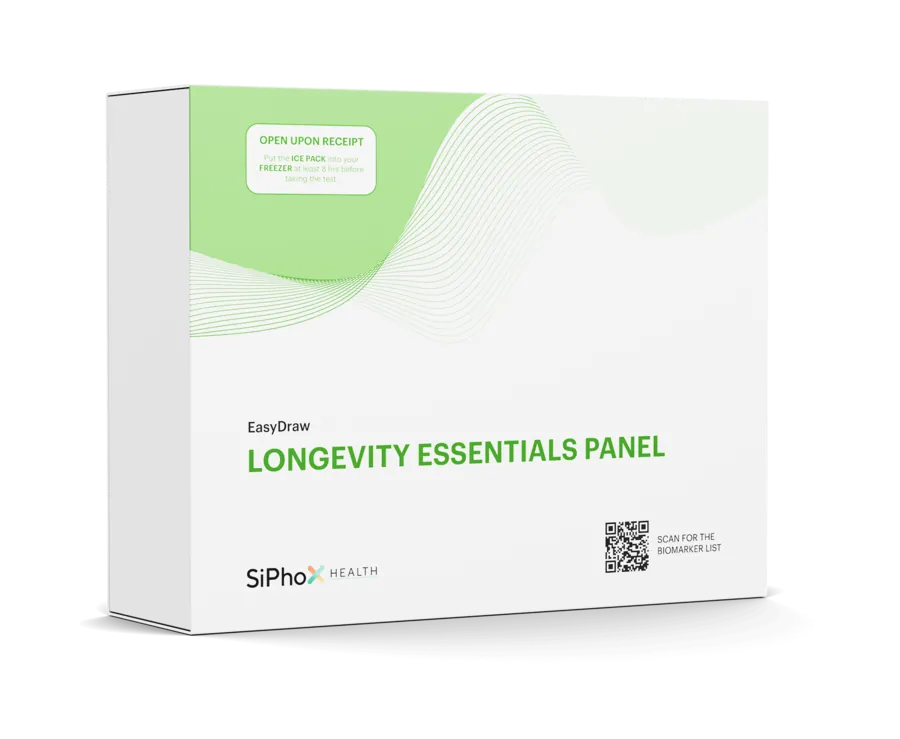
Longevity Essentials
The default panel: heart, metabolic, hormone and inflammation markers in one draw.
Check price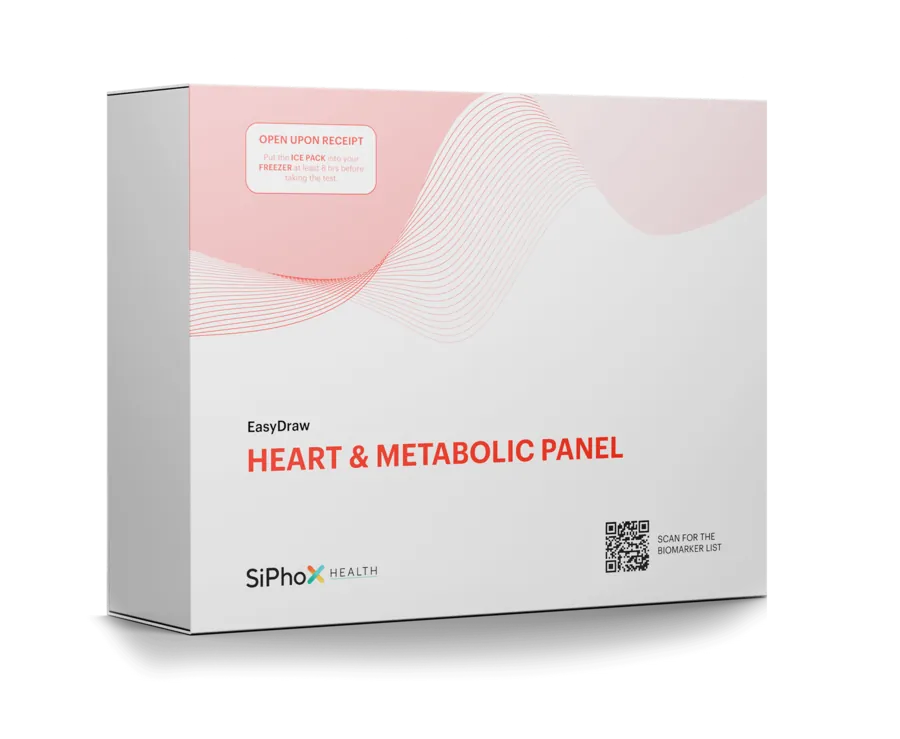
Heart & Metabolic
Lipids plus kidney and liver function: the panel for cardiovascular and metabolic risk.
Check price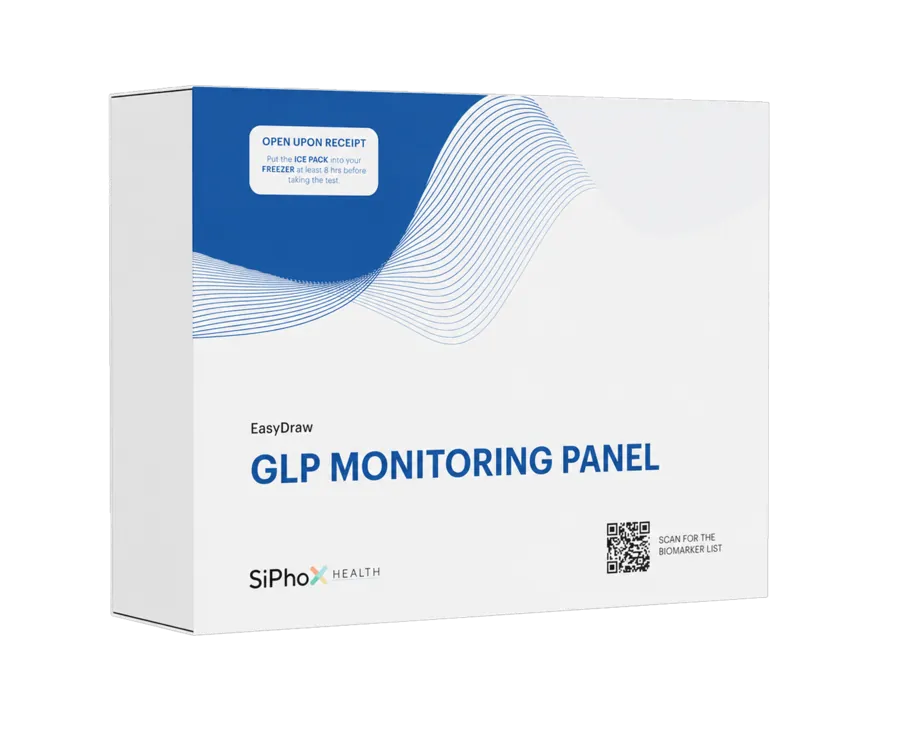
GLP Optimization
Built for people on GLP-1 medication: metabolic, liver, kidney, nutrient and iron markers.
Check price
Frequently asked questions
What is a normal C-peptide level?
About 0.5 to 2.0 ng/mL when fasting (Cleveland Clinic). MedlinePlus gives a wider 0.3 to 3.3 ng/mL, and ranges vary by lab.
What does high C-peptide mean?
Your pancreas is releasing a lot of insulin. Common reasons are insulin resistance, type 2 diabetes and obesity; kidney failure also raises it because the kidneys clear C-peptide.
Is C-peptide the same as insulin?
No, but they are released in equal amounts. C-peptide lasts longer in the blood and is not in injected insulin, so it reflects your own production.
Do I need to fast for a C-peptide test?
Often yes. Cleveland Clinic says 8 to 12 hours of fasting may be needed, and a meal raises C-peptide. Follow your lab or doctor's instructions.
Can C-peptide diagnose diabetes?
No. Cleveland Clinic says it cannot determine whether you have diabetes; A1C or glucose tests do that. C-peptide helps classify the type and see how much insulin you still make.