Quick answer: under 150 mg/dL (1.7 mmol/L) is normal for adults, 150 to 199 borderline high, 200 to 499 high and 500 mg/dL or more very high (NCEP ATP III). The AHA's 2011 statement set an optimal fasting level of under 100 mg/dL. For ages 10 to 19, Cleveland Clinic uses under 90 mg/dL. The 2018 AHA/ACC guideline counts persistent levels of 175 mg/dL or more as a heart-risk enhancer.
Triglycerides normal range
| Category | mg/dL | mmol/L | Source |
|---|---|---|---|
| Optimal | Under 100 | Under 1.1 | AHA scientific statement, 2011 |
| Normal | Under 150 | Under 1.7 | NCEP ATP III |
| Borderline high | 150 to 199 | 1.7 to 2.2 | NCEP ATP III |
| High | 200 to 499 | 2.3 to 5.6 | NCEP ATP III |
| Very high | 500 or more | 5.6 or more | NCEP ATP III |
| Risk-enhancing factor (persistent) | 175 or more | 2.0 or more | 2018 AHA/ACC guideline |
| Ages 10 to 19, normal | Under 90 | Under 1.0 | Cleveland Clinic |
To convert mg/dL to mmol/L, divide by 88.57. Cleveland Clinic labels 150 to 199 as mild, 200 to 499 as moderate and over 500 mg/dL as severe.
NCEP ATP III categories, with Cleveland Clinic's mild and moderate labels. 500 mg/dL or more is very high (severe).
Cleveland Clinic (ages 10 to 19), AHA 2011 statement, NCEP ATP III and the 2018 AHA/ACC guideline.
What are triglycerides?
Triglycerides are the main form of fat in the blood. Your body makes them from calories it does not need right away, especially from sugar, refined carbs and alcohol, and stores them in fat cells. They travel in VLDL and other particles that also carry ApoB, which is why high triglycerides and high ApoB often go together. The level rises after every meal, so a fasting sample reads lower than a non-fasting one.
What high triglycerides mean
Raised triglycerides add to heart risk, especially with low HDL. Very high levels are also a pancreatitis risk: the 2026 ACC/AHA guideline focuses treatment on preventing pancreatitis at 1,000 mg/dL or more. Cleveland Clinic lists these causes:
- Too much alcohol, and diets high in sugar and saturated fat
- Uncontrolled diabetes (check your HbA1c), higher BMI and inactivity
- Kidney or liver disease, thyroid problems and inflammatory diseases
- Some medications, including diuretics, corticosteroids and beta-blockers
- Smoking
The 2018 guideline flags triglycerides of 200 mg/dL or more as a reason to measure ApoB, because LDL cholesterol alone can understate risk at those levels.
Worked example: triglycerides of 230
Say a 41-year-old man who drinks four or five beers most weekends gets a fasting triglyceride result of 230 mg/dL (about 2.6 mmol/L), with HDL of 38 mg/dL. 230 is in the 200 to 499 high band: 80 mg/dL over the adult normal line and 130 over the AHA's optimal level. If a repeat fasting test confirms it, it is also a persistent level above the 175 mg/dL risk-enhancer line in the 2018 guideline.
What might explain it: alcohol and diets high in sugar and saturated fat are first on Cleveland Clinic's list, followed by uncontrolled diabetes, higher BMI and inactivity. His low HDL fits the same pattern.
Questions to take to his doctor:
- Should we repeat this fasting, after a few weeks with less alcohol, to see whether it is persistent?
- Since it is above 200 mg/dL, should I have ApoB measured?
- Should I check HbA1c for blood sugar and a thyroid test?
- Does my overall heart risk call for a statin, which the 2026 guideline keeps as a mainstay alongside lifestyle change?
What low triglycerides mean
Guidelines set no lower cutoff, and a low number is generally not a problem on its own. If a low value comes with unexplained weight loss or digestive symptoms, mention it to your doctor.
How to lower triglycerides
Cleveland Clinic recommends:
- At least 30 minutes of physical activity every day
- Fewer simple sugars and unhealthy fats, more fiber
- Limiting alcohol
- Reaching a healthy weight, sleeping enough and not smoking
- Managing diabetes and blood pressure
The 2026 ACC/AHA guideline keeps lifestyle change and statins as the mainstay for high triglycerides, because the main danger at moderate levels is heart disease. Other therapies may be added depending on your heart and pancreatitis risk, and at 1,000 mg/dL or more the priority becomes preventing pancreatitis. Which option fits you is a decision for your doctor.
Reading a non-fasting result
If your sample was taken after a meal, a result a little above 150 mg/dL may simply reflect that meal. Repeat it fasting before drawing conclusions, and compare like with like. A very high non-fasting value still deserves a prompt fasting repeat rather than a shrug. If you test at home, write down when you last ate and whether you drank alcohol the night before, and match those conditions next time. That single habit makes a series of home results far easier to read.
How to test triglycerides
Triglycerides are part of a standard lipid panel. Cleveland Clinic says to fast 8 to 12 hours for the most accurate reading; the 2018 guideline allows non-fasting screening. Because they swing with meals and alcohol, test under the same conditions each time (same time of day, same fasting window) so the trend is real. Our at-home cholesterol test page compares kits.
Which at-home tests include triglycerides
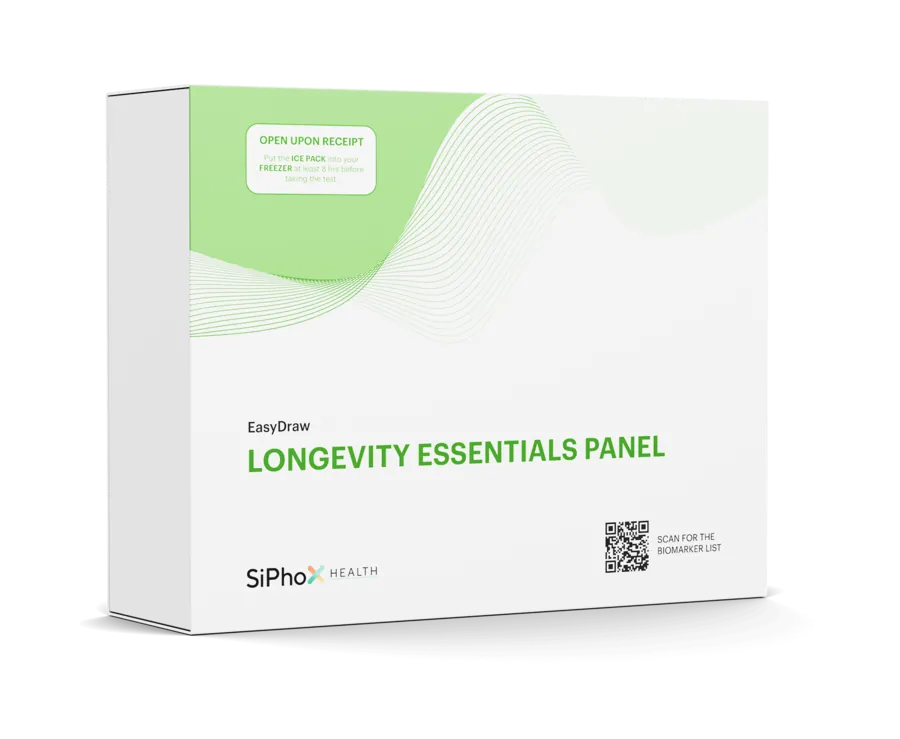
Triglycerides are on five SiPhox panels: Longevity Essentials, Heart & Metabolic, Thyroid Focus, Ultimate 360 and GLP Optimization.
| SiPhox panel | Biomarkers per test | Per test, with shipping | Listed as |
|---|---|---|---|
| Longevity Essentials | 31 | $149 | Triglycerides (Heart) |
| Heart & Metabolic | 28 | $149 | Triglycerides (Heart) |
| Thyroid Focus | 21 | $149 | Triglycerides (Heart) |
| Ultimate 360 | 62 | $274 | Triglycerides (Heart) |
| GLP Optimization | 46 | $224 | Triglycerides (Heart) |
Each of these also reports the triglyceride:HDL ratio. SiPhox's EasyDraw instructions we read do not set a fasting rule, so note whether you had eaten and keep it the same between tests. There is no included doctor review. For people on GLP-1 medication, the GLP-1 blood test page covers the GLP Optimization panel, and our SiPhox review covers the rest.
Longevity Essentials
The default panel: heart, metabolic, hormone and inflammation markers in one draw.
Check price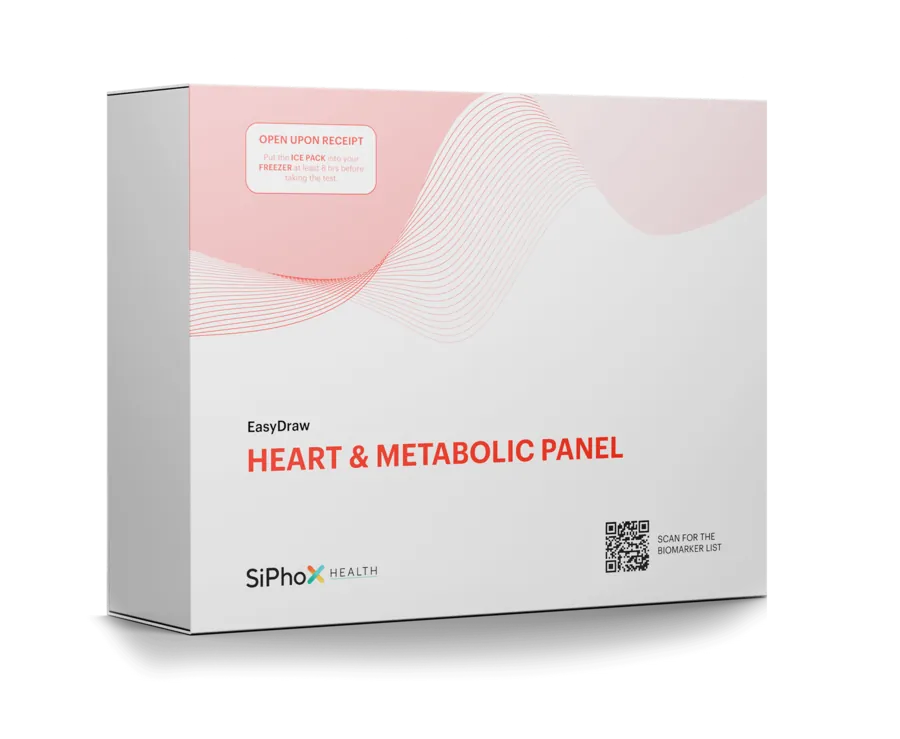
Heart & Metabolic
Lipids plus kidney and liver function: the panel for cardiovascular and metabolic risk.
Check price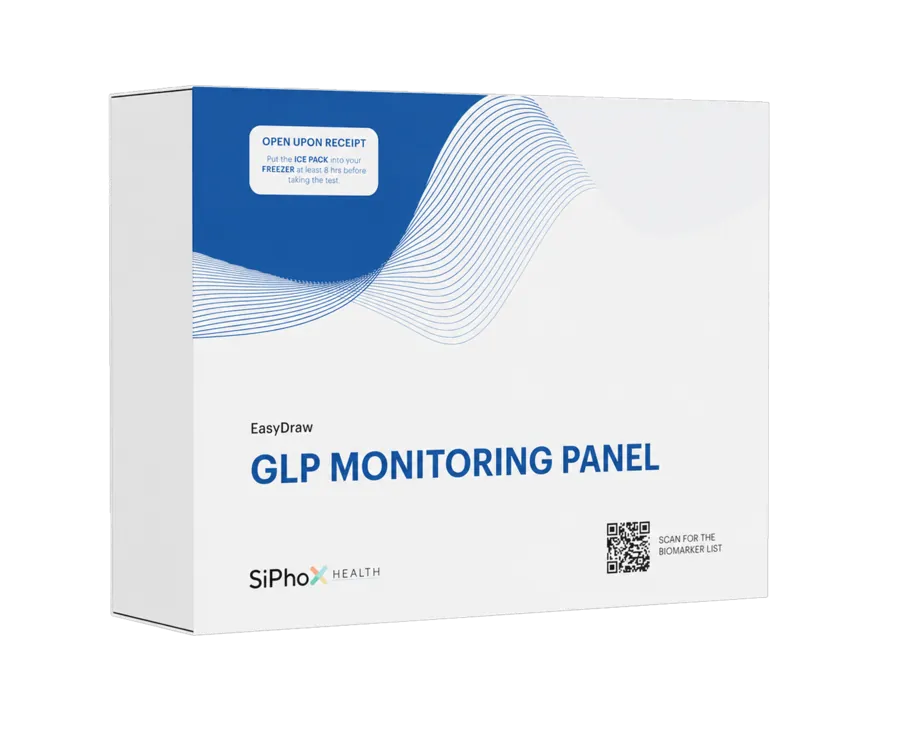
GLP Optimization
Built for people on GLP-1 medication: metabolic, liver, kidney, nutrient and iron markers.
Check price
Frequently asked questions
What is a normal triglyceride level?
Under 150 mg/dL (1.7 mmol/L) for adults (NCEP ATP III). The AHA considers under 100 mg/dL optimal. For ages 10 to 19, Cleveland Clinic uses under 90 mg/dL.
Is 200 triglycerides bad?
200 to 499 mg/dL is classed as high. It adds to heart risk and is a reason, per the 2018 guideline, to also measure ApoB.
Do I need to fast for a triglyceride test?
Fasting 8 to 12 hours gives the most accurate reading (Cleveland Clinic), though non-fasting screening is accepted. Triglycerides rise after meals, so a non-fasting result reads higher.
What causes high triglycerides?
Common causes are excess alcohol, sugary and high-fat diets, uncontrolled diabetes, excess weight, inactivity, kidney, liver or thyroid disease, and some medications (Cleveland Clinic).
How can I lower triglycerides naturally?
Cleveland Clinic recommends 30 minutes of activity a day, fewer simple sugars and unhealthy fats, more fiber, less alcohol, a healthy weight, enough sleep and no smoking. Retest under the same fasting conditions to see the change.
Sources
- NHLBI: ATP III guidelines at-a-glance quick desk reference (NCEP)
- Miller M et al. Triglycerides and cardiovascular disease: a scientific statement from the American Heart Association. Circulation 2011
- Cleveland Clinic: Triglycerides
- Grundy SM et al. 2018 AHA/ACC multisociety guideline on the management of blood cholesterol. Circulation 2019
- Blumenthal RS et al. 2026 ACC/AHA multisociety guideline on the management of dyslipidemia. J Am Coll Cardiol 2026
- Cardiometabolic Health Congress: What the 2026 dyslipidemia guidelines mean for your patients and your practice
- SiPhox Health: panel comparison and biomarker lists (checked 29 Sep 2026)