Quick answer
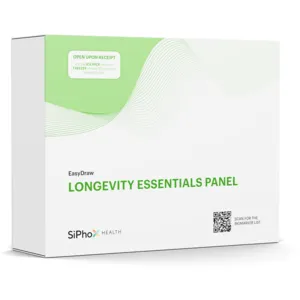
Yes, most HSA eligible blood tests include the at-home and online lab services people actually buy. SiPhox Health says all its tests are HSA/FSA eligible; Function Health, Superpower and Rythm Health list HSA/FSA on their pricing pages; InsideTracker takes HSA and FSA through Truemed; Labcorp OnDemand lists over 100 eligible tests; and Quest accepts the cards but leaves eligibility to your plan. With a combined tax rate of about 35%, a $596 year of quarterly SiPhox tests costs about $390 in real money when paid from an HSA or FSA.
What the IRS rules say
HSA and FSA money can pay for "qualified medical expenses", which IRS Publication 502 defines as the costs of diagnosis, cure, mitigation, treatment or prevention of disease. Three lines in Publication 502 matter for blood work:
- Laboratory fees: you can include amounts paid for laboratory fees that are part of medical care.
- Physical exams: an annual physical and diagnostic tests count, and you do not need to be ill at the time.
- The limit: expenses that are merely beneficial to general health, such as vitamins, do not count. Medical expenses must be primarily to alleviate or prevent a physical or mental disability or illness.
A blood test that screens for or monitors disease, such as cholesterol, HbA1c or thyroid markers, fits the first two. Wellness-branded extras bundled with a membership, like supplement plans or coaching, may not. Your plan administrator makes the final call, not the testing company.
| 2026 limit | Amount |
|---|---|
| HSA contribution, self-only coverage | $4,400 |
| HSA contribution, family coverage | $8,750 |
| Minimum HDHP deductible to open an HSA | $1,700 self-only, $3,400 family |
| Health FSA salary reduction | $3,400 |
| Health FSA carryover, if your plan allows it | $680 |
Source: IRS Rev. Proc. 2025-19 and 2025-32.
Which blood test services accept HSA and FSA
Checked on each company's site on September 29, 2026.
| Service | HSA / FSA | How it works |
|---|---|---|
| SiPhox Health | Yes, all tests | Use the card at checkout. If it is declined, support sends an itemized receipt for reimbursement. |
| Function Health | Yes | "HSA/FSA Eligible" on the pricing page |
| Superpower | Yes | HSA/FSA listed as a payment method |
| InsideTracker | Yes, under most plans | Pay through Truemed at checkout, or submit your fee for reimbursement |
| Rythm Health | Yes | HSA/FSA eligible on the homepage |
| Labcorp OnDemand | Yes, 100+ tests | Pay with the card like any debit card |
| Quest (questhealth.com) | Card accepted | Quest does not decide eligibility; check with your administrator |
| Everlywell | Not verified | We could not confirm on everlywell.com; check at checkout |
If you are comparing services first, see the best at-home blood tests or our SiPhox review.
HSA vs FSA for blood tests
| HSA | Health FSA | |
|---|---|---|
| Who can have one | People covered by a high-deductible health plan | Employees whose employer offers one |
| 2026 limit | $4,400 self-only, $8,750 family | $3,400 |
| Unused money | Stays yours and rolls over every year | Lost at year end unless the plan allows a carryover (up to $680) or grace period |
| Reimbursing yourself | Any time later, for expenses after the HSA was opened | Within the plan's claim deadline |
| Best use for blood tests | Subscriptions spread over years | A yearly membership paid in one go before the deadline |
If you have an HSA, there is no rush: pay for a test from any card, keep the receipt, and reimburse yourself when it suits you. If you have an FSA, remember that Publication 969 only lets it reimburse expenses incurred during the plan year, and an expense is incurred when the care is provided, not when you pay. A test that is collected before the plan year ends is a simple way to use money that would otherwise expire; a membership paid in December for a draw in February may not be.
How to pay with an HSA or FSA
- Use the card at checkout. HSA and FSA cards run as Visa or Mastercard debit cards. This is the simplest route and leaves a clean record.
- If the card is declined, pay with a personal card, then ask for an itemized receipt and submit a claim to your HSA or FSA administrator. SiPhox's FAQ says support will send one on request.
- For an HSA, you can reimburse yourself later. IRS Publication 969 allows tax-free HSA distributions for qualified expenses incurred after you opened the HSA, with no deadline in the same year. Keep the receipt.
- For an FSA, watch the deadline. FSA money is use-it-or-lose-it unless your plan has a grace period or carryover (up to $680 for 2026).
Example: paying for a SiPhox membership with an HSA card
- Pick your panel and cadence at checkout and enter the HSA card as the payment card.
- Each renewal ($124 plus $25 shipping) is charged to the same card on your cadence.
- If the card is ever declined, pay another way and email support for an itemized receipt, then claim it from your HSA.
- Download each receipt or invoice from your account and file it with your tax records.
Subscriptions work the same way: each renewal is a new charge on the card. If you pay yearly, as with Function or Superpower, it lands in one plan year.
Itemized receipts
A card statement that says "SiPhox" or "Superpower" is not enough for most administrators. Ask for an itemized receipt showing:
- the date of service or purchase;
- the provider's name;
- a description of the service (for example "laboratory blood panel");
- the amount paid;
- the name of the person tested.
Keep every receipt with your tax records. If the IRS later asks about an HSA distribution you cannot support, the amount becomes taxable income and may carry an additional 20% tax (Publication 969).
Letter of medical necessity
A letter of medical necessity (LMN) is a note from a licensed clinician stating the condition a purchase is meant to diagnose, treat, monitor or prevent. The IRS FAQ on wellness expenses explains why these exist: dual-purpose items only qualify when bought primarily for a specific medical reason, not general wellness.
For lab tests you often will not need one, because diagnostic lab fees are listed in Publication 502. You are more likely to be asked for an LMN when:
- the purchase is sold as a wellness membership rather than a lab test;
- your administrator's automated system rejects the merchant;
- the membership bundles non-medical extras.
If you need one, ask your own doctor for a short letter naming the reason, for example monitoring cholesterol, prediabetes or thyroid treatment. Some brands route payment through third parties such as Truemed, which ask health questions at checkout.
HRAs and employer programs
A health reimbursement arrangement (HRA) is funded by your employer and follows the same qualified-expense rules, but each employer decides what its HRA covers. InsideTracker says its plans can be paid from HSA, FSA or HRA funds under most plans. Some employers also offer blood testing directly as a benefit; Superpower, for example, runs company-specific pages for employer programs. Ask HR before paying out of pocket.
Why HSA and FSA claims for blood tests get rejected
- No itemized receipt. A bank or card statement rarely shows what was bought. Send the itemized receipt.
- The merchant looks like a wellness brand. Automated card systems sometimes decline merchants they do not recognize as medical. The fix is a manual claim with the receipt, plus a letter of medical necessity if asked.
- Bundled non-medical items. If a checkout mixes a blood test with supplements, the supplements part may be refused. Buy them separately.
- Wrong person. Tests for someone who is not your spouse or dependent under the plan rules are not eligible.
- Missed FSA deadline. FSA claims have to be filed within the plan's run-out period.
Worked savings example
The rule behind the saving is in IRS Publication 969: you do not pay federal income tax or employment taxes on salary you put into a health FSA, and HSA contributions made by your employer, including through a cafeteria plan, can be excluded from income and are generally not subject to employment taxes. The employee share of those employment taxes is 6.2% Social Security plus 1.45% Medicare, 7.65% in all (IRS Topic 751).
Now a hypothetical case. Say you are in the 22% federal bracket (one of the 2026 rates set in Rev. Proc. 2025-32), pay 5% state tax, and fund an FSA or HSA through payroll so you also skip 7.65% FICA. Each pre-tax dollar saves about 34.65 cents.
| Plan | List price | Tax saved at 34.65% | Real cost |
|---|---|---|---|
| SiPhox, one test | $149 | $52 | $97 |
| SiPhox, quarterly for a year | $596 | $207 | $389 |
| SiPhox, 3 Longevity + 1 Ultimate 360 | $721 | $250 | $471 |
| Function Health, one year | $365 | $126 | $239 |
| Superpower, one year | $349 | $121 | $228 |
Your rate will differ: no state income tax, a different bracket, or HSA contributions made outside payroll (which still skip income tax but not FICA) change the numbers. The chart shows how much the bracket matters for the same $596 year of quarterly tests.
Our arithmetic: $596 x (1 minus the combined rate). Brackets are examples from the 2026 federal rates (Rev. Proc. 2025-32); FICA 7.65% per IRS Topic 751 applies only to payroll contributions and only below the Social Security wage base. Not tax advice.
Price any combination in the blood test cost calculator, then apply your own rate. See SiPhox cost and at-home blood test cost for full price lists.
Using up an FSA balance before the deadline
Take Priya, a hypothetical reader who elected $1,200 for her health FSA and has $430 left on December 1. If her plan allows the 2026 carryover of up to $680, the whole $430 rolls into next year and there is no rush. If her plan has no carryover and no grace period, anything unspent is lost. A SiPhox Longevity Essentials test started now costs $124 for a new member ($99 plus $25 shipping); the kit ships within about 3 days and arrives in 3 to 5, so she can collect well before December 31. Adding a one-off Ultimate 360 kit at its $274 shop price would bring her total to $124 + $274 = $398, leaving $32. Because the expense counts when the care is provided, what matters is that she collects the samples before the plan year ends, and that she keeps both itemized receipts. The membership renews on the cadence she picks, so she should set it to every six months or cancel before the next ship date if she does not want more tests.
Which account and payment route to use
| If you have | Pay this way | Why |
|---|---|---|
| An HSA and cash to spare | Any card now, reimburse yourself from the HSA later | Publication 969 sets no deadline, as long as the HSA was open when you bought the test; keep the receipt |
| An FSA balance that expires | A test collected before the plan year ends | FSA expenses count when the care is provided |
| A card that gets declined at checkout | Another card, then a manual claim | SiPhox support sends an itemized receipt on request |
| An employer HRA | Ask HR before paying | Each employer decides what its HRA covers |
| A plan to test every quarter, pre-tax | SiPhox Longevity Essentials on your HSA or FSA card | $149 a test, $596 a year, about $389 after tax in our 34.65% example |
What is not covered
- Supplements a results dashboard recommends are generally not eligible; Publication 502 names vitamins as merely beneficial to general health.
- Coaching or wellness extras may not qualify without a medical reason.
- Shipping is charged with the test on SiPhox; ask your administrator whether they accept it as part of the purchase.
- No double dipping. Anything paid from an HSA or FSA cannot also be claimed as an itemized medical deduction.
This is a plain-English summary of IRS publications. Your plan documents and administrator decide what is eligible. Ask a tax professional about your situation.
Frequently asked questions
Can you use an HSA for lab work?
Yes. IRS Publication 502 lists laboratory fees that are part of medical care as qualified medical expenses, so blood tests for diagnosis, screening or monitoring can be paid from an HSA or FSA.
Is SiPhox FSA eligible?
Yes. SiPhox says all its tests are HSA/FSA eligible. Use the card at checkout, or contact support for an itemized receipt if it is declined.
Do I need a letter of medical necessity for blood tests?
Usually not for lab tests, which Publication 502 lists directly. Some administrators ask for one for wellness memberships. A short note from your doctor naming the medical reason is enough in most cases.
Can I use my FSA for Function Health or Superpower?
Both list HSA/FSA as accepted. Because each is a yearly fee, the full amount lands in one plan year, so check your remaining FSA balance first, and ask your administrator how it treats a draw that happens in the next plan year.
What if my HSA card is declined at checkout?
Pay with another card, request an itemized receipt, and submit it to your HSA or FSA administrator for reimbursement. With an HSA, you can reimburse yourself later as long as the HSA was open when you bought the test.
Sources
- IRS Publication 502 (2025): medical and dental expenses
- IRS Publication 969: health savings accounts and other tax-favored health plans
- IRS: FAQs about medical expenses related to nutrition, wellness and general health
- IRS Rev. Proc. 2025-19: 2026 HSA contribution limits and HDHP deductibles
- IRS Rev. Proc. 2025-32: 2026 tax rate tables, health FSA limit and carryover
- IRS Topic 751: Social Security and Medicare withholding rates
- SiPhox Health: membership, panels and pricing (checked 29 Sep 2026)
- SiPhox Health FAQ
- SiPhox Health shop: one-off kits and add-ons
- Function Health: pricing (checked 29 Sep 2026)
- Superpower: membership and pricing (checked 29 Sep 2026)
- InsideTracker support: is InsideTracker eligible for HSA/FSA?
- Rythm Health: pricing and plans (checked 29 Sep 2026)
- Labcorp OnDemand: HSA and FSA eligible tests
- Quest: payment options, HSA/FSA and insurance FAQ