Quick answer: the BUN normal range is generally 6 to 20 mg/dL (MedlinePlus). Cleveland Clinic splits it by sex and age: 8 to 24 mg/dL for adult men, 6 to 21 mg/dL for adult women and 7 to 20 mg/dL for children aged 1 to 17. BUN tends to rise with age. Because diet and hydration move it, doctors judge kidney function from creatinine and eGFR, with BUN as supporting evidence.

BUN normal range
MedlinePlus Medical Encyclopedia (general range); Cleveland Clinic (ranges by age and sex).
Most US labs report BUN in mg/dL. Labs outside the US often report urea in mmol/L instead, which is a different number for the same thing, so check which one your report shows before comparing.
What BUN measures
When your body breaks down protein, the liver turns the leftover nitrogen into urea, and the kidneys filter urea out into urine. BUN measures the nitrogen in that urea. It therefore depends on three things: how much protein you eat and break down, how well your liver makes urea, and how well your kidneys clear it. That is why BUN is part of both the kidney function test and the comprehensive metabolic panel.
What high BUN means
A high BUN may mean the kidneys are not clearing urea well, but MedlinePlus and Cleveland Clinic both list common causes that have nothing to do with kidney damage:
- Dehydration and burns
- A high-protein diet, and bleeding in the stomach or gut (digested blood is protein)
- Heart problems: congestive heart failure or a recent heart attack, which reduce blood flow to the kidneys
- Kidney disease or failure, or a urinary tract blockage
- Aging and some medicines, including carbamazepine, methotrexate and tetracycline (Cleveland Clinic)
Cleveland Clinic notes that doctors do not use BUN to define kidney failure. If BUN and creatinine are both high, that is a stronger sign of reduced kidney function than BUN alone.
What low BUN means
A low BUN is uncommon. Causes listed by MedlinePlus and Cleveland Clinic include a low-protein diet or malnutrition, liver disease (the liver makes less urea), drinking a lot of fluid (overhydration) and a small body size. MedlinePlus notes that in liver disease BUN may be low even when the kidneys are normal.
BUN:creatinine ratio
Dividing BUN by creatinine (both in mg/dL) helps separate a hydration problem from a kidney problem. SiPhox's own explainer uses 10:1 to 20:1 as the normal range. Above 20 suggests something raising BUN faster than creatinine, such as dehydration, a high protein intake or gut bleeding. Below 10 can go with liver disease or a low-protein diet.
| Ratio | Common reading | Typical causes |
|---|---|---|
| Under 10 | Low | Low-protein diet, liver disease, overhydration |
| 10 to 20 | Usual range | Consistent with normal kidney handling |
| Over 20 | High | Dehydration, high protein intake, gut bleeding, heart failure |
Worked example
A 38-year-old on a high-protein cutting diet tests after a hot day with little water. BUN is 28 mg/dL (above the 24 limit for men), creatinine is 1.0 mg/dL and eGFR is 95. The ratio is 28 / 1.0 = 28, and the normal creatinine and eGFR point to hydration and diet, not kidney damage. Retested two weeks later, well hydrated, BUN is 17 and the ratio 17.
Compare a 70-year-old with BUN 28 and creatinine 2.0 mg/dL. The ratio is only 14, but both numbers are high, which points to reduced filtering. That one goes to a doctor, along with the eGFR and a urine albumin test.
| If you want | Test | Where |
|---|---|---|
| A full kidney picture | eGFR, creatinine, BUN, urine albumin | Your doctor; SiPhox Heart & Metabolic covers the blood markers |
| To track BUN on a high-protein or GLP-1 diet | BUN, creatinine, eGFR, albumin, total protein | SiPhox GLP Optimization |
| Kidney plus a broad health panel | All kidney, liver, lipid, thyroid and hormone markers | SiPhox Ultimate 360 |
| A kidney marker less affected by muscle | Cystatin C | Your doctor (not on SiPhox EasyDraw panels) |
Getting a reliable BUN result
- Drink normally the day before. Dehydration raises BUN (MedlinePlus, Cleveland Clinic), and a morning home draw after a hot day with little water can show a falsely high value.
- Do not load up on protein just before. A high-protein diet raises BUN, so keep eating the way you normally do.
- Tell your doctor about medicines. Cleveland Clinic names carbamazepine, methotrexate and tetracycline among drugs that can raise BUN.
- Always read BUN with creatinine and eGFR. MedlinePlus notes BUN rises with age and varies by sex, so on its own it is a weak kidney marker; with creatinine it becomes useful.
At-home tests that include BUN
BUN is on three SiPhox panels: Heart & Metabolic, Ultimate 360 and GLP Optimization. All three also report creatinine, eGFR and the BUN:creatinine ratio. BUN is not on Longevity Essentials, Thyroid Focus or Hormone Focus; Thyroid Focus has creatinine and eGFR but not BUN.
| SiPhox panel | Biomarkers per test | Per test, with shipping | Listed as |
|---|---|---|---|
| Heart & Metabolic | 28 | $149 | BUN (Kidney) |
| Ultimate 360 | 62 | $274 | BUN (Kidney) |
| GLP Optimization | 46 | $224 | BUN (Kidney) |
Drink normally the day before a home draw, since dehydration alone can push BUN over the range. SiPhox is a wellness service with no doctor review included. Read more about cystatin C, a kidney marker SiPhox does not currently offer, and our SiPhox review.
A note on home samples: SiPhox's partner lab tests capillary blood collected from the upper arm. SiPhox says its results show a 95% to 99% correlation with venous draws in its own quarterly comparisons against Labcorp and Quest, but it has not published a study of the EasyDraw device. If a result would change a treatment decision, confirm it with a venous test through your doctor.
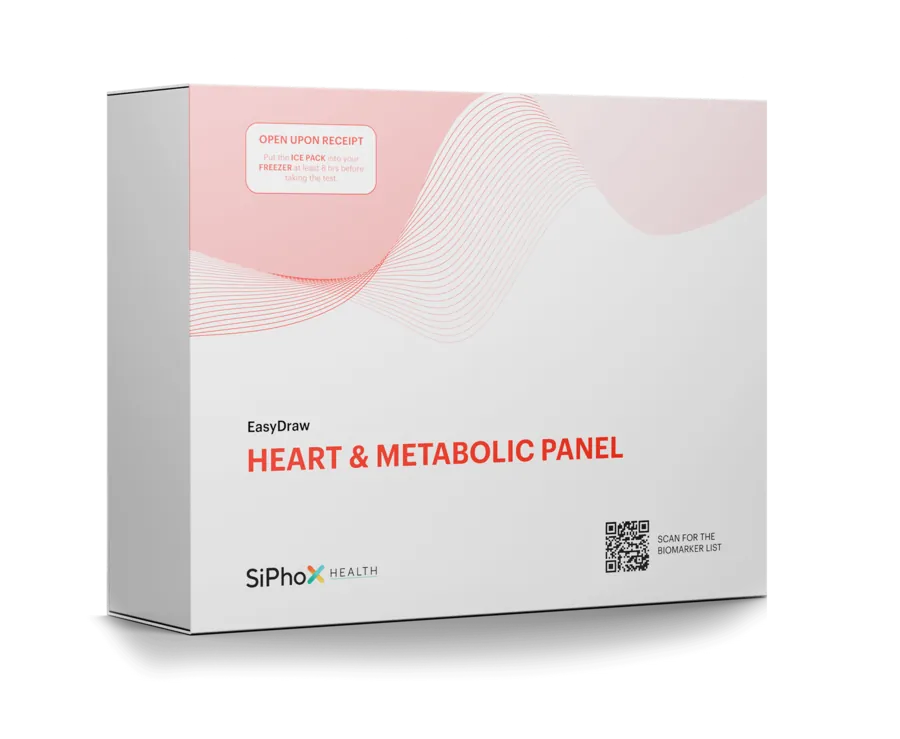
Heart & Metabolic
Lipids plus kidney and liver function: the panel for cardiovascular and metabolic risk.
Check price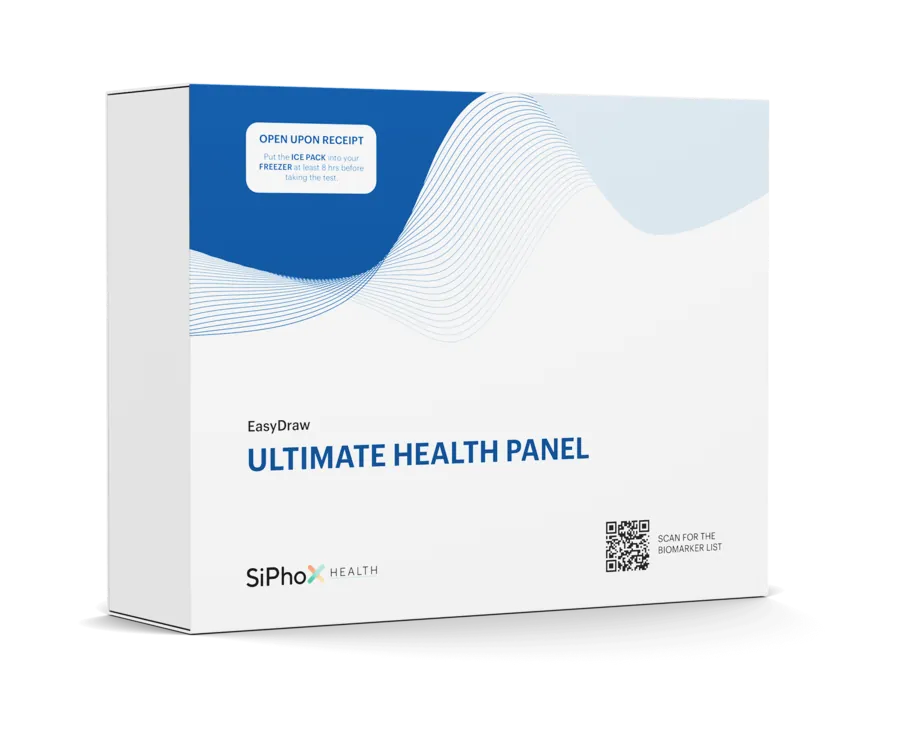
Ultimate 360
Everything on the four core panels plus iron studies, B12 and folate, GGT and PSA.
Check price
GLP Optimization
Built for people on GLP-1 medication: metabolic, liver, kidney, nutrient and iron markers.
Check price
Frequently asked questions
What is a normal BUN level?
Generally 6 to 20 mg/dL (MedlinePlus). Cleveland Clinic lists 8 to 24 mg/dL for adult men, 6 to 21 mg/dL for adult women and 7 to 20 mg/dL for children aged 1 to 17.
Does high BUN mean kidney disease?
Not by itself. Dehydration and a high-protein diet are common causes. A high BUN with a high creatinine or low eGFR is a stronger sign of reduced kidney function.
Can dehydration raise BUN?
Yes. Dehydration is a common cause of a high BUN and typically raises the BUN:creatinine ratio above 20.
What is a normal BUN:creatinine ratio?
About 10:1 to 20:1 is the usual range, which is the range SiPhox uses. Interpret it alongside the BUN and creatinine values themselves.
Can I test BUN at home?
Yes. SiPhox includes BUN, creatinine, eGFR and the ratio on Heart & Metabolic, GLP Optimization and Ultimate 360.
Sources
- MedlinePlus Medical Encyclopedia: BUN (blood urea nitrogen)
- MedlinePlus Lab Tests: BUN (blood urea nitrogen)
- Cleveland Clinic: Blood urea nitrogen (BUN) test
- SiPhox Health: What is a normal BUN creatinine ratio?
- SiPhox Health: panel comparison (checked 29 Sep 2026)
- SiPhox Health: Heart & Metabolic panel
- SiPhox Health: Ultimate 360 panel
- SiPhox Health: GLP Optimization panel