
Cystatin C is a small protein made at a steady rate by nearly every cell and cleared by the kidneys, so its blood level rises when kidney filtration falls. In a nationally representative US sample the median cystatin C was 0.85 mg/L, and the 99th percentile in young healthy adults was 1.03 mg/L. Most labs place the top of the normal range close to 1.0 mg/L, but the exact range depends on the assay, so use the one on your report.
Cystatin C normal range
| Value (mg/L) | What the studies used it for | Source |
|---|---|---|
| 0.85 | Median across US residents aged 12 and over | Kottgen 2008, NHANES III |
| 1.03 | 99th percentile of young healthy adults (standardized assay), used as the "elevated" line | Juraschek 2013 |
| Above 1.12 | Definition of increased cystatin C | Kottgen 2008 |
Cystatin C is rarely read on its own. Labs usually turn it into an estimated GFR (eGFR) with the CKD-EPI equations, and that eGFR is what doctors stage kidney function by. KDIGO's categories: 90 or more normal, 60 to 89 mildly reduced, 45 to 59 and 30 to 44 moderately reduced, 15 to 29 severely reduced, under 15 kidney failure (all mL/min/1.73m2), always read together with urine albumin. See our eGFR guide.
Source: KDIGO 2024. G1 (normal) is 90 or more. G5 is under 15.
Cystatin C normal range by age
Kidney filtration declines gradually with age, and cystatin C rises with it. In the US NHANES data, the share of people above 1.12 mg/L was:
| Age group | Share with cystatin C above 1.12 mg/L |
|---|---|
| Under 20 | About 1% |
| 60 and over | About 41% |
| 80 and over | More than 50% |
Source: Kottgen 2008, NHANES III. The 80 and over group is reported as more than 50%.
Levels were also a little higher in men and in non-Hispanic white people, even among healthy 20 to 39 year olds. This is why a value just above 1.0 mg/L means more at 30 than at 75, and why an eGFR, which adjusts for age and sex, is the better number to act on.
Cystatin C vs creatinine
| Cystatin C | Creatinine | |
|---|---|---|
| Made by | Almost all cells, at a steady rate | Muscle |
| Thrown off by | Thyroid disease, steroids, inflammation, obesity | Muscle mass, high-meat diets, creatine supplements |
| Routine? | No, ordered when creatinine is unclear | Yes, on every basic metabolic panel |
| Unit | mg/L | mg/dL |
The National Kidney Foundation says cystatin C is most useful when creatinine may mislead, such as in older adults or very muscular people. The best estimate uses both: the 2021 race-free CKD-EPI creatinine-cystatin C equation was more accurate than creatinine alone (Inker 2021). The 2024 KDIGO guideline recommends measuring cystatin C when a creatinine-based eGFR is likely to be less accurate and the result affects decisions, and using the combined eGFR when it is available.
Worked example: when creatinine and cystatin C disagree
| Person | Creatinine | eGFR, creatinine | Cystatin C | eGFR, cystatin C | eGFR, combined |
|---|---|---|---|---|---|
| Man, 34, lifts weights, takes creatine | 1.4 mg/dL | 68 | 0.85 mg/L | 107 | 89 |
| Woman, 72, slight build | 0.7 mg/dL | 92 | 1.25 mg/L | 51 | 69 |
eGFR in mL/min/1.73m2. Our arithmetic with the 2021 CKD-EPI creatinine and creatinine-cystatin C equations (Inker 2021) and the CKD-EPI cystatin C equation; both people are illustrative.
Say the man's routine panel flags a creatinine-only eGFR of 68, in KDIGO's mildly reduced band. His cystatin C sits at the US median, and the combined estimate of 89 is close to normal: his muscle and creatine supplement pushed creatinine up without any kidney problem. The woman is the reverse. Low muscle keeps her creatinine low, so the creatinine eGFR of 92 looks fine, while a cystatin C of 1.25 mg/L, above the 1.12 line, brings the combined estimate down to 69. That difference can matter for the dose of a kidney-cleared medicine.
Questions for the doctor in either case: should my eGFR be calculated from both markers? Do I need a urine albumin-to-creatinine ratio? Should we repeat it in 3 months to see whether the change lasts? Does any medicine I take need a dose check at this level?
What a high cystatin C means
A high cystatin C most often means the kidneys are filtering less, especially if the combined eGFR is under 60. Because it is less swayed by muscle, it can reveal reduced filtration in someone whose creatinine looks fine, for instance an older person with little muscle. It can also read high for reasons outside the kidney: thyroid overactivity, high-dose steroids and inflammation all push it up. In population studies higher cystatin C also went with hypertension, smoking and a higher CRP.
A single raised value should be confirmed, read with urine albumin, and discussed with your doctor; chronic kidney disease is defined by changes that last more than three months.
Common questions about cystatin C
Do I need to fast, and what can throw it off?
Labcorp prefers an overnight fast and notes that cystatin C has not been shown to be affected by muscle mass or nutrition, unlike creatinine. Its known non-kidney influences are thyroid disease, steroid treatment, inflammation and obesity, so a high value with an abnormal TSH or a course of prednisone should be read with care. Heavily hemolyzed samples are rejected.
What should be tested alongside it?
KDIGO stages kidney disease by eGFR and urine albumin together. The urine albumin-to-creatinine ratio categories are A1 under 30 mg/g (normal to mildly increased), A2 30 to 300 mg/g (moderately increased) and A3 above 300 mg/g (severely increased). Add creatinine for the combined eGFR, blood pressure, and HbA1c, since diabetes and high blood pressure are the usual reasons kidney function is being checked at all.
How often should it be repeated?
Once, to confirm: chronic kidney disease requires the change to last more than three months. After that, KDIGO 2024 suggests checking eGFR and urine albumin at least once a year in people with CKD, rising to four or more times a year in the highest-risk groups. Use the same lab and the same equation each time, because assays and formulas shift the result.
Getting tested, and what SiPhox covers
Cystatin C is a venous blood test, usually ordered by a doctor as "cystatin C with eGFR". It is worth asking for when a creatinine-based eGFR may be misleading and the answer changes a decision. KDIGO 2024 points to situations such as:
- A creatinine eGFR under 60, to confirm whether kidney function is really reduced
- Very high or very low muscle mass, including bodybuilders and frail older adults
- Unusual diets, such as very high-meat or vegetarian diets, or creatine supplements
- Raised urine albumin, or a medicine whose dose depends on kidney function
To be clear: SiPhox Health's current EasyDraw panels do not measure cystatin C; an older finger-prick panel listed it. They do report the standard kidney markers, creatinine and eGFR, on Heart & Metabolic, Thyroid Focus, Ultimate 360 and GLP Optimization, with BUN on all but Thyroid Focus. SiPhox's one-off $85 Kidney, Liver and Lp(a) kit also includes creatinine, eGFR and BUN. That makes SiPhox useful for keeping an eye on creatinine-based kidney function over time, for example on GLP-1 medication (what to monitor), while cystatin C stays a lab test you add when a creatinine result needs a second opinion. Our longevity blood test guide shows which services include cystatin C directly.
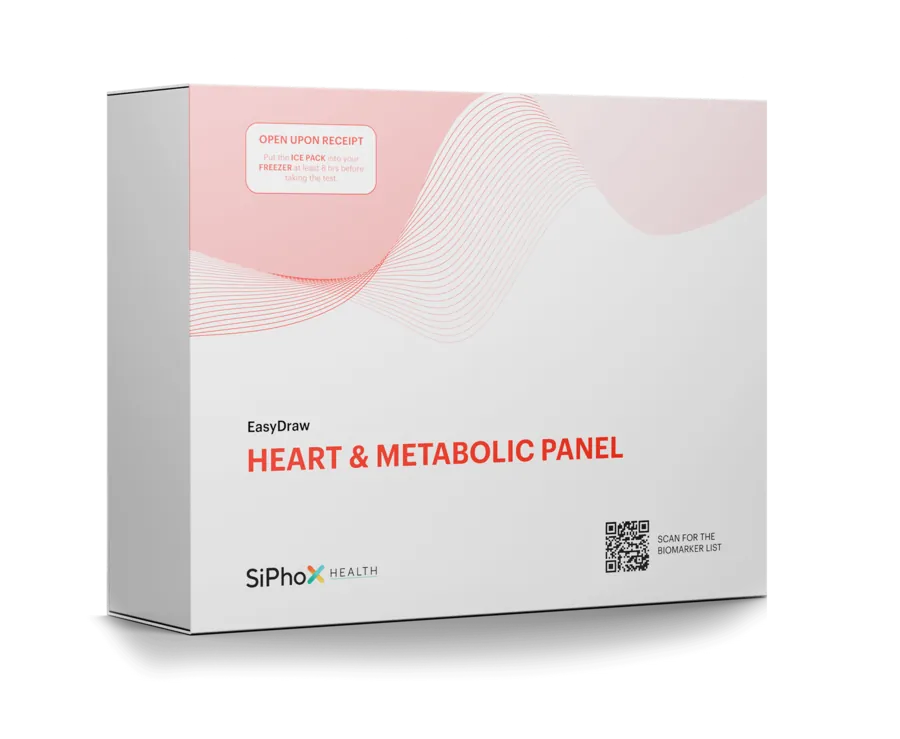
Heart & Metabolic
Lipids plus kidney and liver function: the panel for cardiovascular and metabolic risk.
Check price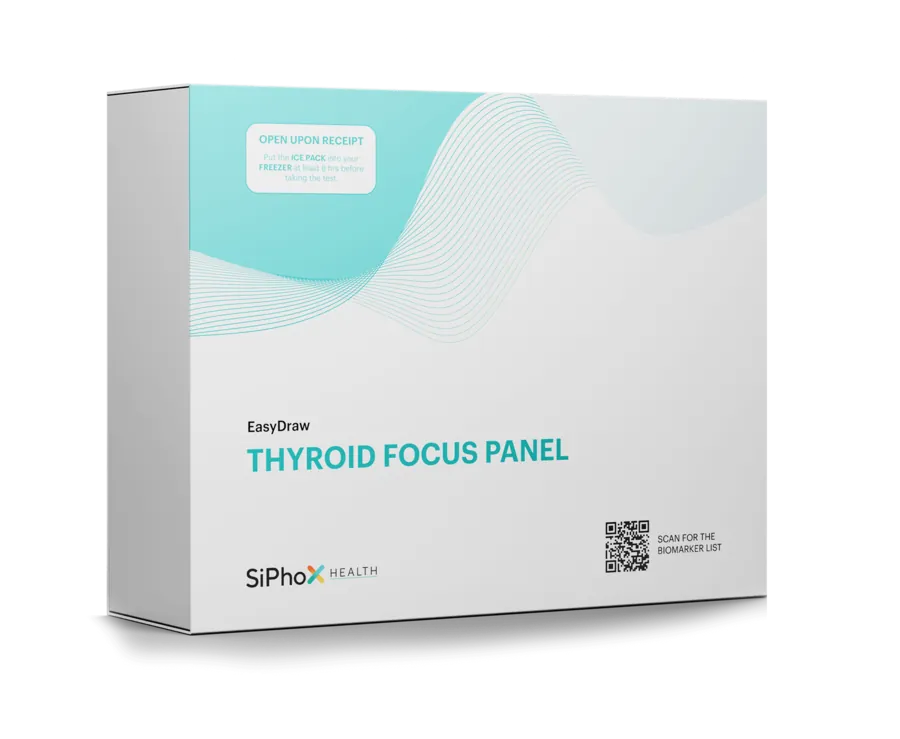
Thyroid Focus
A full thyroid workup including both thyroid antibodies, plus core lipids.
Check price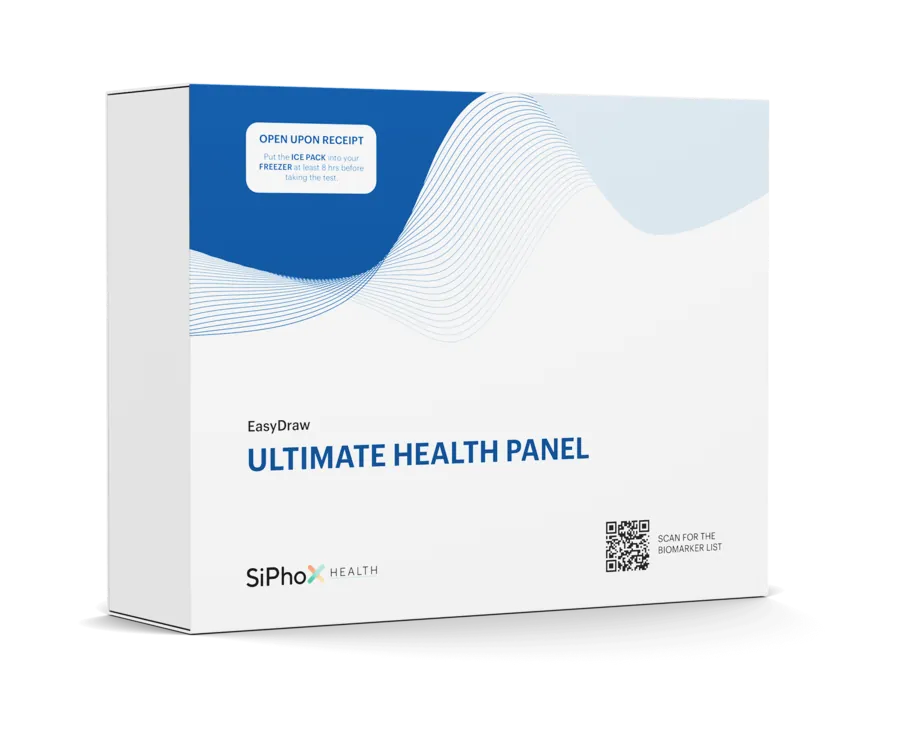
Ultimate 360
Everything on the four core panels plus iron studies, B12 and folate, GGT and PSA.
Check price
Frequently asked questions
What is the normal range for cystatin C?
Roughly under 1.0 mg/L in healthy adults, but it depends on the lab. In US NHANES data the median was 0.85 mg/L, the 99th percentile in young healthy adults was 1.03 mg/L, and above 1.12 mg/L was counted as raised.
Does cystatin C increase with age?
Yes. In US data about 1% of people under 20 were above 1.12 mg/L, compared with about 41% of those 60 and over and more than half of those 80 and over.
Is cystatin C better than creatinine?
It is less affected by muscle mass and diet, so it helps when creatinine may mislead. The most accurate kidney estimate combines both in the 2021 CKD-EPI creatinine-cystatin C equation.
What does a high cystatin C mean?
Usually reduced kidney filtration, especially if the combined eGFR is under 60. Thyroid overactivity, steroids and inflammation can also raise it, so a high value should be confirmed and reviewed with your doctor.
Does SiPhox test cystatin C?
No, not on its current EasyDraw panels. It measures creatinine and eGFR on Heart & Metabolic, Thyroid Focus, Ultimate 360 and GLP Optimization.
Sources
- Kottgen A et al. Serum cystatin C in the United States: NHANES III. Am J Kidney Dis 2008
- Juraschek SP et al. Beta-trace protein, beta2-microglobulin, cystatin C and creatinine in the US population. CJASN 2013
- Inker LA et al. New creatinine- and cystatin C-based equations to estimate GFR without race. N Engl J Med 2021
- KDIGO 2024 Clinical Practice Guideline for the evaluation and management of CKD
- National Kidney Foundation: Cystatin C
- Labcorp test 121265: Cystatin C with eGFR
- SiPhox Health panel comparison (checked 29 Sep 2026)
- SiPhox Health: Heart & Metabolic EasyDraw panel
- SiPhox Health: Kidney, Liver and Lp(a) Panel