Quick answer: the fasting glucose normal range is 70 to 99 mg/dL (3.9 to 5.5 mmol/L) after at least 8 hours without food. A fasting result of 100 to 125 mg/dL (5.6 to 6.9 mmol/L) is prediabetes, also called impaired fasting glucose, and 126 mg/dL (7.0 mmol/L) or higher usually means diabetes (MedlinePlus; NIDDK, citing the American Diabetes Association). To convert mg/dL to mmol/L, divide by 18.
Fasting glucose normal range
Doctors diagnose prediabetes and diabetes with four tests, and each has its own cutoffs. NIDDK publishes the American Diabetes Association values side by side:
| Test | Normal | Prediabetes | Diabetes |
|---|---|---|---|
| Fasting plasma glucose | 99 mg/dL or below (5.5 mmol/L) | 100 to 125 mg/dL (5.6 to 6.9 mmol/L) | 126 mg/dL or above (7.0 mmol/L) |
| HbA1c | Below 5.7% | 5.7% to 6.4% | 6.5% or above |
| Oral glucose tolerance test, 2 hours | 139 mg/dL or below | 140 to 199 mg/dL | 200 mg/dL or above |
| Random glucose, with symptoms | Not used | Not used | 200 mg/dL or above (11.1 mmol/L) |
Cutoffs from NIDDK, which cites the American Diabetes Association; the 70 mg/dL floor of the normal fasting range is from MedlinePlus.
MedlinePlus adds that a random glucose is usually 125 mg/dL (6.9 mmol/L) or lower, depending on when you last ate, and that normal ranges vary slightly between labs. Blood drawn from a vein is more accurate than a fingerstick meter or a continuous glucose monitor.
What fasting glucose measures
Glucose is the sugar your cells burn for fuel. After a meal it rises, and insulin from the pancreas moves it into cells. Overnight, with no food coming in, your liver releases stored glucose to keep the level steady, so a fasting reading shows your baseline control with the effect of meals stripped out.
NIDDK notes the fasting test captures a single point in time and is most reliable in the morning after at least 8 hours with nothing to eat or drink except sips of water. That is its weakness as well as its strength: one bad night of sleep, an illness or a late snack can move it. HbA1c averages the last 3 months and needs no fast, which makes it easier to use for screening. Our guide to fasting before a blood test covers what counts as breaking a fast.
What high fasting glucose means
100 to 125 mg/dL means impaired fasting glucose, a form of prediabetes that raises the risk of type 2 diabetes (MedlinePlus). 126 mg/dL or higher usually means diabetes. A single high reading is not a diagnosis on its own: your provider will usually confirm it with another fasting test, an A1C or a glucose tolerance test. Causes of a high result other than diabetes, per MedlinePlus, include:
- An overactive thyroid gland
- Pancreatitis or other problems with the pancreas
- Stress from surgery, serious illness or trauma
- Adrenal problems such as Cushing syndrome or pheochromocytoma, and certain medicines
Fasting glucose also creeps up late. Insulin can rise for years to hold glucose in range, which is why a normal glucose with a high fasting insulin or C-peptide can be the earlier signal. Our prediabetes blood test guide covers which markers to combine.
What low glucose means
Below 70 mg/dL (3.9 mmol/L) falls under the normal range. In people with diabetes, the usual causes are glucose-lowering medicines, skipped meals after a dose or more activity than usual. Without diabetes, low glucose is uncommon; MedlinePlus lists liver or kidney disease, underactive adrenal glands such as Addison disease, certain pituitary disorders and an underactive thyroid. Repeated lows with shakiness, sweating or confusion need a doctor's review.
Worked example: fasting glucose vs HbA1c
A 48-year-old gets a routine panel back with a fasting glucose of 108 mg/dL (6.0 mmol/L) and an HbA1c of 5.8%. Both sit in the prediabetes band: 100 to 125 mg/dL for glucose and 5.7% to 6.4% for HbA1c.
The ADAG study formula converts HbA1c into an estimated average glucose (eAG): eAG = 28.7 x HbA1c minus 46.7. For 5.8%, that is 28.7 x 5.8 = 166.5, minus 46.7 = about 120 mg/dL. The average is higher than the fasting number because it includes the rises after every meal. Six months of changes later, an HbA1c of 5.5% works out to an eAG of about 111 mg/dL, back under the prediabetes line of 5.7%.
| HbA1c | Estimated average glucose (mg/dL) | Band |
|---|---|---|
| 5.0% | 97 | Normal |
| 5.5% | 111 | Normal |
| 5.7% | 117 | Prediabetes starts |
| 6.0% | 126 | Prediabetes |
| 6.5% | 140 | Diabetes threshold |
Our arithmetic from the ADAG formula (Nathan et al, 2008), rounded. The lesson: an eAG of 117 is not a fasting glucose of 117, so never compare the two numbers directly.
Which blood sugar test to use
| If you want | Test | Where |
|---|---|---|
| A diagnosis-grade fasting number | Fasting plasma glucose | Venous draw ordered by your doctor or a walk-in lab |
| Your 3-month average, no fasting | HbA1c | SiPhox Longevity Essentials or Heart & Metabolic |
| Early signs your pancreas is working harder | C-peptide with HbA1c and the triglyceride:HDL ratio | SiPhox Longevity Essentials or Heart & Metabolic |
| Blood sugar through the day and after meals | Continuous glucose monitor | Your doctor or an over-the-counter CGM |
| Tracking while on a GLP-1 drug | HbA1c plus liver, kidney and nutrient markers | SiPhox GLP Optimization |
Does SiPhox test glucose?
No. None of SiPhox's six current EasyDraw panels lists fasting glucose. What they do report is HbA1c on Longevity Essentials, Heart & Metabolic, Ultimate 360 and GLP Optimization, estimated average glucose (calculated from HbA1c, not measured) on Longevity Essentials, Ultimate 360 and GLP Optimization, and C-peptide, a marker of how much insulin your pancreas is releasing.
| SiPhox panel | Biomarkers per test | Per test, with shipping | Listed as |
|---|---|---|---|
| Longevity Essentials | 31 | $149 | HbA1c (Metabolic) |
| Heart & Metabolic | 28 | $149 | HbA1c (Metabolic) |
| Ultimate 360 | 62 | $274 | HbA1c (Metabolic) |
| GLP Optimization | 46 | $224 | HbA1c (Metabolic) |
There is a practical reason home kits skip glucose. In a published evaluation of Labcorp's own upper-arm collection device against venous draws, glucose was one of two analytes that showed a bias. HbA1c is far more stable in a mailed sample. New members pay $99 for the first test plus shipping. SiPhox is a wellness service with no doctor review included, so take a prediabetic HbA1c to your doctor. Compare options in our at-home A1C test guide.
A note on home samples: SiPhox's partner lab tests capillary blood collected from the upper arm. SiPhox says its results show a 95% to 99% correlation with venous draws in its own quarterly comparisons against Labcorp and Quest, but it has not published a study of the EasyDraw device. If a result would change a treatment decision, confirm it with a venous test through your doctor.
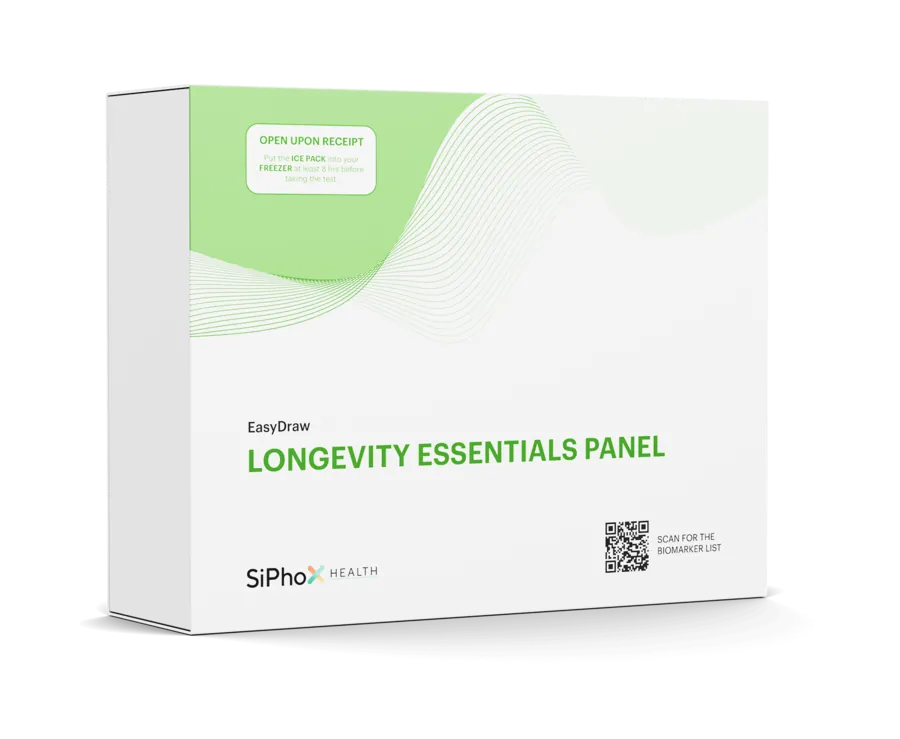
Longevity Essentials
The default panel: heart, metabolic, hormone and inflammation markers in one draw.
Check price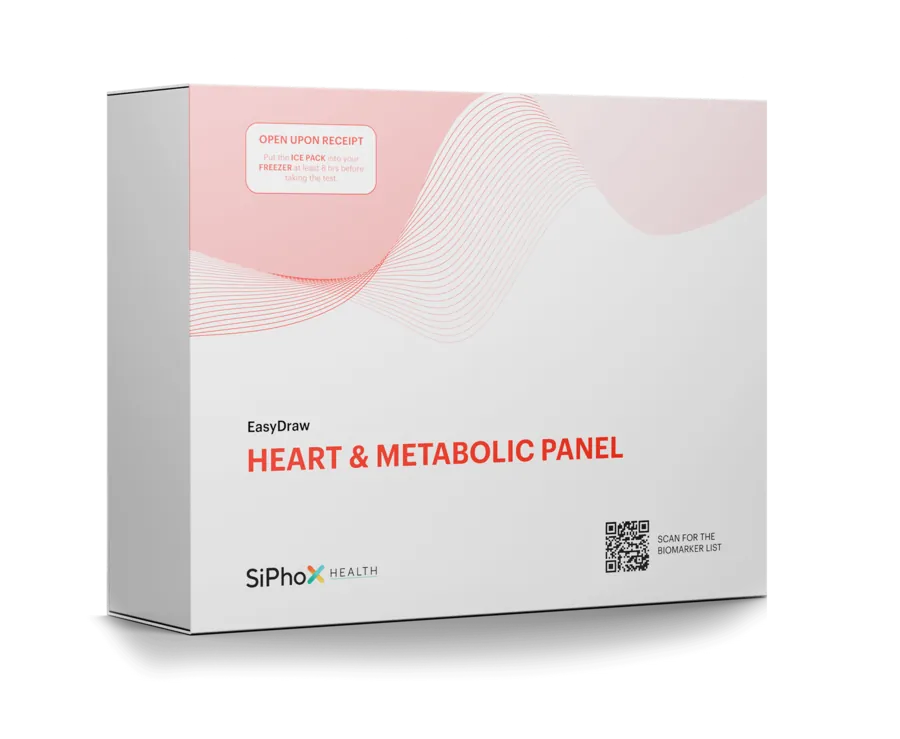
Heart & Metabolic
Lipids plus kidney and liver function: the panel for cardiovascular and metabolic risk.
Check price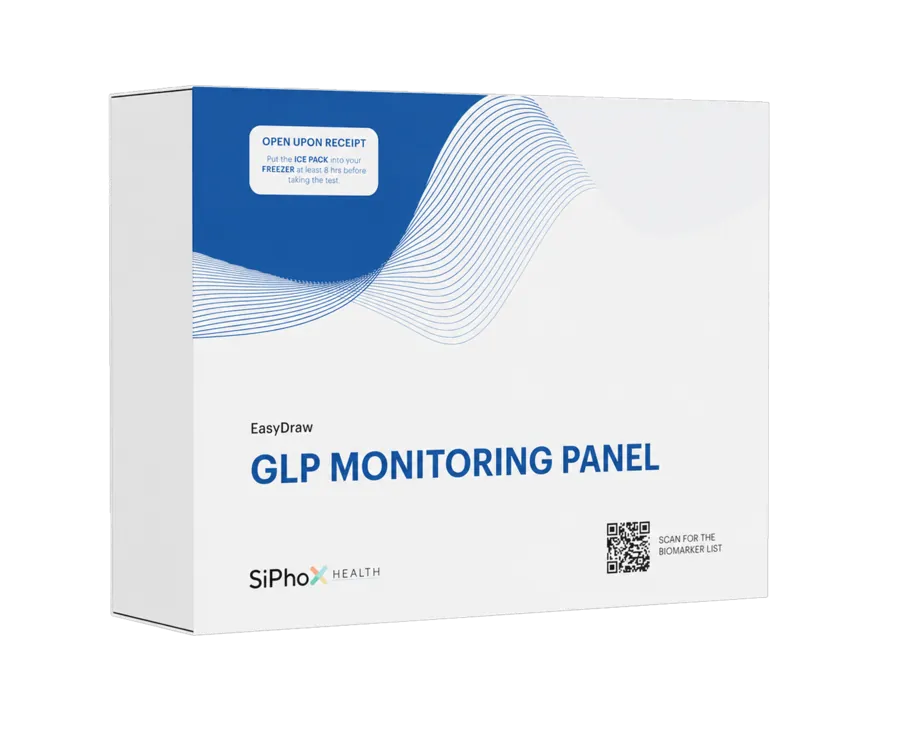
GLP Optimization
Built for people on GLP-1 medication: metabolic, liver, kidney, nutrient and iron markers.
Check price
Frequently asked questions
What is a normal fasting glucose level?
70 to 99 mg/dL (3.9 to 5.5 mmol/L) after at least 8 hours without food, according to MedlinePlus. 100 to 125 mg/dL is prediabetes and 126 mg/dL or higher usually means diabetes.
Is a fasting glucose of 100 bad?
100 mg/dL (5.6 mmol/L) is the first value in the prediabetes range. It is a warning sign, not diabetes. A repeat test or an HbA1c helps confirm where you stand, and diet, activity and weight changes can bring it back down.
How long should I fast before a glucose test?
At least 8 hours, with nothing to eat or drink except water (NIDDK, MedlinePlus). Morning tests are the most reliable.
Is estimated average glucose the same as fasting glucose?
No. Estimated average glucose is calculated from HbA1c with the formula 28.7 x HbA1c minus 46.7 and reflects the whole day, including after meals. It usually runs higher than a fasting reading.
Can I test fasting glucose at home with SiPhox?
No. SiPhox panels do not include glucose. They report HbA1c, estimated average glucose and C-peptide instead. For a fasting glucose, use a lab draw or a home glucose meter.
Sources
- NIDDK: Diabetes tests and diagnosis (ADA cutoffs table)
- MedlinePlus Medical Encyclopedia: Blood sugar test
- MedlinePlus Lab Tests: Blood glucose test
- Nathan DM et al. Translating the A1C assay into estimated average glucose values. Diabetes Care 2008
- Evaluation of an upper-arm capillary collection device against venous draws, Diagnostics (Basel) 2025
- SiPhox Health: panel comparison (checked 29 Sep 2026)
- SiPhox Health: Longevity Essentials panel, marker list and per-cycle add-ons
- SiPhox Health: GLP Optimization panel