Is there a perimenopause blood test?
Not one that settles it. Cleveland Clinic says hormone testing is not necessary to diagnose perimenopause because hormone levels fluctuate so much that the tests are not reliable, and MedlinePlus says women 45 or older usually do not need an FSH test at all. What a perimenopause blood test does well is rule out look-alikes (thyroid disease, high prolactin, pregnancy, iron deficiency from heavy periods) and set a baseline for the heart and metabolic risks that change at midlife.
| Marker | Why it matters | What a result suggests | On SiPhox |
|---|---|---|---|
| FSH | Rises as the ovaries run low on follicles | Repeatedly high values fit the late transition; a single normal value rules nothing out | Longevity (women), Hormone Focus, Ultimate 360 |
| Estradiol | Main estrogen; swings high and low in perimenopause | One value cannot stage you; very low with high FSH suggests the late transition | Longevity (women), Hormone Focus, Ultimate 360, GLP |
| LH | Rises with FSH | Adds little on its own for perimenopause | Longevity (women), Hormone Focus, Ultimate 360 |
| Progesterone | Shows whether you ovulated that cycle | Low in the second half of the cycle means no ovulation, common in perimenopause | Hormone Focus, Ultimate 360 |
| AMH | Tracks the remaining egg supply | Low AMH fits declining reserve; MedlinePlus says it cannot predict how long until menopause | Not on SiPhox |
| TSH | Thyroid disease mimics hot flashes, fatigue, mood and cycle changes | High or low TSH points to a thyroid cause | Longevity, Heart & Metabolic, Thyroid Focus, Ultimate 360, GLP |
| Prolactin | High prolactin disrupts periods | Raised values are repeated, then investigated | Hormone Focus, Ultimate 360 |
| Ferritin and hemoglobin | Heavy or frequent periods drain iron | Low ferritin or anemia is a treatable cause of fatigue | Longevity, Thyroid Focus, Ultimate 360, GLP |
| ApoB, LDL, Lp(a) | Midlife is a good time for a baseline; menopause before 40 is a guideline risk enhancer | A midlife baseline to compare against later | Longevity, Heart & Metabolic, Ultimate 360, GLP |
| HbA1c | Weight and body fat often shift in midlife | 5.7% to 6.4% is the prediabetes range | Longevity, Heart & Metabolic, Ultimate 360, GLP |
| Vitamin D | Bone loss speeds up around menopause | Under 12 ng/mL risks deficiency | Longevity, Ultimate 360, GLP |
| hCG (pregnancy) | Pregnancy is still possible until a year after the last period | A late period is not proof of perimenopause | Not on SiPhox |
How the menopause transition is staged
Researchers stage the transition with STRAW+10, a 2011 consensus system, and it is built on your cycles, not a blood number. The early transition starts when the length of your cycles varies by 7 days or more and keeps doing so. The late transition starts with a gap of 60 days or more between periods, and STRAW+10 notes FSH is often above 25 IU/L at that stage. Menopause is confirmed after 12 months with no period.
Source: STRAW+10 executive summary (Harlow et al., Menopause 2012). FSH above 25 IU/L is a supportive marker in the late transition.
This is why a period diary beats a single blood test. Cleveland Clinic puts the start of perimenopause about 8 to 10 years before menopause, usually in the mid-40s, and says it lasts about four years on average and up to eight.
When perimenopause hormone testing does help
- You are 40 or younger with missed periods or hot flashes. MedlinePlus lists premature menopause (40 or younger) and early menopause (before 45) as reasons for FSH and other hormone tests. Your doctor will usually repeat FSH and add estradiol, TSH and prolactin.
- Your symptoms are unclear, for example after a hysterectomy or ablation with no periods to track, or on hormonal contraception.
- You want to rule out a thyroid cause. TSH is cheap and thyroid problems are common in midlife women; see our hypothyroidism blood test guide.
- Your periods are heavy. Ferritin and hemoglobin catch iron deficiency, one of the most fixable reasons for feeling worn out.
What testing does not do: tell you whether you still need contraception, predict your last period, or decide whether hormone therapy suits you. Those are conversations with a clinician.
Worked example: two tests, two different answers
Illustrative numbers. A 46-year-old has cycles anywhere from 24 to 52 days apart, night sweats and poor sleep. She tests FSH and estradiol twice, a month apart, both on day 3 of her cycle:
| Marker | Month 1 | Month 2 |
|---|---|---|
| FSH | 34 IU/L | 8 IU/L |
| Estradiol | 38 pg/mL | 210 pg/mL |
| TSH | 1.9 mIU/L | Not repeated |
| Ferritin | 12 ng/mL | Not repeated |
Month 1 looks like the late transition; month 2 looks like a normal cycle. Both are true: that is what perimenopause does. Her cycle pattern (variation well over 7 days) already puts her in the early transition by STRAW+10, with or without the blood test. The useful findings are the normal TSH, which makes a thyroid cause unlikely, and the low ferritin, which fits her heavy periods and is treatable. She takes both to her doctor along with her symptom diary.
When to take a perimenopause blood test
- If you still have periods, test FSH, LH and estradiol early in the cycle, days 2 to 5, so results can be compared with standard ranges.
- Test progesterone about 7 days before your next expected period if you want to know whether you ovulated.
- Write down the cycle day on every result. Without it, hormone values are hard to read.
- Tell the reader of your results about hormonal contraception or HRT, both of which change FSH and estradiol.
- Pause high-dose biotin if advised; the FDA warns it can distort hormone tests.
Our at-home hormone test for women guide covers cycle timing for each hormone in more detail.
What an at-home test can and cannot do in perimenopause
- Show FSH, LH and estradiol on a known cycle day, and track them over time
- Rule out thyroid and iron problems that mimic perimenopause
- Record a midlife heart, blood sugar and vitamin D baseline
- Diagnose perimenopause or menopause: a diagnosis needs a clinician
- Test for pregnancy, or tell you when you can stop contraception
- Decide on hormone therapy
Best-fit SiPhox panel for perimenopause
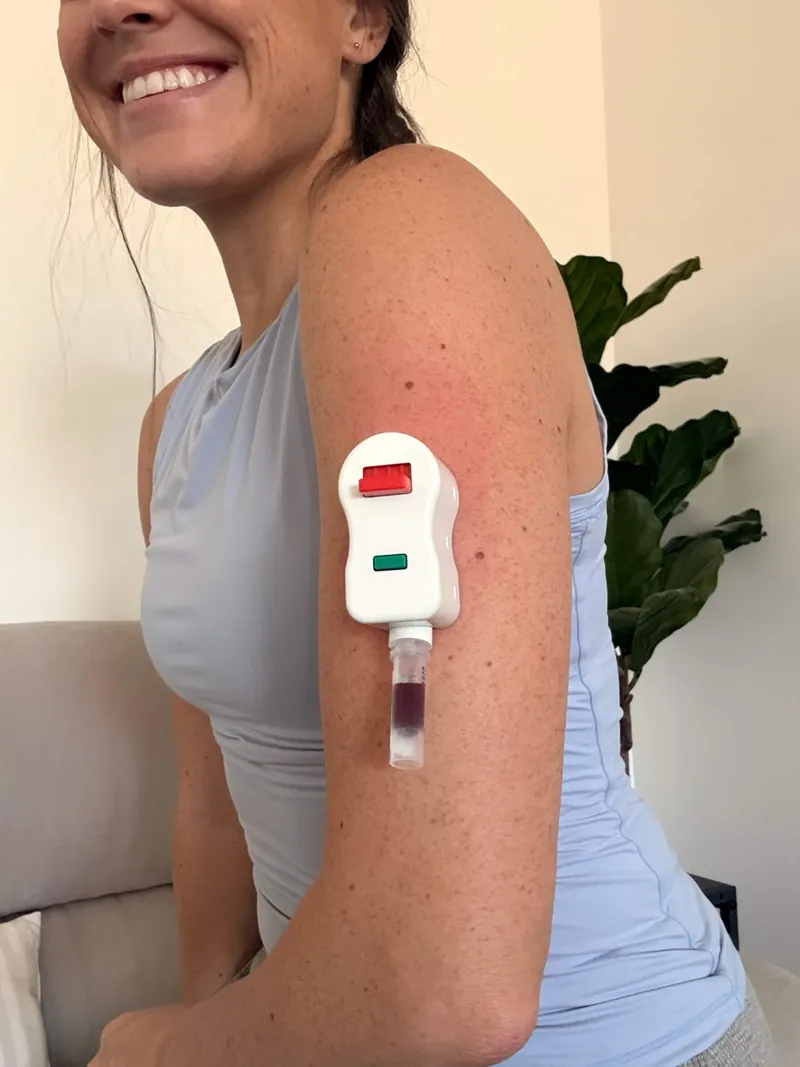
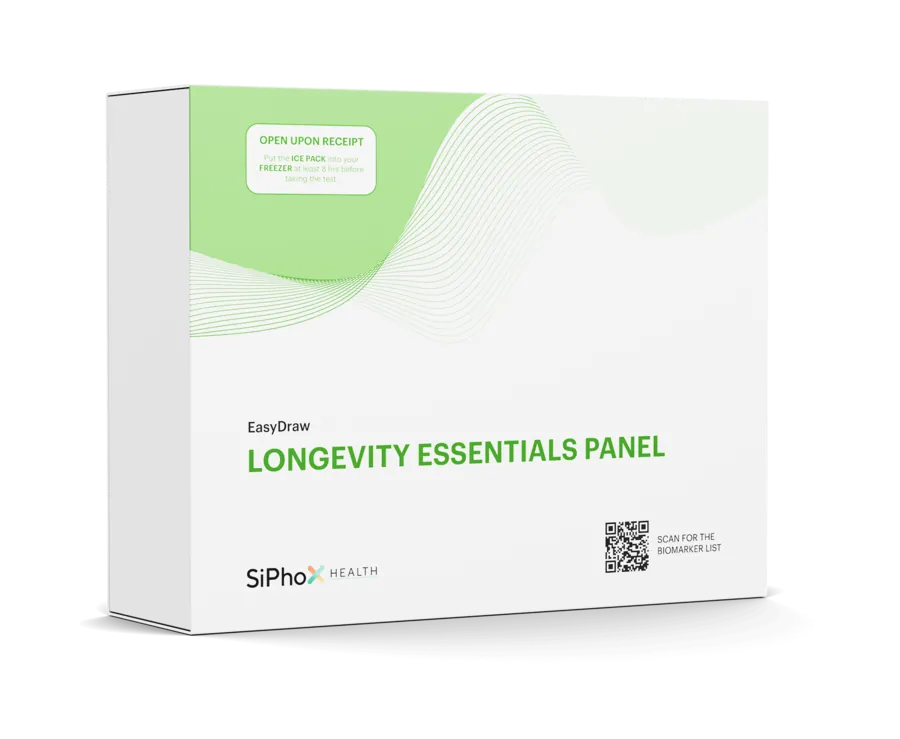
For most women in their 40s, Longevity Essentials is the better fit than a hormone-only panel. For women it reports FSH, LH, estradiol and the LH:FSH ratio alongside TSH, ferritin, vitamin D, ApoB, Lp(a), HbA1c and hs-CRP, for $124 plus $25 shipping. Hormone Focus adds progesterone, prolactin, testosterone and SHBG but has no TSH, ferritin or heart markers. Ultimate 360 has all of it for $249 plus shipping.
| If you want | Test | Choose |
|---|---|---|
| Hormones plus the midlife baseline | FSH, LH, estradiol, TSH, ferritin, vitamin D, ApoB, Lp(a), A1C | Longevity Essentials |
| To check ovulation and prolactin | Progesterone, prolactin, estradiol, FSH, LH, testosterone | Hormone Focus |
| Everything, including B12 and full thyroid | All of the above plus iron studies, free T4, antibodies | Ultimate 360 |
| A pregnancy test or AMH | Urine hCG, venous AMH | Pharmacy or your doctor |
Because SiPhox lets you switch panels each test, one approach is Longevity Essentials now and Hormone Focus a cycle or two later, timed for progesterone. For the heart side, read our heart disease risk blood test guide.
Longevity Essentials
The default panel: heart, metabolic, hormone and inflammation markers in one draw.
Check price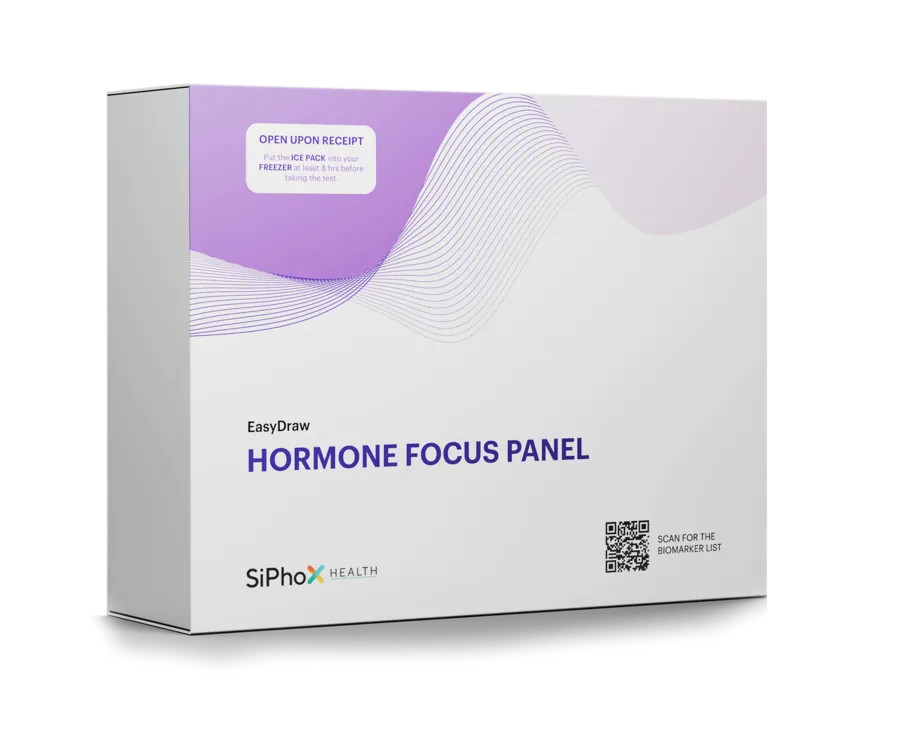
Hormone Focus
Sex hormones for men and women, including PSA for men and progesterone for women.
Check price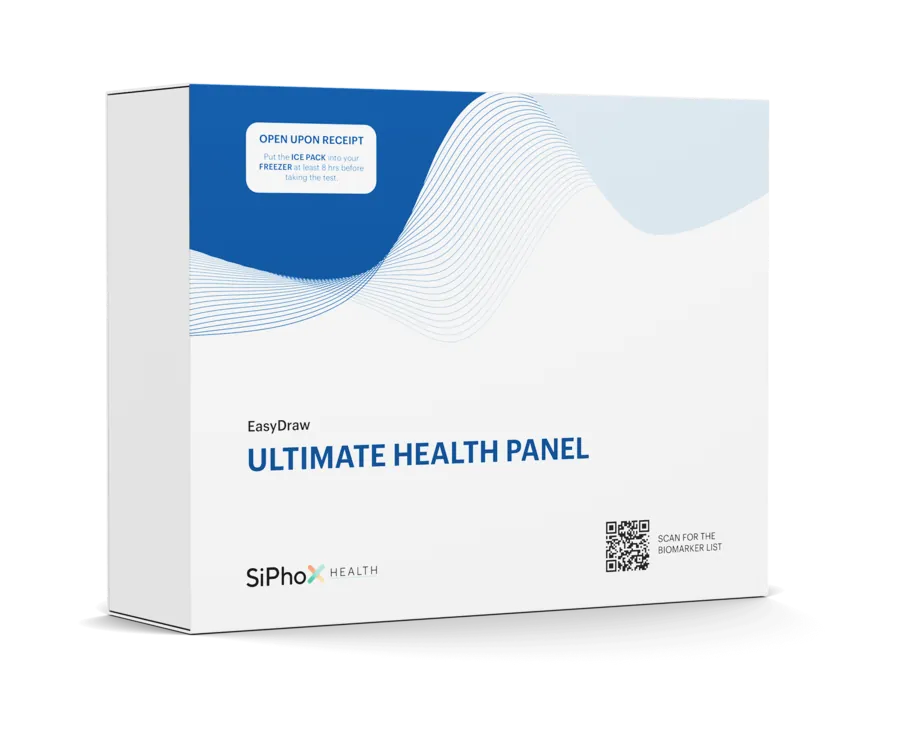
Ultimate 360
Everything on the four core panels plus iron studies, B12 and folate, GGT and PSA.
Check price
Frequently asked questions
Can a blood test tell if I am in perimenopause?
Not reliably. FSH and estradiol swing from cycle to cycle, so one normal result does not rule perimenopause out. For women 45 and older with typical symptoms, diagnosis is based on symptoms and cycle changes.
What FSH level indicates perimenopause?
There is no single cut-off. The STRAW+10 staging system notes FSH is often above 25 IU/L in the late transition, but values can drop back to normal the next month. Lab reference ranges vary.
When should I take a perimenopause blood test?
If you still have periods, test FSH, LH and estradiol on days 2 to 5 of your cycle, and progesterone about 7 days before your next period. Record the cycle day with every result.
What other blood tests are useful in perimenopause?
TSH to rule out thyroid disease, ferritin and hemoglobin if periods are heavy, and a baseline of lipids or ApoB, Lp(a), HbA1c and vitamin D for midlife heart, metabolic and bone health.
Can AMH predict menopause?
Not precisely. AMH falls as egg supply declines, but MedlinePlus says AMH results cannot predict how long you have until menopause.
Sources
- Cleveland Clinic: Perimenopause
- MedlinePlus: Follicle-stimulating hormone (FSH) levels test
- Harlow SD et al. Executive summary of STRAW+10: staging reproductive aging. Menopause 2012
- MedlinePlus: Estrogen levels test
- MedlinePlus: Luteinizing hormone (LH) levels test
- MedlinePlus: Progesterone test
- MedlinePlus: Anti-Mullerian hormone test
- MedlinePlus: TSH (thyroid-stimulating hormone) test
- MedlinePlus: Ferritin blood test
- Grundy SM et al. 2018 AHA/ACC multisociety guideline on the management of blood cholesterol. Circulation 2019
- NIDDK (NIH): Diabetes tests and diagnosis
- Ross AC et al. The 2011 report on dietary reference intakes for calcium and vitamin D from the Institute of Medicine. J Clin Endocrinol Metab 2011
- FDA: Biotin interference with lab tests
- SiPhox Health: Longevity Essentials panel and add-ons (checked 29 Sep 2026)
- SiPhox Health: Hormone Focus panel (checked 29 Sep 2026)
- SiPhox Health: Ultimate 360 panel (checked 29 Sep 2026)