Which blood tests diagnose hypothyroidism
The 2012 hypothyroidism guideline from the American Association of Clinical Endocrinologists and the American Thyroid Association makes TSH the first test, because the pituitary pushes TSH up as soon as the thyroid starts to fall behind. Free T4 confirms how far behind it is, and TPO antibodies identify autoimmune thyroiditis (Hashimoto's disease), the most common cause in the US. The same guideline says T3 should not be used to diagnose hypothyroidism.
| Marker | Why it matters | What a result suggests | On SiPhox |
|---|---|---|---|
| TSH | The most sensitive first test | High TSH means the thyroid is underperforming; many labs flag above about 4 to 4.5 mIU/L | Longevity, Heart & Metabolic, Thyroid Focus, Ultimate 360, GLP |
| Free T4 | Shows how much thyroid hormone is actually available | Low with high TSH is overt hypothyroidism; normal with high TSH is subclinical | Thyroid Focus, Ultimate 360, GLP |
| TPO antibodies | Marks autoimmune thyroiditis | Positive antibodies raise the chance that mild hypothyroidism progresses | Thyroid Focus, Ultimate 360 |
| Thyroglobulin antibodies | Second autoimmune marker | On their own, not strongly linked to thyroid disease in NHANES III | Thyroid Focus, Ultimate 360 |
| Free T3 | The active hormone | Not used to diagnose hypothyroidism; more useful in hyperthyroidism | Thyroid Focus, Ultimate 360 |
| LDL cholesterol | Hypothyroidism raises LDL | A new high LDL is a reason to check TSH | Longevity, Heart & Metabolic, Thyroid Focus, Ultimate 360, GLP |
| Ferritin and hemoglobin | Anemia and low iron share the same fatigue | Low values point to a second, separate cause of tiredness | Longevity, Thyroid Focus, Ultimate 360, GLP |
| Vitamin B12 | Autoimmune conditions cluster together | Low B12 needs its own workup | Ultimate 360, GLP |
| Creatine kinase, sodium | Can be abnormal in more severe hypothyroidism | Part of a doctor's workup, not a screen | Not on SiPhox |
Reading hypothyroidism blood test patterns
| TSH | Free T4 | Usual reading | Typical next step |
|---|---|---|---|
| High | Low | Overt (primary) hypothyroidism | Doctor visit; treatment is usual |
| Mildly high (upper limit to 10 mIU/L) | Normal | Subclinical hypothyroidism | Repeat in weeks to months; treatment is individual |
| Above 10 mIU/L | Normal | Subclinical, higher grade | The 2012 guideline says treatment is generally considered |
| Low or normal | Low | Possible pituitary (central) cause | Needs an endocrinologist |
| Normal | Normal | Thyroid unlikely to be the cause | Look for other causes of symptoms |
| Low | High | Hyperthyroidism | Doctor visit; add free T3 |
TSH is not fixed. It rises with age, varies by time of day, and can jump temporarily while recovering from an illness, which is why a single mildly high result is normally repeated before anyone acts. In NHANES III, the geometric mean TSH in people without thyroid disease was 1.40 mIU/L, higher in women and older adults. Reference ranges vary by lab, so read your number against the range printed on your report. Our TSH levels by age page shows how the range shifts.
Who should get a hypothyroidism blood test
Hypothyroidism develops slowly, and early symptoms are easy to blame on age or stress. A TSH test is worth doing if you have several of these:
- Symptoms: tiredness, feeling cold when others are not, dry skin, constipation, slower thinking, heavier or irregular periods, or a hoarse voice.
- Lab clues: a new high LDL cholesterol or mild anemia with no other explanation.
- Risk factors listed by NIDDK: being a woman, being over 60, a past thyroid problem or thyroid surgery, pregnancy in the past six months, and autoimmune conditions such as celiac disease, type 1 diabetes or rheumatoid arthritis.
- Family history of thyroid disease.
Weight is the symptom people most often ask about. The American Thyroid Association says about 5 to 10 pounds of weight gain may be thyroid-related, depending on severity, and that treatment returns weight to where it was before the hypothyroidism started. A thyroid result rarely explains a large weight gain on its own.
How common hypothyroidism is
Source: Hollowell et al., J Clin Endocrinol Metab 2002, NHANES III sample of 17,353 people aged 12 and older.
The same survey found that most people with lab evidence of thyroid disease did not know it. NIDDK adds that women are much more likely than men to develop hypothyroidism and that the risk rises after 60. Hashimoto's disease, where the immune system attacks the thyroid, is the most common cause.
Worked example: tired, TSH 7.8
Illustrative numbers. A 41-year-old woman with fatigue, dry skin and a new high LDL tests at home:
| Marker | Result | Reading |
|---|---|---|
| TSH | 7.8 mIU/L | High, below 10 |
| Free T4 | 1.0 ng/dL | Within the lab range |
| TPO antibodies | Positive | Autoimmune thyroiditis likely |
| LDL cholesterol | 148 mg/dL | Raised; can improve if hypothyroidism is treated |
| Ferritin | 55 ng/mL | Iron stores not the explanation |
This is the classic subclinical pattern with positive antibodies. The next step is her doctor, who will usually repeat TSH and free T4 to confirm it. Under the 2012 guideline, a TSH between the upper limit and 10 mIU/L is treated case by case, and positive TPO antibodies, symptoms and high LDL all count toward treatment. If she starts levothyroxine, TSH is rechecked in 6 to 8 weeks.
Testing on levothyroxine
- Timing: the American Thyroid Association says doctors check blood 6 to 8 weeks after starting or changing a thyroid hormone dose, and less often once stable.
- What to test: TSH for most people with primary hypothyroidism; free T4 when the cause is pituitary or the dose was just changed.
- Be consistent: test at the same time of day and in the same relation to your dose each time. If your doctor wants a pre-dose level, take the tablet after the draw.
- Watch interactions: pregnancy, estrogen and some medicines change thyroid hormone needs; the ATA notes more frequent monitoring in those cases.
- Biotin: the FDA warns high-dose biotin can cause falsely high or low results on some lab tests, including thyroid tests. Tell whoever reads your results if you take it.
Never change a thyroid dose based on a home result alone; your prescriber adjusts the dose.
What an at-home test can and cannot do for hypothyroidism
- Measure TSH, free T4, free T3 and both antibodies from one draw
- Retest TSH 6 to 8 weeks after a dose change without a lab trip
- Show trends over years, which matters for mild cases
- Diagnose hypothyroidism: a diagnosis needs a clinician, and usually a repeat test
- Examine the thyroid or image nodules
- Set or change a levothyroxine dose
Best-fit SiPhox panel for hypothyroidism
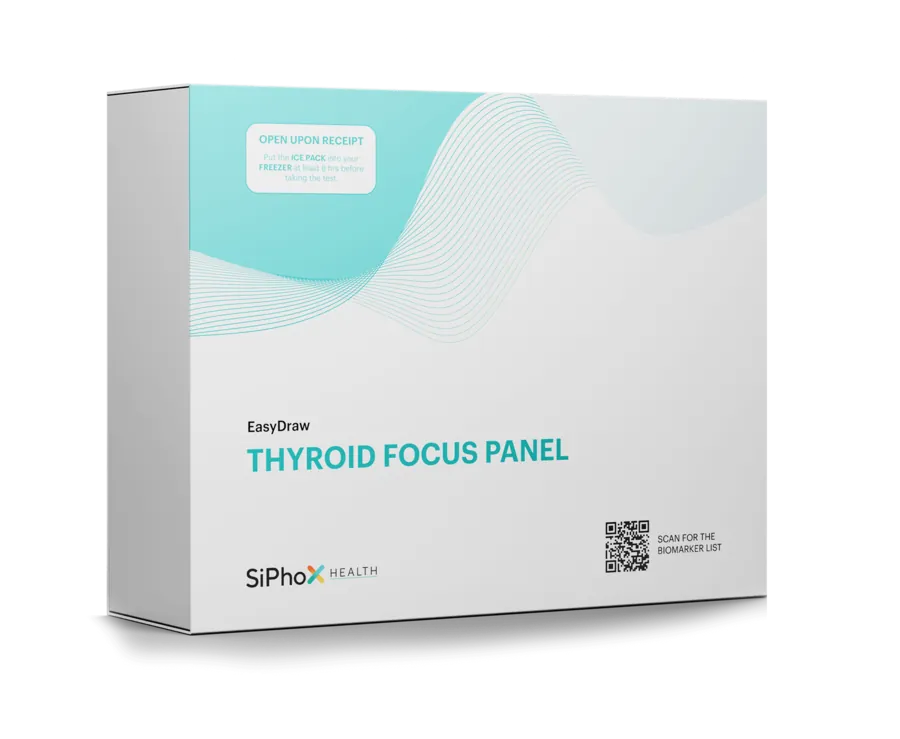
Thyroid Focus is the clear fit: TSH, free T4, free T3, TPO and thyroglobulin antibodies, the free T3:free T4 and TSH:T4 ratios, plus lipids, ferritin, hs-CRP, SHBG and liver and kidney markers, 21 in all, for $124 plus $25 shipping. Most other home thyroid kits skip thyroglobulin antibodies. Our at-home thyroid test guide compares them.
| If you want | Test | Choose |
|---|---|---|
| A full thyroid workup | TSH, free T4, free T3, TPO and Tg antibodies | Thyroid Focus |
| A TSH check inside a general panel | TSH plus heart, metabolic and hormone markers | Longevity Essentials |
| Thyroid plus iron, B12 and folate | Full thyroid, iron studies, B12, folate | Ultimate 360 |
| Ultrasound or nodule assessment | Imaging | Your doctor |
Thyroid Focus
A full thyroid workup including both thyroid antibodies, plus core lipids.
Check price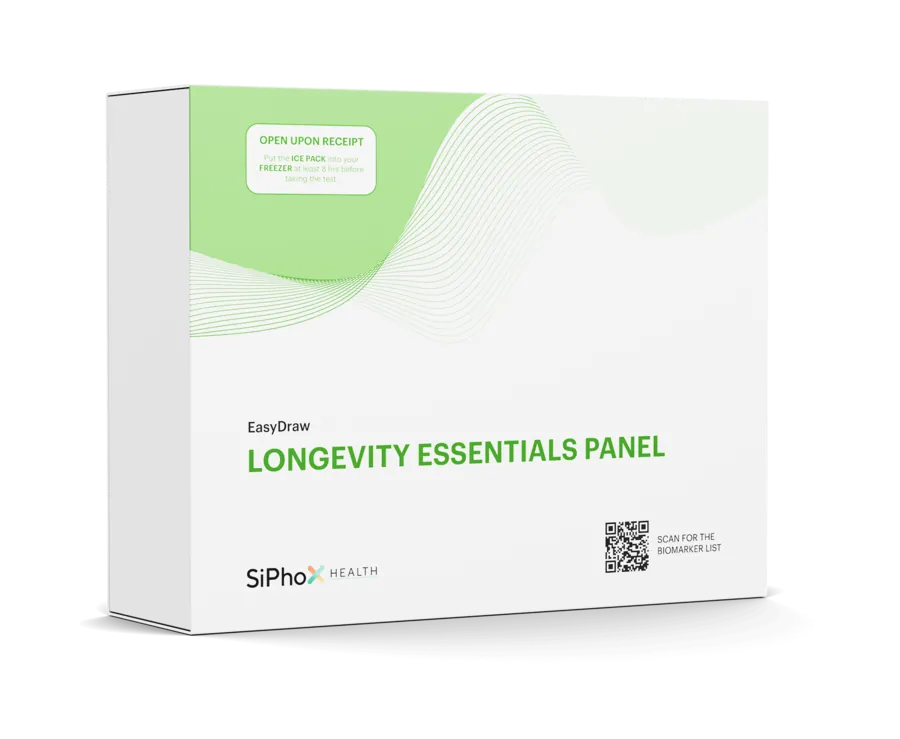
Longevity Essentials
The default panel: heart, metabolic, hormone and inflammation markers in one draw.
Check price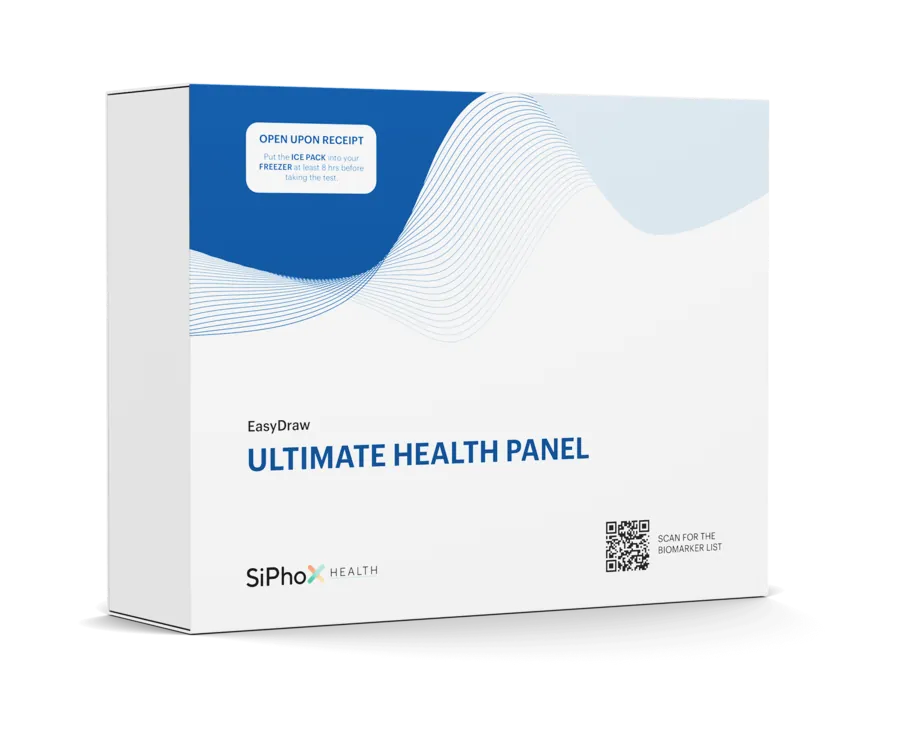
Ultimate 360
Everything on the four core panels plus iron studies, B12 and folate, GGT and PSA.
Check price
Frequently asked questions
What is the best blood test for hypothyroidism?
TSH. It rises early when the thyroid underperforms. If TSH is abnormal, free T4 confirms the diagnosis and TPO antibodies identify Hashimoto's disease as the cause.
What TSH level indicates hypothyroidism?
Many labs flag TSH above about 4 to 4.5 mIU/L. A high TSH with low free T4 is overt hypothyroidism; with normal free T4 it is subclinical. Ranges vary by lab and age.
Should T3 be tested for hypothyroidism?
Not for the diagnosis. The 2012 AACE and ATA guideline says T3 should not be used to diagnose hypothyroidism, because it often stays normal until the condition is advanced.
Can you have hypothyroidism with normal TSH?
Rarely. In central hypothyroidism, a pituitary problem, TSH can be low or normal while free T4 is low. That is why free T4 is tested when symptoms are strong or TSH does not fit.
How often should TSH be checked on levothyroxine?
About 6 to 8 weeks after starting or changing the dose, then less often once stable, as your doctor advises.
Sources
- Garber JR et al. Clinical practice guidelines for hypothyroidism in adults (AACE and ATA). Endocr Pract 2012
- Hollowell JG et al. Serum TSH, T4 and thyroid antibodies in the US population (NHANES III). J Clin Endocrinol Metab 2002
- NIDDK (NIH): Hypothyroidism (underactive thyroid)
- American Thyroid Association: Hypothyroidism
- American Thyroid Association: Thyroid function tests
- American Thyroid Association: Thyroid and weight
- MedlinePlus: TSH (thyroid-stimulating hormone) test
- MedlinePlus: Thyroid antibodies test
- FDA: Biotin interference with lab tests
- SiPhox Health: Thyroid Focus panel (checked 29 Sep 2026)
- SiPhox Health: Longevity Essentials panel and add-ons (checked 29 Sep 2026)
- SiPhox Health: Ultimate 360 panel (checked 29 Sep 2026)