What is prolactin?
Prolactin is a hormone made by the pituitary gland at the base of the brain. Its main job is to make breast tissue grow during pregnancy and produce milk after birth, so levels are normally high in pregnant women and new mothers and low in everyone else.
Too much prolactin (hyperprolactinemia) matters beyond breastfeeding. MedlinePlus explains that in women it can disrupt how the ovaries work, causing period problems and infertility; in men it can affect the testicles, lowering sex drive and causing erectile dysfunction. In anyone who is not pregnant or breastfeeding, it can trigger breast milk production. High prolactin is one of the causes doctors check for when testosterone is low or periods stop.
Prolactin normal range
| Group | MedlinePlus | ARUP |
|---|---|---|
| Men | Under 20 ng/mL | 2.1 to 17.7 ng/mL |
| Women, not pregnant | Under 25 ng/mL | 2.8 to 29.2 ng/mL |
| Pregnant women | Under 500 ng/mL | Not listed |
ng/mL and µg/L are the same number. ARUP also lists 1.8 to 20.3 ng/mL for postmenopausal women and notes that pregnancy, breastfeeding and birth control pills can all raise prolactin. If your report uses a different unit, check it before comparing with these ranges.
ARUP Laboratories. MedlinePlus uses under 20 ng/mL for men and under 25 ng/mL for women who are not pregnant.
What high prolactin means
MedlinePlus says the most common cause of high prolactin is a prolactinoma, a benign (noncancerous) tumor of the pituitary gland that makes prolactin. Other causes include:
- Other pituitary tumors or diseases, and disorders of the hypothalamus
- An underactive thyroid (check TSH)
- Kidney disease and cirrhosis of the liver
- Polycystic ovary syndrome (PCOS) in women
- Chest wall injury or irritation, including nipple rings
- Macroprolactin, where prolactin molecules are cleared from the blood abnormally
Medicines that raise prolactin
MedlinePlus lists antidepressants, butyrophenones and phenothiazines (antipsychotics), risperidone, estrogens, H2 blockers, metoclopramide, opioids and verapamil. Marijuana products can raise it too. If you take one of these and your prolactin is high, do not stop the medicine yourself; your doctor may adjust it or check whether it is the cause.
Prolactin and low testosterone
A prolactin-producing pituitary tumor is on MedlinePlus's list of causes of low testosterone, and high prolactin in men can lower sex drive and cause erectile dysfunction. So if a man's testosterone is low, and especially if LH is not raised to compensate, prolactin is worth checking with your doctor.
Interpreting a high result is complicated enough that MedlinePlus says most people will be referred to an endocrinologist. If a prolactinoma is suspected, an MRI of the pituitary is usually next. Treatment depends on the cause; MedlinePlus says it is usually medicine, with surgery needed for certain pituitary tumors. The Endocrine Society publishes a guideline on working through the causes and treating prolactinomas.
Worked example: a prolactin of 38 on an antidepressant
Say a 29-year-old woman whose periods have stopped gets a prolactin of 38 ng/mL. That is above both MedlinePlus's under 25 ng/mL and ARUP's 2.8 to 29.2 ng/mL range for women. She takes an antidepressant, and the blood was drawn after a hard morning workout.
Several things on this page could explain it. Antidepressants are on MedlinePlus's list of medicines that raise prolactin, and recent exercise and stress raise it for a short time. A prolactinoma is still the most common cause overall, so the result needs follow-up, and pregnancy, where the limit is 500 ng/mL, should be ruled out.
Questions for the doctor: Can we repeat it rested and fasting, at the time the lab recommends? Should we check TSH and kidney function? If it stays high, is a macroprolactin test or a pituitary MRI next? Could my antidepressant be the cause, and is there an alternative? Do not stop the medicine on your own.
What low prolactin means
Low prolactin is rare. It can be a sign of a pituitary disorder, and in a woman who has just given birth it can mean she does not make enough milk to breastfeed, which is usually the only symptom.
What can raise prolactin temporarily
Prolactin reacts to everyday things. MedlinePlus lists these temporary causes:
- Emotional or physical stress
- High-protein meals
- Recent exercise
- Sex, intense breast stimulation or a recent breast exam
That is why a mildly high prolactin is often simply repeated. MedlinePlus says the repeat may be done in the early morning after an 8-hour fast.
How to test prolactin
- No special preparation is needed for a first test, but results are cleanest after a calm morning: avoid exercise, a big protein meal, sex and breast stimulation beforehand.
- If a result is high, repeat it in the early morning after an 8-hour fast before anyone draws conclusions.
- List every medicine, including antidepressants, antipsychotics, stomach and nausea medicines, and opioids.
- If the repeat is still high, ask your doctor about thyroid and kidney tests and, if needed, a macroprolactin check.
Common questions about prolactin
What time of day should prolactin be tested?
MedlinePlus's lab test guide says the sample is usually scheduled 3 to 4 hours after you wake up, and you may be asked to fast for several hours. Its encyclopedia entry says a repeat may be done in the early morning after an 8-hour fast. Ask the lab which timing it wants, and use the same timing for every retest.
What are the symptoms of high prolactin?
In women, MedlinePlus lists irregular or absent periods, breast milk when not pregnant or breastfeeding, nipple discharge and infertility. In men, it lists nipple discharge, erectile dysfunction, enlarged breasts (gynecomastia), less facial and body hair and low sex drive. Because high prolactin can lower testosterone, men usually have both read together.
Which at-home tests include prolactin
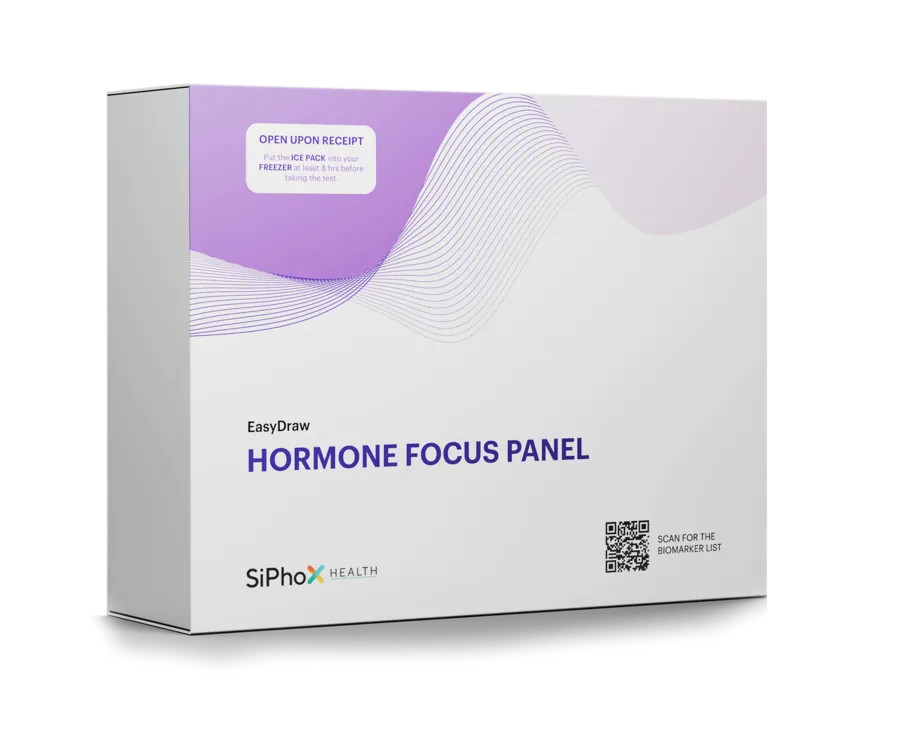
SiPhox Health measures prolactin on two panels: Hormone Focus (included in the base $124 a test price) and Ultimate 360 (+$125 a test). Longevity Essentials, Heart & Metabolic, Thyroid Focus and GLP Optimization do not include it.
Hormone Focus is a good fit if you want to look at prolactin in context: it pairs it with total and free testosterone, estradiol, LH, FSH, progesterone and DHEA-S, which covers the usual questions behind low sex drive or irregular periods. A home draw lets you collect calmly in the morning after fasting. Compare kits in our at-home hormone test guide for women or the testosterone test guide for men.
A note on home samples: SiPhox's partner lab tests capillary blood collected from the upper arm. SiPhox says its results show a 95% to 99% correlation with venous draws in its own quarterly comparisons against Labcorp and Quest, but it has not published a study of the EasyDraw device. If a result would change a treatment decision, confirm it with a venous test through your doctor.
Hormone Focus
Sex hormones for men and women, including PSA for men and progesterone for women.
Check price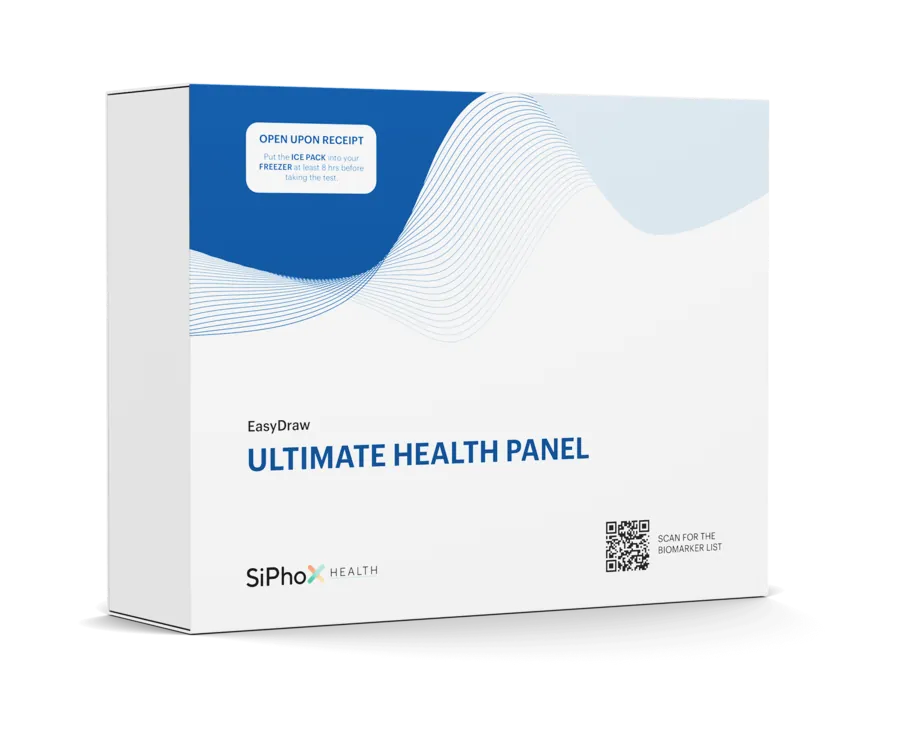
Ultimate 360
Everything on the four core panels plus iron studies, B12 and folate, GGT and PSA.
Check priceFrequently asked questions
What is a normal prolactin level?
Under 20 ng/mL for men and under 25 ng/mL for women who are not pregnant (MedlinePlus). ARUP uses 2.1 to 17.7 ng/mL for men and 2.8 to 29.2 ng/mL for women.
What is the most common cause of high prolactin?
A prolactinoma, a benign pituitary tumor that makes prolactin, according to MedlinePlus. Other causes include medicines, an underactive thyroid, kidney disease and stress.
Can stress raise prolactin?
Yes, occasionally. Emotional or physical stress, exercise, high-protein meals and breast stimulation can all raise prolactin for a short time, so a mildly high result is usually repeated.
What are the symptoms of high prolactin in men?
Lower sex drive and erectile dysfunction, and occasionally breast milk production. High prolactin can also lower testosterone.
Sources
- MedlinePlus Medical Encyclopedia: Prolactin blood test
- MedlinePlus Lab Tests: Prolactin levels
- ARUP Laboratories Test Directory: Prolactin
- Melmed S et al. Diagnosis and treatment of hyperprolactinemia: an Endocrine Society clinical practice guideline. J Clin Endocrinol Metab 2011
- SiPhox Health: panel comparison (checked 29 Sep 2026)
- SiPhox Health: Hormone Focus panel