Quick answer
Every reliable vitamin D test at home measures 25-hydroxyvitamin D, written 25(OH)D, which MedlinePlus calls the most accurate way to see whether you have enough. The NIH Office of Dietary Supplements, using the National Academies' cut-offs, says under 12 ng/mL (30 nmol/L) is deficient, 12 to 19 ng/mL may be inadequate, 20 ng/mL (50 nmol/L) or more is sufficient for most people, and over 50 ng/mL (125 nmol/L) can be linked to harm.
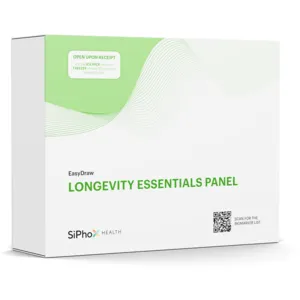
A walk-in Labcorp test cost $99 ($74.25 on sale) on September 29, 2026 and needs no fasting. SiPhox Health includes vitamin D on Longevity Essentials ($124), GLP Optimization and Ultimate 360, collected at home from the upper arm with no needle.
Vitamin D results: the cut-offs
NIH Office of Dietary Supplements fact sheet (National Academies cut-offs); Endocrine Society 2011 guideline. The 2024 Endocrine Society update set no target.
| ng/mL | nmol/L | NIH ODS (National Academies) | Endocrine Society 2011 |
|---|---|---|---|
| Under 12 | Under 30 | At risk of deficiency | Deficient |
| 12 to 19 | 30 to 49 | Possibly inadequate | Deficient |
| 20 to 29 | 50 to 74 | Sufficient for most people | Insufficient |
| 30 to 50 | 75 to 125 | Sufficient | Target range |
| Over 50 | Over 125 | Possible adverse effects | Target runs to 100 |
This is why two people can read the same number differently. The 2011 Endocrine Society guideline aimed for 30 ng/mL or more, and many lab reports still flag anything under 30. Its 2024 replacement dropped a target altogether, finding no clear evidence for an optimal level in healthy people. To convert, multiply ng/mL by 2.5 for nmol/L. Assays differ between labs, so track your result on the same lab over time. Our vitamin D levels guide covers low-level symptoms and causes.
ng/mL to nmol/L, and a worked example
US labs usually report vitamin D in ng/mL; Canadian, UK and many European labs use nmol/L. Multiply ng/mL by 2.5 to get nmol/L, or divide nmol/L by 2.5 to go the other way. Our lab unit converter does it for any marker.
| ng/mL | nmol/L | NIH ODS reading |
|---|---|---|
| 10 | 25 | At risk of deficiency |
| 12 | 30 | Deficiency cut-off |
| 20 | 50 | Sufficient for most people |
| 30 | 75 | Sufficient; the old Endocrine Society target |
| 40 | 100 | Sufficient |
| 50 | 125 | Upper line; above this, possible harm |
Say Ana, 50, spends most of the day indoors and gets 18 ng/mL (45 nmol/L) in March. The NIH calls that possibly inadequate; a lab still using the 2011 Endocrine Society bands would flag it as deficient. Her doctor suggests a daily supplement and a retest in a few months. In July she gets 29 ng/mL (72.5 nmol/L). Some of that rise is the supplement and some is summer sun, so the fairer comparison is next March. Two tests a few months apart cost 2 x $99 = $198 at Labcorp OnDemand list price ($148.50 on sale), or $124 + $149 = $273 for two SiPhox Longevity Essentials kits, which also bring ferritin, ApoB, HbA1c and hormones.
Who actually needs a vitamin D test
Here the evidence is more cautious than the marketing. The US Preventive Services Task Force (2021) found the evidence insufficient to recommend screening adults without symptoms, and the 2024 Endocrine Society guideline suggests against routine testing in healthy people, including those with obesity or darker skin. MedlinePlus also says routine testing is not recommended for everyone.
Testing makes more sense if you have:
- Bone problems such as osteoporosis or a low-trauma fracture, or bone pain and muscle weakness
- A condition that limits absorption (celiac disease, Crohn's, weight-loss surgery) or kidney or liver disease
- Very little sun exposure, or take medicines that affect vitamin D
- Started a high-dose supplement and want to check you are not overshooting
If you are healthy and simply curious, the case for paying for vitamin D alone is weak. The case gets better when it rides along in a panel you want for other reasons, which is how SiPhox includes it.
What moves your vitamin D level
The NIH Office of Dietary Supplements lists the groups most likely to run low: older adults, whose skin makes less vitamin D; people who get little sun; people with darker skin; people with conditions that limit fat absorption, such as Crohn's or celiac disease; people with obesity or who have had gastric bypass surgery; and breastfed infants. Season matters for everyone, since skin makes most of its vitamin D from summer sun.
| Age | Recommended intake (RDA) | Upper limit |
|---|---|---|
| 1 to 70 | 600 IU (15 mcg) a day | 4,000 IU (100 mcg) from age 9 |
| 71 and over | 800 IU (20 mcg) a day | 4,000 IU (100 mcg) |
The upper limit is the reason a retest matters for anyone on a high-dose supplement. The ODS notes that vitamin D toxicity almost always comes from supplements rather than sun or food, and that levels above 50 ng/mL have been linked to harm. A retest a few months after starting or changing a dose tells you where you have landed; after that, once a year is usually enough unless your doctor says otherwise.
Vitamin D test cost
| Option | Price seen 29 Sep 2026 | Also includes | Collection |
|---|---|---|---|
| Labcorp OnDemand vitamin D | $99 list ($74.25 on sale) | Nothing else | Venous draw at Labcorp |
| SiPhox Longevity Essentials | $124 + $25 shipping ($99 first test advertised) | 30 markers incl. ferritin, ApoB, HbA1c, hormones | At home, upper arm |
| SiPhox GLP Optimization | $199 + $25 shipping | 45 markers incl. B12, folate, iron panel | At home, upper arm |
| SiPhox Ultimate 360 | $249 + $25 shipping | 61 markers | At home, upper arm |
| Through your doctor | Often covered if there is a medical reason | Varies | Venous draw |
With insurance and a medical reason, your doctor is usually the cheapest route. Without one, compare cost per marker: our at-home blood test cost guide and cost calculator do the maths. SiPhox kits are HSA and FSA eligible.
Prices seen 29 Sep 2026. SiPhox prices include $25 US shipping and 30 to 61 other markers.
SiPhox panels with vitamin D
| Panel | Vitamin D (25-OH) | Other nutrients |
|---|---|---|
| Longevity Essentials | Yes | Ferritin |
| GLP Optimization | Yes | B12, folate, ferritin, full iron panel |
| Ultimate 360 | Yes | B12, folate, ferritin, full iron panel |
| Heart & Metabolic, Thyroid Focus, Hormone Focus | No | Ferritin on Thyroid Focus only |
If you are supplementing, a useful pattern is Longevity Essentials now and again a few months later, switching to other panels between. Vitamin D sits well next to ferritin and B12 for anyone checking nutrient status, and next to heart markers for anyone on a longevity panel.
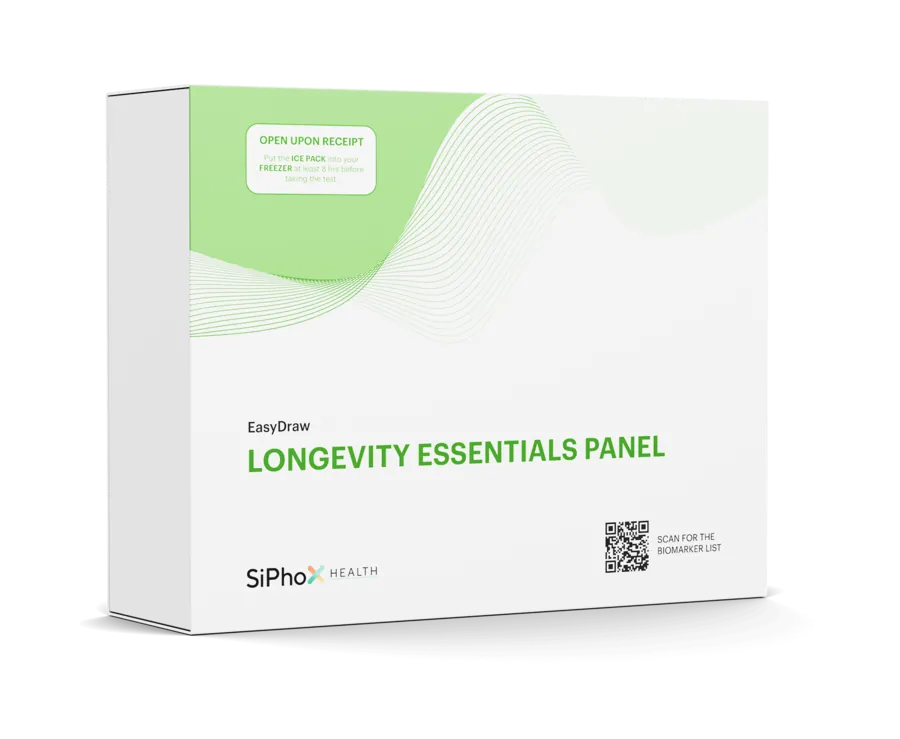
Longevity Essentials
The default panel: heart, metabolic, hormone and inflammation markers in one draw.
Check price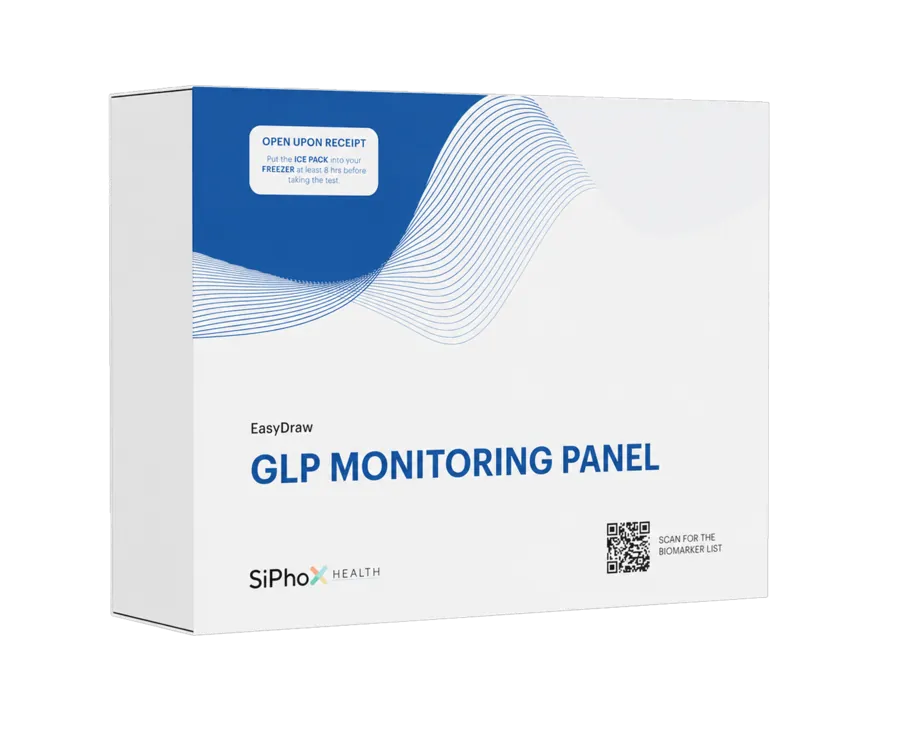
GLP Optimization
Built for people on GLP-1 medication: metabolic, liver, kidney, nutrient and iron markers.
Check price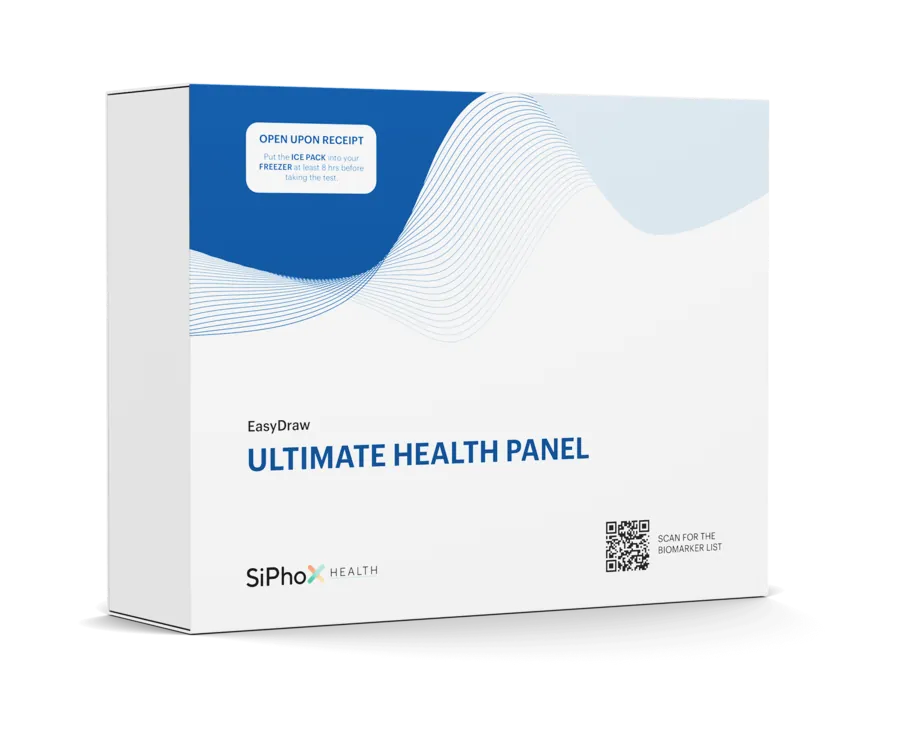
Ultimate 360
Everything on the four core panels plus iron studies, B12 and folate, GGT and PSA.
Check priceWhich vitamin D test to choose
| If you | Best route | Why |
|---|---|---|
| Have bone disease, an absorption problem or a medical reason | Your doctor | Often covered by insurance with a reason |
| Want one vitamin D number and nothing else | Labcorp OnDemand | $99 list, $74.25 on sale, lab visit |
| Take a high-dose supplement and want to check the level | SiPhox Longevity Essentials, a few months after starting | $149 ($124 first test), no needle, with ferritin and heart markers |
| Are on GLP-1 medication and eating less | SiPhox GLP Optimization | $224, vitamin D with B12, folate and iron |
| Want a full nutrient and organ check once a year | SiPhox Ultimate 360 | $274 for 62 markers |
| Are healthy and only curious | Probably no test | USPSTF and the 2024 Endocrine Society guideline do not support routine screening |
The last row is the honest one. If vitamin D is the only reason you are buying a test, the evidence says you can skip it. If you want a broader panel anyway, vitamin D rides along on Longevity Essentials at no extra cost, and our SiPhox review covers the rest of that panel.
Getting a result you can use
- No fasting needed for vitamin D, per MedlinePlus. If the panel includes lipids or iron, follow the stricter rule for those.
- Mind the season. Levels are usually higher after summer than after winter, so compare like with like.
- Retest after a change in dose rather than on a fixed schedule, and give the new dose a few months to settle.
- Keep the units straight. 30 on a ng/mL report is 75 on a nmol/L report.
- Use the same lab each time. 25(OH)D assays differ, so a change of 3 or 4 ng/mL between two different labs may be the method rather than you. Stick with one provider for a series of tests so the method stays the same.
- Write down your dose and the date you started it, so the retest a few months later can be read against a known change.
A result under 12 ng/mL, or above 50 ng/mL while you take supplements, is one to review with your doctor. For how capillary samples compare with a lab draw, read are at-home blood tests accurate.
Frequently asked questions
How much does a vitamin D test cost?
Labcorp OnDemand listed its 25-OH vitamin D test at $99 ($74.25 on sale) on September 29, 2026. SiPhox includes vitamin D in panels from $124 plus $25 shipping, with 30 other markers.
Are at-home vitamin D tests accurate?
Mail-in kits send blood to a certified lab that runs the same 25(OH)D assay types as a clinic. Accuracy depends on getting a good sample and on the assay, which varies between labs, so track results from the same lab.
What is a normal vitamin D level?
The NIH Office of Dietary Supplements says 20 ng/mL (50 nmol/L) or more is sufficient for most people, under 12 ng/mL is deficient, and over 50 ng/mL may cause harm. Many labs still flag results under 30 ng/mL.
Should I get my vitamin D tested?
Routine testing of healthy adults is not recommended by the USPSTF (insufficient evidence) or the 2024 Endocrine Society guideline. It makes sense with bone disease, absorption problems, little sun exposure or high-dose supplements.
Do I need to fast for a vitamin D test?
No, MedlinePlus says no special preparation is needed. Fast only if the same sample is also used for lipids, glucose or iron.
Sources
- NIH Office of Dietary Supplements: Vitamin D fact sheet for health professionals
- MedlinePlus: Vitamin D test
- Demay MB et al. Vitamin D for the prevention of disease: Endocrine Society guideline. JCEM 2024
- Holick MF et al. Evaluation, treatment and prevention of vitamin D deficiency: Endocrine Society guideline. JCEM 2011
- USPSTF: Vitamin D deficiency in adults, screening (2021)
- Labcorp test 081950: Vitamin D, 25-hydroxy
- Labcorp OnDemand: Vitamin D test price
- SiPhox Health panel comparison (checked 29 Sep 2026)
- SiPhox Health: Longevity Essentials EasyDraw panel and price
- SiPhox Health: GLP Optimization panel
- SiPhox Health: Ultimate 360 EasyDraw panel