Short answer
Are at home blood tests accurate? For most common markers, yes, if three things go right: enough blood is collected cleanly, it reaches the lab in good condition, and the lab is certified and has validated its method for that sample type. A 2025 study of an upper-arm collection device found 17 of 19 routine chemistry tests met CLIA accuracy limits against venous blood. A 2022 study of home HbA1c kits found one kit within 5% of the lab value 82% of the time and another only 29% of the time. So the honest answer is: it depends on the method, the marker and the company.
The four ways to collect blood
| Method | How it works | Sample | Examples |
|---|---|---|---|
| Venous draw | A phlebotomist draws from a vein at a lab or at home | Several milliliters of blood | Quest, Labcorp, Function Health, Superpower |
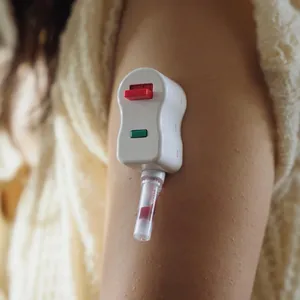
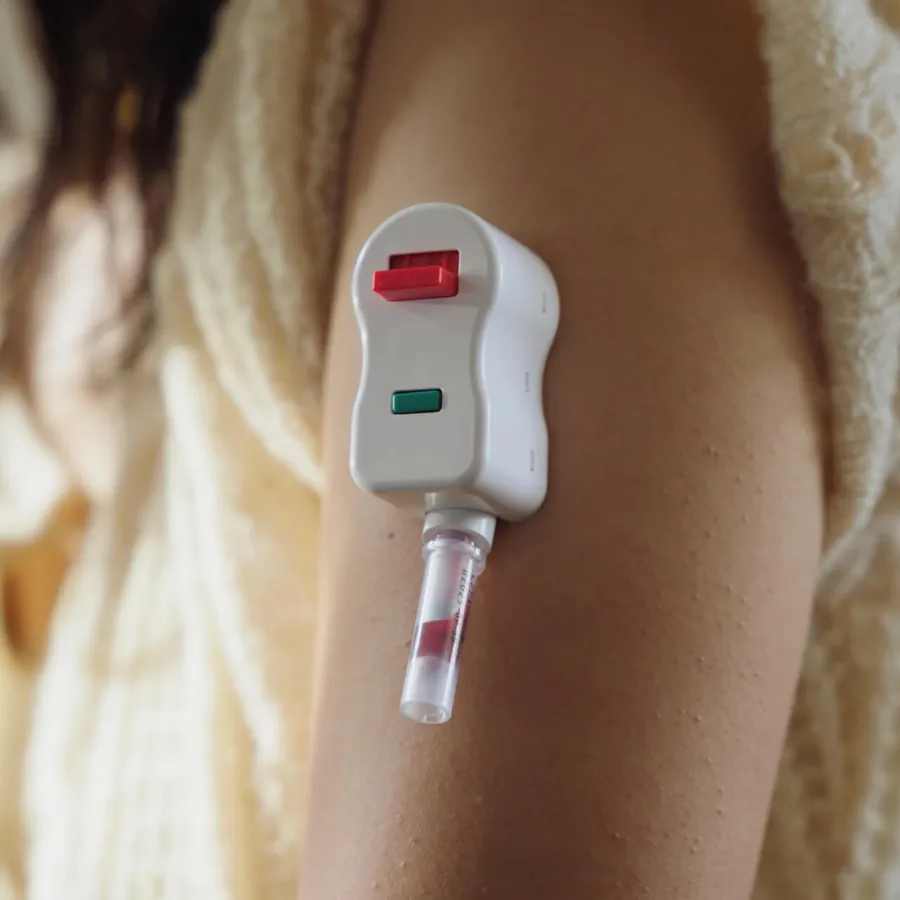
| Upper-arm device | A small device on the upper arm uses tiny lancets and vacuum to fill a tube | Hundreds of microliters (about 538 in one study) | SiPhox EasyDraw, Rythm, Tasso+, Labcorp Comfort Draw |
| Finger prick into a tube | You lance a fingertip and drip blood into a small tube | A few drops to a small tube | Many single-marker mail-in kits |
| Dried blood spot | Drops of finger-prick blood dry on a filter card | A few spots on paper | Many HbA1c and hormone mail-in kits |
Everything except the venous draw collects capillary blood, which is a mix of blood from tiny vessels plus some fluid from the surrounding tissue. For most markers capillary and venous values agree closely. For a few they do not, and that is where most accuracy problems start.
What the evidence says for each method
Upper-arm devices
The best recent evidence is a July 2025 study in Diagnostics of Labcorp's upper-arm vacuum device. Across 54 people it collected a mean of 538 microliters, and 95.1% of people gave at least 100 microliters of serum. Seventeen of 19 analytes, including cholesterol, HDL, LDL, triglycerides, ALT, AST, albumin and CRP, met CLIA acceptance limits. Glucose did not: only 56.8% of results were within limits, with a mean bias of +8.6%. Potassium also failed, at 61.5% within limits and a bias of +0.26 mmol/L. Average pain was 0.39 out of 10.
Share of paired results within CLIA acceptance limits, Diagnostics (Basel) 2025, Labcorp upper-arm device (PMC12345872). Mean bias: glucose +8.6%, potassium +0.26 mmol/L, cholesterol +1.0%, LDL +0.3%, hs-CRP +2.3%. The authors judged 17 of 19 analytes acceptable; 13 of 19 shown.
Three more figures from the same study are worth knowing. The collection target of at least 400 microliters of blood was reached in 85.4% of samples (35 of 41), so roughly 1 in 7 draws came up short of that goal even in a supervised study. The hemolysis index averaged 4.1 for the arm samples against 4.9 for venous, so the device did not burst more red cells than a needle did. And the markers that did best (the lipid panel, hs-CRP, ALP) are the ones home panels are mostly bought for.
A 2023 study of the Tasso+ upper-arm device for liver chemistry found almost perfect agreement with venous blood for ALT, ALP, AST and total bilirubin. Potassium agreed poorly because of hemolysis (burst red cells), and whole-blood glucose read low because cells kept consuming sugar during refrigerated shipping.
Finger prick
Finger-prick blood varies more from drop to drop than venous blood. A 2015 Rice University study found drop-to-drop variability 2.3 to 3.4 times higher for hemoglobin and about 4 times higher for platelets, and in some donors hemoglobin changed by more than 2 g/dL between two consecutive drops. Averaging several drops fixed most of it. That matters most for blood counts, less for chemistry markers.
Kit quality matters as much as the method. In the 2022 Diabetes Technology and Therapeutics study of 219 people, home HbA1c results were within 5% of the reference lab for 82% of Home Access samples, 46% of A1cNow+ and 29% of CoreMedica. None met the standardization program's goal of 90% within 5%. Our at-home A1C test guide covers the options.
Diabetes Technology and Therapeutics 2022, 219 participants (PubMed 35763337). The goal is the standardization program target of 90% of results within 5%.
Dried blood spots
A 2014 meta-analysis of 16 studies found close agreement between dried blood spot and venous HbA1c for most assay types. Lipids were harder: total cholesterol needed significant adjustment to match venous values, while triglycerides were directly comparable. In practice, a dried spot result is only as good as the lab's conversion to venous-equivalent values, which is why cholesterol from a card is less trustworthy than HbA1c from a card.
CLIA and CAP: the lab matters most
A home kit is mostly a collection method. The number you get comes from a laboratory, so check the lab first.
- CLIA is the set of federal standards for every US facility that tests human specimens for health assessment or diagnosis, overseen by CMS with the CDC and FDA. A lab without CLIA certification should not be reporting your results.
- CAP accreditation is a stricter, voluntary layer. The College of American Pathologists inspects accredited labs on site every two years using detailed checklists, and CMS accepts CAP inspections in place of its own.
- Validation for the sample type. A lab can be certified and still run a test that was validated on venous blood but not on capillary or dried samples. Ask whether each marker was validated for the kit's collection method.
Markers most likely to go wrong
| Marker | Problem at home | What to do |
|---|---|---|
| Potassium | Burst red cells release potassium and push results falsely high; even clenching your fist can raise it | Do not trust a high home potassium; recheck by venous draw |
| Glucose | Keeps falling in the tube during shipping; capillary reads higher than venous | Use HbA1c for trends instead |
| Blood counts (CBC) | High drop-to-drop variation in finger-prick blood | Prefer venous or larger capillary samples |
| Lipids on dried spots | Need calibration to match venous values | Prefer a liquid sample for cholesterol and ApoB |
| Testosterone | Varies through the day; highest between 7 and 10 a.m. | Always test in the morning, same time each test |
| hs-CRP | Rises with any infection or injury | Do not test when unwell; see hs-CRP |
What bias does to a real number
Company accuracy claims usually quote a correlation coefficient. Correlation only tells you that results rise and fall together; bias tells you how far off each result sits. The mean biases from the 2025 upper-arm study show why the difference matters.
Say your true venous values are total cholesterol 200 mg/dL, LDL 130 mg/dL, hs-CRP 2.0 mg/L, glucose 95 mg/dL and potassium 4.5 mmol/L. Applying the study's mean biases, the arm sample would read about 202 for cholesterol (+1.0%), 130.4 for LDL (+0.3%) and 2.05 for hs-CRP (+2.3%): differences too small to change any decision. Glucose would read about 103 mg/dL (95 x 1.086) and potassium about 4.76 mmol/L (4.5 + 0.26), and those are averages, so single samples can be further off. A device can correlate at 0.99 with venous blood and still carry that 8.6% glucose shift, which is why a correlation figure alone does not prove accuracy.
The practical rule: trust home results most for the markers with small, well-studied biases (the lipid panel, hs-CRP and liver enzymes in the upper-arm studies, and HbA1c in the dried-spot meta-analysis), compare trends within one service, and confirm anything that would change treatment with a venous draw.
Which collection method for which goal
| If you want | Choose | Why |
|---|---|---|
| A diagnosis, or a result that will change medication | Venous draw ordered by your doctor | The reference method; results feed straight into your medical record |
| Glucose, potassium or a full blood count | Venous draw at a lab | These failed or varied most in capillary studies |
| A single HbA1c check at the lowest price | A lab HbA1c order ($39 at Labcorp OnDemand) or a well-rated kit | Home kits ranged from 29% to 82% within 5% of the lab |
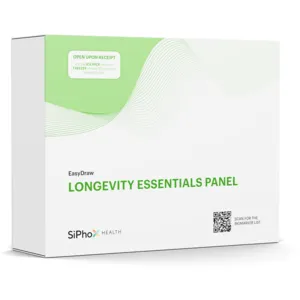
| Cholesterol, ApoB, Lp(a) and hs-CRP tracked at home, no needle | SiPhox Longevity Essentials, $149 a test all-in | Upper-arm liquid sample to a CLIA-certified, CAP-accredited lab; skips glucose and potassium |
How to avoid a bad sample
Most failed home tests are collection problems: not enough blood (labs call it QNS, quantity not sufficient), hemolysis, or a sample that sat too long. These steps come from SiPhox's EasyDraw instructions and general lab practice:
- Hydrate. Drink about 16 oz of water 20 to 60 minutes before collecting.
- Warm up. Light exercise, a warm shower, and the heat pack on the collection site for about 4 minutes all increase blood flow.
- Do not squeeze or milk a finger or the skin around a device. It dilutes the sample with tissue fluid and bursts red cells.
- Fill to the line and use every device or tube in the kit.
- Time it right. Morning for hormones; fast if the kit asks; stop biotin supplements if the lab says so (Labcorp asks for 72 hours).
- Ship the same day. SiPhox asks for a staffed FedEx location, Monday to Thursday before 4 p.m., with the cold pack. Friday samples can sit over a weekend.
Our EasyDraw guide walks through the SiPhox device step by step.
When to confirm with a venous test
Treat a home result like any single lab result: good for tracking a trend, not a reason on its own to start or stop treatment. Confirm with a venous draw ordered by your doctor when:
- a result is far outside the reference range, or does not fit how you feel;
- it is potassium, glucose or a blood count from a capillary sample;
- you or your doctor plan to change medication because of it;
- a diagnosis depends on it (diabetes, for example, is usually confirmed with a repeat test).
Home tests are for information and tracking. If a result worries you, share the PDF with your doctor and ask whether to repeat it at a lab.
Questions to ask any home test company
Before you buy, you should be able to answer these from the company's website or support team. If you cannot, treat that as a warning sign.
- Which lab runs the tests, and is it CLIA-certified and CAP-accredited? Many companies say "CLIA-certified lab" without naming it. A named lab you can look up is better.
- How is the blood collected, and how much? An upper-arm device or a tube of capillary blood gives the lab more to work with than a few spots on a card.
- Has each marker been validated for that sample type? Ask for any published or internal comparison with venous draws, marker by marker, not one overall "correlation".
- How does the sample travel? Cold packs, overnight shipping and a limit on shipping days all protect fragile markers.
- What happens if the sample fails? Look for a clear policy on redraws, credits or refunds for insufficient samples.
- Are units and reference ranges shown? You need both to compare results with your doctor's lab. Ranges differ between labs, so compare trends within one service where you can.
Our best at-home blood tests ranking scores each service on these points.
Where SiPhox fits
SiPhox uses the upper-arm method, ships samples cold and overnight, and says its partner labs are CLIA-certified and CAP-accredited. It claims a 95% to 99% correlation with venous draws from its own quarterly comparisons against Labcorp and Quest, but it does not name the lab and has not published a peer-reviewed study of the EasyDraw device. Correlation also is not the same as agreement: a test can correlate at 0.99 and still read consistently a little high. SiPhox's own accuracy page says concordance can vary by biomarker.
In its favor, SiPhox leaves glucose and potassium, the two markers that failed in the 2025 upper-arm study, off its EasyDraw panels and uses HbA1c for blood sugar. Its hemoglobin and hematocrit are derived values, not a full CBC. See our SiPhox review and is SiPhox legit for the rest, or compare it with the other arm-device service in SiPhox vs Rythm Health.
Frequently asked questions
Are at-home blood tests as accurate as lab tests?
For most chemistry markers, well-collected capillary samples analyzed in a certified lab agree closely with venous draws. In a 2025 upper-arm device study, 17 of 19 tests met CLIA limits. Glucose and potassium are the main exceptions.
Are finger prick blood tests accurate?
They can be for markers like HbA1c, but results vary more from drop to drop than venous blood, especially for blood counts, and kit quality varies. In a 2022 study, home HbA1c kits ranged from 29% to 82% of results within 5% of the lab value.
Is SiPhox accurate?
SiPhox reports a 95% to 99% correlation with venous draws from in-house comparisons and uses CLIA-certified, CAP-accredited labs, but has not published a peer-reviewed study of its device. Independent studies of similar upper-arm devices are encouraging.
Why is my home test different from my doctor’s result?
Common reasons are different labs and reference ranges, time of day (hormones), fasting status, recent illness (hs-CRP), and normal biological variation. Capillary potassium and glucose can also differ from venous values.
Will my doctor accept at-home blood test results?
Many doctors will look at them, but some will repeat key results at their own lab before making a decision. Bring the full PDF with units and reference ranges.
Sources
- Diagnostics (Basel) 2025: evaluation of a simplified upper-arm device for vacuum-assisted collection of capillary blood
- Wickremsinhe et al., J Appl Lab Med 2023: standard venipuncture vs a capillary collection device (Tasso+) for liver chemistry
- Bond and Richards-Kortum, Am J Clin Pathol 2015: drop-to-drop variation in the cellular components of fingerprick blood
- Diabetes Technology and Therapeutics 2022: accuracy of three commercial home-use HbA1c tests
- Affan et al., BMC Clinical Pathology 2014: HbA1c and lipids from dried blood spots vs venous samples, a meta-analysis
- CDC: Clinical Laboratory Improvement Amendments (CLIA)
- College of American Pathologists: Laboratory Accreditation Program
- MedlinePlus: potassium blood test
- MedlinePlus: testosterone levels test
- Labcorp OnDemand: Comprehensive Health Test
- Labcorp OnDemand: general health test prices
- SiPhox Health FAQ
- SiPhox Health: EasyDraw collection instructions
- SiPhox answers: SiPhox vs a lab draw (accuracy, April 2026)