Homocysteine is an amino acid your body normally keeps low by breaking it down with vitamins B12, B6 and folate. Cleveland Clinic gives normal homocysteine levels as 5 to 15 umol/L, with 15 to 30 mildly high, 30 to 100 moderately high and above 100 severe. High levels are linked to heart disease and stroke, but lowering them with B vitamins has not cut heart attacks in large trials.
Homocysteine levels: normal and high
Labs set their upper limit by age because homocysteine rises as kidney function and vitamin absorption decline. Labcorp's reference ranges (same for men and women):
| Age | Labcorp upper limit (umol/L) |
|---|---|
| 18 to 60 | 14.5 |
| 61 to 70 | 17.2 |
| 71 to 80 | 19.2 |
| Over 80 | 21.3 |
Source: Labcorp test 706994. The same limits apply to men and women.
MedlinePlus notes levels tend to be higher in men and rise in women after menopause. Other labs use slightly different limits, so read your result against the range on your own report.
What raises homocysteine
- Low vitamin B12, folate or B6. The commonest fixable cause. B12 deficiency is more likely with age, a vegan diet, metformin, acid-reducing medicines or absorption problems. See vitamin B12 and folate.
- Chronic kidney disease. The kidneys clear homocysteine, so levels climb as function falls. eGFR and creatinine are the usual checks.
- Underactive thyroid. Hypothyroidism is listed by both MedlinePlus and Cleveland Clinic; a TSH test screens for it.
- Homocystinuria. A rare inherited enzyme disorder that causes very high levels, usually found in childhood.
- Age, male sex and smoking. All push levels up.
Because B12 and folate deficiency are the main drivers, a high homocysteine is often most useful as a clue to check them. Methylmalonic acid is sometimes added to confirm B12 deficiency when B12 itself is borderline.
Worked example: 18 umol/L on metformin
Say a 58-year-old woman who has taken metformin for six years gets a homocysteine of 18 umol/L. Labcorp's upper limit at her age is 14.5, and Cleveland Clinic would call 18 mildly high (15 to 30). The number does not say why it is high, so the useful work is finding the cause.
Metformin is a known reason for low B12, so the first checks are vitamin B12 and folate, with methylmalonic acid if B12 is borderline. Next come eGFR and TSH to rule out the kidney and thyroid causes. If a deficiency is found and treated, the trial data below give a sense of scale: folic acid lowered homocysteine by about 25% in a 12-trial meta-analysis, with larger drops when the starting level was higher.
Questions for her doctor: is my B12 low enough to explain this, and should methylmalonic acid be added? Could my kidney function account for part of it? If I start a supplement, when should the test be repeated, fasting and on the same lab, to confirm it worked?
Homocysteine and heart risk: what trials found
People with higher homocysteine have more heart disease and stroke, which is why it became a popular "longevity" marker. The harder question is whether lowering it helps, and trials give a mostly disappointing answer:
- HOPE-2 (2006, 5,522 people with vascular disease or diabetes): folic acid, B6 and B12 lowered homocysteine but did not reduce the combined rate of cardiovascular death, heart attack and stroke. Stroke alone was lower (relative risk 0.75).
- Cochrane review (2017): across randomized trials, homocysteine-lowering had no effect on heart attacks or deaths, and a small reduction in stroke (relative risk 0.90).
So a high homocysteine is worth investigating for the cause, particularly B12, folate and kidney function, but taking B vitamins purely to push the number down is not proven to prevent heart attacks. Heart risk is better tracked with ApoB, Lp(a) and blood pressure. Discuss a high result with your doctor.
The homocysteine test
- Preparation: MedlinePlus and Quest recommend fasting for 8 to 12 hours.
- Sample: a venous blood draw; the sample needs quick processing, which is one reason it is less common on mail-in kits.
- Cost: Quest listed a standalone homocysteine test at $75 plus a $6 physician fee on September 29, 2026.
- Who orders it: doctors use it to check for B vitamin deficiency, diagnose homocystinuria and, in some patients, to assess cardiovascular risk.
Who should get a homocysteine test
Homocysteine is not part of routine screening, and a normal adult with no symptoms rarely needs it. It earns its place when there is a specific question:
- Suspected B12 or folate deficiency, such as unexplained anemia, numbness or tingling, especially when a B12 result sits in the borderline zone.
- Higher-risk diets and medicines: a long-term vegan diet, metformin or acid-reducing drugs, or weight-loss surgery.
- Kidney disease, where levels climb as filtration falls.
- A family history of homocystinuria, or blood clots or vascular disease at a young age.
If you are testing out of general curiosity about heart risk, the trial evidence above suggests your money is better spent on ApoB, Lp(a) and hs-CRP.
Common questions about homocysteine
Can the sample itself give a falsely high result?
Yes. Blood cells keep releasing homocysteine after the draw, so Labcorp asks for plasma samples to be centrifuged immediately, or kept on ice and spun within one hour. A sample left at room temperature can read high. That handling rule is the main reason homocysteine is rarely offered on mail-in kits.
Which medicines raise it?
Labcorp lists nicotinic acid (niacin), theophylline, methotrexate and L-dopa as drugs reported to raise homocysteine. Metformin and acid-reducing medicines act indirectly by lowering B12. Keep taking prescribed medicine and ask your doctor whether it explains the result.
How much do B vitamins lower it?
In a 1998 meta-analysis of 12 trials (1,114 people), folic acid at 0.5 to 5 mg a day lowered homocysteine by about 25%, adding about 0.5 mg of B12 took off another 7%, and B6 added nothing measurable. In HOPE-2, daily 2.5 mg folic acid, 50 mg B6 and 1 mg B12 lowered the average level by 2.4 umol/L while the placebo group rose 0.8 umol/L. Those are large doses to take only on a doctor's advice, and HOPE-2 still found no fall in heart attacks.
Is it a good test for B12 deficiency?
It is a clue, not the answer. Labcorp states its homocysteine test is not intended to diagnose folate or B12 deficiency, and a fasting sample is preferred when it is used to set a baseline or monitor treatment. Measure B12 and folate directly, and repeat homocysteine on the same lab after treatment to confirm the fall.
Testing the drivers at home
To be clear: SiPhox Health's current EasyDraw panels do not include homocysteine. An older SiPhox finger-prick panel listed it, which is why you may see it in older reviews. What SiPhox does measure are the markers behind most high readings:
| Driver | SiPhox marker | Panels |
|---|---|---|
| B12 deficiency | Vitamin B12 | Ultimate 360, GLP Optimization |
| Folate deficiency | Folate | Ultimate 360, GLP Optimization |
| Kidney function | Creatinine, eGFR, BUN | Heart & Metabolic, Thyroid Focus (no BUN), Ultimate 360, GLP Optimization |
| Thyroid | TSH (full panel on Thyroid Focus and Ultimate 360) | All except Hormone Focus |
If you want homocysteine itself, order it from a lab. If you want to check the reasons it could be high, Ultimate 360 covers B12, folate, kidney and thyroid markers in one at-home draw, plus ApoB and Lp(a) for heart risk. Our longevity blood test guide compares which services include homocysteine directly.
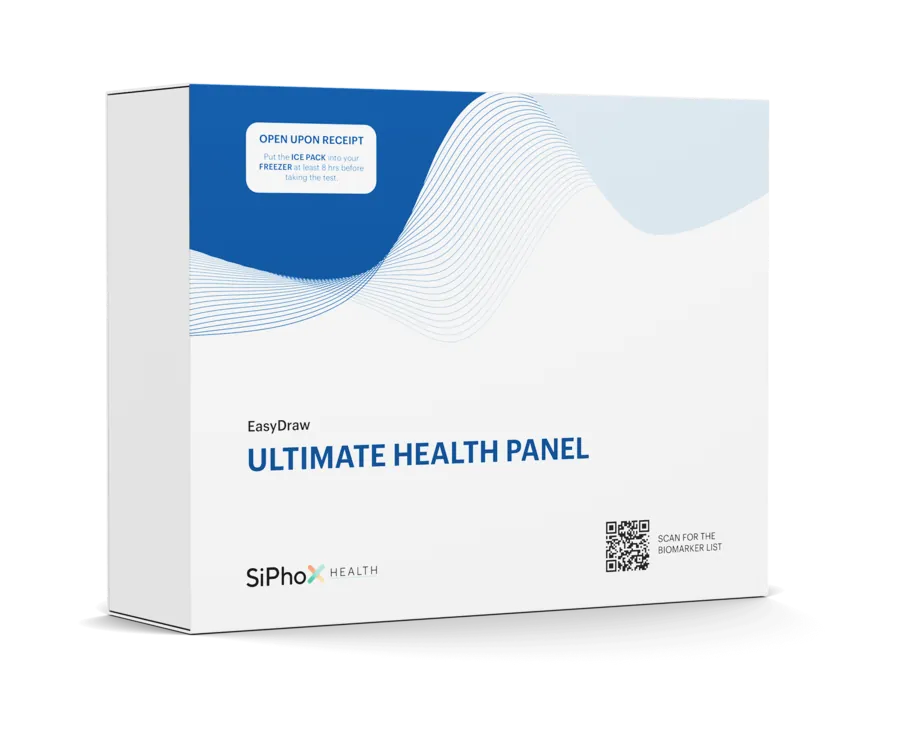
Ultimate 360
Everything on the four core panels plus iron studies, B12 and folate, GGT and PSA.
Check price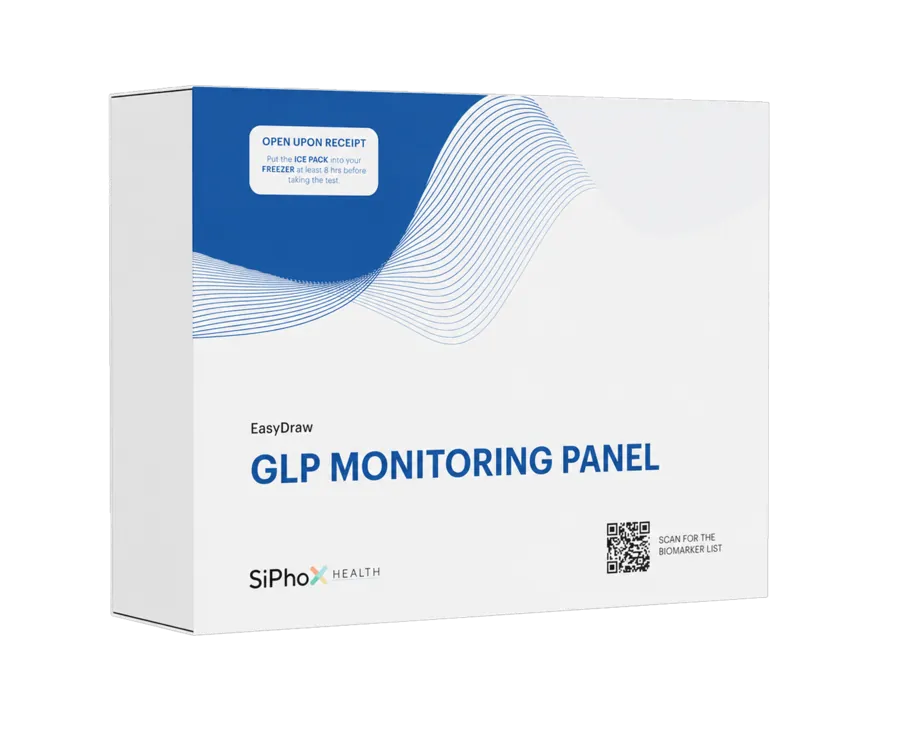
GLP Optimization
Built for people on GLP-1 medication: metabolic, liver, kidney, nutrient and iron markers.
Check price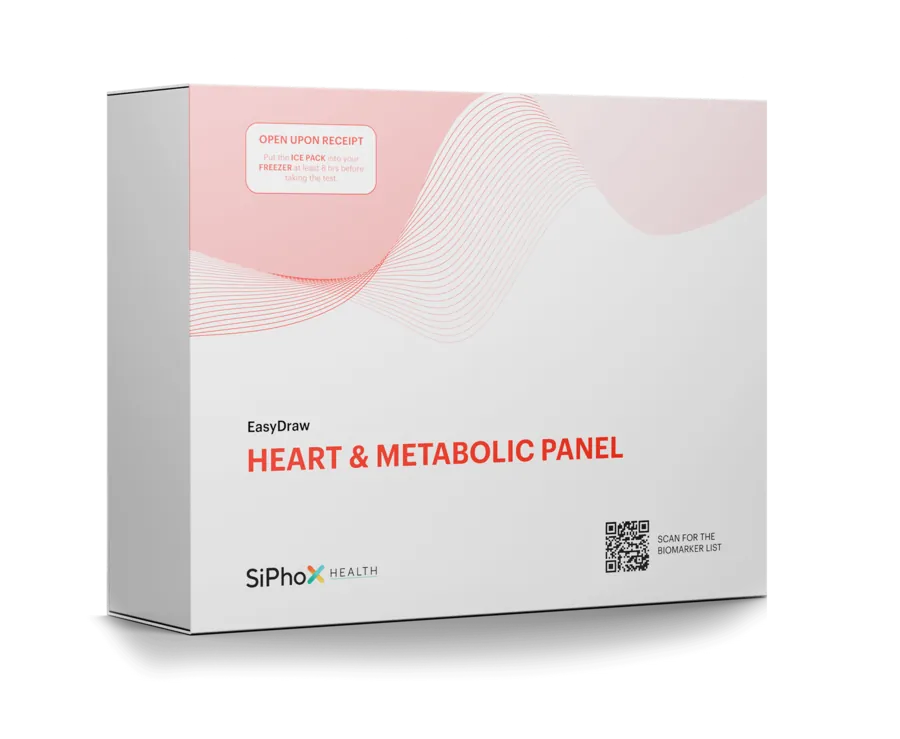
Heart & Metabolic
Lipids plus kidney and liver function: the panel for cardiovascular and metabolic risk.
Check price
Frequently asked questions
What is a normal homocysteine level?
About 5 to 15 umol/L per Cleveland Clinic. Labcorp's upper limit is 14.5 umol/L up to age 60, rising to 17.2 (61 to 70), 19.2 (71 to 80) and 21.3 (over 80).
What causes high homocysteine?
Most often low vitamin B12, folate or B6, or reduced kidney function. Hypothyroidism, smoking, older age and the rare inherited disorder homocystinuria also raise it.
What are the symptoms of high homocysteine?
High homocysteine itself usually causes no symptoms. Symptoms, when present, come from the cause, such as tiredness, numbness or tingling with B12 deficiency.
Does lowering homocysteine prevent heart attacks?
Trials say no. HOPE-2 and a 2017 Cochrane review found B vitamins lowered homocysteine without reducing heart attacks, with at most a small reduction in stroke.
Does SiPhox test homocysteine?
No, not on its current EasyDraw panels. Ultimate 360 and GLP Optimization measure vitamin B12 and folate, and several panels measure creatinine and eGFR, which are the main drivers.
Sources
- Cleveland Clinic: Homocysteine
- MedlinePlus: Homocysteine test
- Labcorp test 706994: Homocyst(e)ine (age-based reference ranges)
- HOPE 2 Investigators. Homocysteine lowering with folic acid and B vitamins in vascular disease. N Engl J Med 2006
- Marti-Carvajal AJ et al. Homocysteine-lowering interventions for preventing cardiovascular events. Cochrane 2017
- Quest Health: Homocysteine test price
- Homocysteine Lowering Trialists' Collaboration. Lowering blood homocysteine with folic acid based supplements: meta-analysis of randomised trials. BMJ 1998
- SiPhox Health panel comparison (checked 29 Sep 2026)
- SiPhox Health: Ultimate 360 EasyDraw panel
- SiPhox Health: GLP Optimization panel