Quick answer
How often should you get blood work done? If you are healthy with normal past results, US guidance is sparse: a lipid panel every 4 to 6 years (CDC), diabetes screening at least every 3 years from age 35 (ADA 2026), hepatitis C once between 18 and 79 (USPSTF), and Lp(a) once in adulthood (2026 ACC/AHA). Many doctors add a yearly CMP and CBC at a physical, but no USPSTF recommendation calls for them in healthy adults. Test every 3 months when a number is expected to move: after a medicine or diet change, with a borderline HbA1c, or on testosterone or GLP-1 treatment.
What guidelines recommend
| Test | Who | How often | Source |
|---|---|---|---|
| Lipid panel | Healthy adults | Every 4 to 6 years; more often with heart disease, diabetes or family history | CDC |
| Lipid panel | Children | Once between 9 and 11, again 17 to 21 | CDC, 2026 ACC/AHA |
| Lp(a) | All adults | At least once | 2026 ACC/AHA |
| Glucose or HbA1c | Everyone from 35, earlier with overweight plus a risk factor | At least every 3 years if normal | ADA 2026 |
| Glucose or HbA1c | Adults 35 to 70 with overweight or obesity | Every 3 years is reasonable | USPSTF 2021 |
| HbA1c | Prediabetes | At least yearly | ADA 2026 |
| HbA1c | Diabetes, at goal / not at goal | 2 times a year / every 3 months | ADA 2026 |
| Hepatitis C | Adults 18 to 79 | Once | USPSTF 2020 |
| eGFR and urine ACR | Diabetes, high blood pressure, heart disease | Yearly or more by KDIGO stage | KDIGO 2024 |
| PSA | Men 55 to 69 | Individual decision with a doctor | USPSTF 2018 |
| TSH | Healthy non-pregnant adults | No routine screening (evidence insufficient) | USPSTF 2015 |
Most of these are covered at no cost in network when your doctor orders them under ACA preventive benefits.
How often by age
| Age | Minimum from guidelines | Reasonable extras if you want a baseline |
|---|---|---|
| 20s | Lipids once (then every 4 to 6 years); Lp(a) once; hepatitis C once | CMP, CBC, TSH, ferritin, vitamin D once |
| 30s | Lipids every 4 to 6 years; diabetes screening from 35 | HbA1c and ApoB alongside the lipid check |
| 40s | Lipids every 4 to 6 years or more with risk; diabetes every 3 years | Yearly panel if weight, blood pressure or family history is a concern |
| 50s | As above; PSA discussion for men from 55 | Kidney and liver markers yearly if on regular medicines |
| 60s and up | As above; kidney testing with diabetes or high blood pressure | Yearly CMP and CBC are common with multiple medicines |
When to test more often
| Situation | Retest interval | Why |
|---|---|---|
| New diet or cholesterol medicine | 4 to 12 weeks, then every 6 to 12 months | 2026 ACC/AHA dyslipidemia guideline |
| Borderline HbA1c (5.7% to 6.4%) | Every 3 to 12 months | HbA1c reflects the last 2 to 3 months; ADA asks at least yearly |
| Testosterone therapy | After starting, then every 6 to 12 months | AUA testosterone guideline; see at-home testosterone tests |
| GLP-1 medicine | Every 3 to 6 months while weight is changing | Lipids, liver, kidney and nutrients shift; see GLP-1 blood tests |
| Iron or vitamin D repletion | About 3 months after starting | Time for stores to respond |
Testing more often than a marker can change is wasted money: HbA1c monthly shows mostly the same weeks twice, and Lp(a) barely moves in a lifetime.
Guidelines vs blood test trackers
Guidelines are built for screening populations at the lowest cost. Direct-to-consumer trackers are built for people who want to watch their own numbers respond to changes. Neither is wrong; they answer different questions.
| Service | Default cadence | Markers per test |
|---|---|---|
| Doctor, following guidelines | Every 1 to 6 years depending on the test | Lipids, glucose or HbA1c, often CMP and CBC |
| Function Health | 2 draws a year | 160+ a year |
| Superpower | 2 draws a year | 150+ a year |
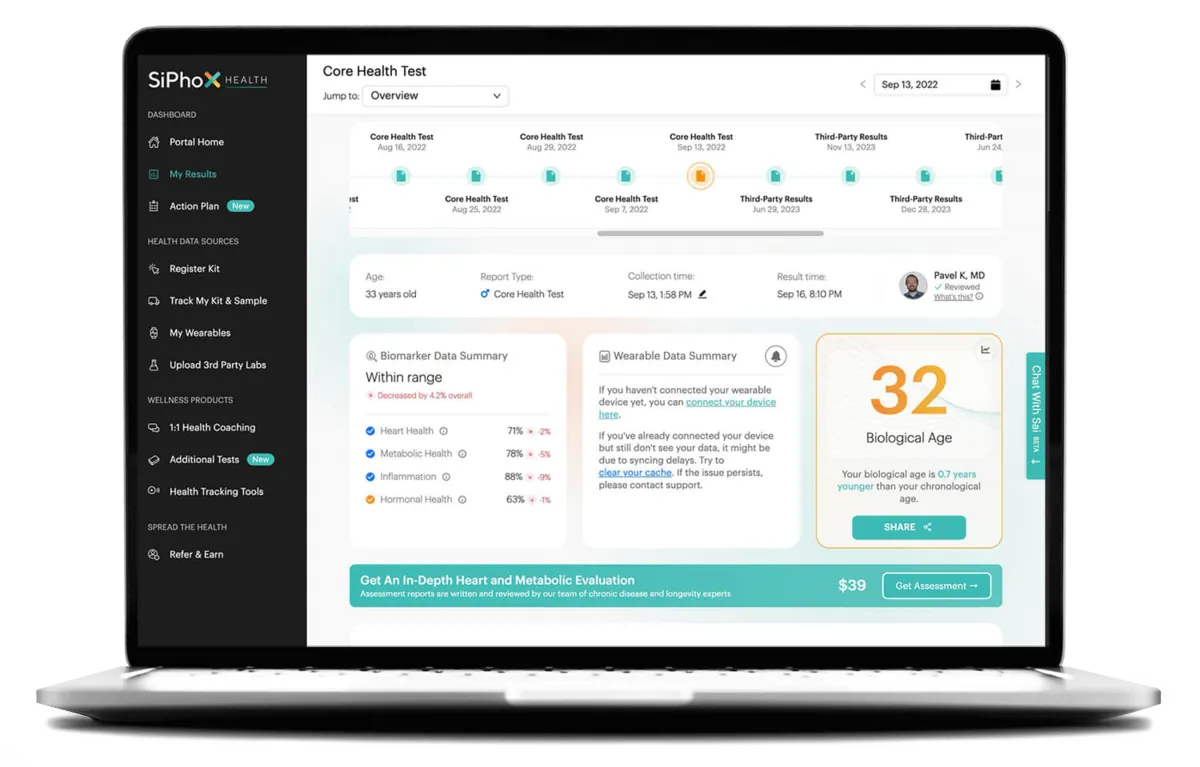
| SiPhox Health | Every 1, 3 or 6 months, your choice | 14 to 31, or 62 on Ultimate 360 |
Membership details are in our blood test subscription comparison and Function Health review.
What a year costs at each cadence
Our arithmetic from list prices checked 29 and 30 September 2026: SiPhox $149 per test with shipping, Labcorp OnDemand Comprehensive Health Test $189, Superpower $349 and Function Health $365 a year.
| Cadence | SiPhox Longevity Essentials | Labcorp OnDemand Comprehensive | Yearly memberships |
|---|---|---|---|
| Once a year | $149 | $189 | Superpower $349, Function $365 (2 draws included) |
| Twice a year | $298 | $378 | Same as above |
| Quarterly | $596 | $756 | Not offered |
| Monthly | $1,788 | $2,268 | Not offered |
| Quarterly with one Ultimate 360 | $721 |
The Labcorp panel has a CMP, CBC, lipids and HbA1c but no ApoB, Lp(a) or hormones; SiPhox Longevity Essentials has ApoB, Lp(a), HbA1c, hs-CRP and hormones but no electrolytes or platelets. Price your own marker list with the blood test cost calculator, and see SiPhox cost and at-home blood test cost for every price.
Worked example: a 12-month tracking plan
A 42-year-old man's physical shows LDL 165 mg/dL and an ApoB of 125 mg/dL. He and his doctor agree on three months of diet and exercise before deciding on medicine. A sensible plan:
- Month 0: baseline (already done at the physical).
- Month 3: retest lipids and ApoB, inside the 4 to 12 week window after a change.
- Month 6: retest to confirm the trend, or after starting a statin.
- Month 12: yearly check; add a broad panel once.
Cost of the three retests: SiPhox Longevity Essentials 3 x $149 = $447 at home, or with Ultimate 360 at month 12, $149 + $149 + $274 = $572. Labcorp's Complete Heart Health test with ApoB at its $169 list price: 3 x $169 = $507, three lab visits. A lipid panel alone at $59 each is cheapest at $177 but has no ApoB, which is the number most likely to settle the medicine question. If his doctor orders the retests, insurance may cover them.
Pick your cadence
| If you are | Test | Cadence and option |
|---|---|---|
| Healthy, normal past results | Lipids, HbA1c, what your doctor suggests | Guideline schedule at your physical; a broad panel every 1 to 2 years if curious |
| Making a diet or medicine change | The markers you are changing | Every 3 months for a year |
| In the prediabetes range | HbA1c, triglycerides, liver enzymes | Every 3 to 6 months; see prediabetes blood tests |
| Wanting a trend line without lab visits | ApoB, Lp(a) once, HbA1c, hs-CRP, hormones | SiPhox Longevity Essentials every 3 or 6 months, Ultimate 360 once a year |
| Panel | Biomarkers per test | Upgrade cost | Per test, with shipping | Cost per biomarker |
|---|---|---|---|---|
| Longevity Essentials | 31 | Included | $149 | $4.81 |
| Heart & Metabolic | 28 | Included | $149 | $5.32 |
| Thyroid Focus | 21 | Included | $149 | $7.10 |
| Hormone Focus | 14 | Included | $149 | $10.64 |
| Ultimate 360 | 62 | +$125 | $274 | $4.42 |
| GLP Optimization | 46 | +$75 | $224 | $4.87 |
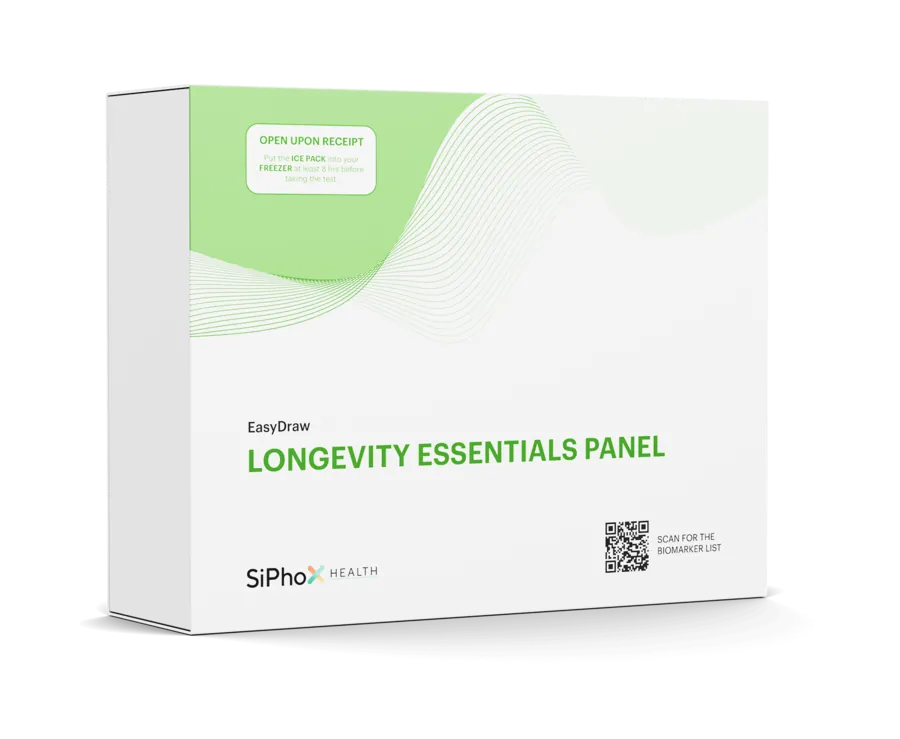
Longevity Essentials
The default panel: heart, metabolic, hormone and inflammation markers in one draw.
Check price
Heart & Metabolic
Lipids plus kidney and liver function: the panel for cardiovascular and metabolic risk.
Check price
Ultimate 360
Everything on the four core panels plus iron studies, B12 and folate, GGT and PSA.
Check price
Frequently asked questions
How often should a healthy adult get blood work?
US guidelines ask for a lipid panel every 4 to 6 years, diabetes screening every 3 years from age 35, and one-time hepatitis C and Lp(a) tests. Many doctors also order a yearly CMP and CBC, which is common practice rather than a screening guideline.
How often should you get blood work in your 30s?
A lipid panel every 4 to 6 years and diabetes screening from 35, or earlier with overweight plus another risk factor. A one-time Lp(a) test is recommended for all adults.
How often should you get blood work in your 50s?
Lipids and diabetes screening on the guideline schedule, a PSA discussion for men from 55, and kidney and liver checks at least yearly if you take regular medicines or have diabetes or high blood pressure.
Is it bad to get blood work too often?
It is not harmful, but it can waste money and cause worry over normal variation. Test about as often as the marker can change: every 3 months for HbA1c, not monthly, and Lp(a) once.
How often does SiPhox test?
You choose every 1, 3 or 6 months, at $124 plus $25 shipping per test. That works out to $298, $596 or $1,788 a year on the core panels.
Sources
- CDC: Getting your cholesterol checked
- American Heart Association newsroom: ACC/AHA issue updated guideline for managing lipids, cholesterol (March 13, 2026)
- Blumenthal RS et al. 2026 ACC/AHA multisociety guideline on the management of dyslipidemia. J Am Coll Cardiol 2026
- American Diabetes Association. 2. Diagnosis and classification of diabetes: Standards of Care in Diabetes 2026
- American Diabetes Association. 6. Glycemic goals: Standards of Care in Diabetes 2026
- USPSTF: Screening for prediabetes and type 2 diabetes (2021)
- USPSTF: Statin use for the primary prevention of cardiovascular disease in adults (2022)
- USPSTF: Hepatitis C virus infection screening in adolescents and adults (2020)
- USPSTF: Thyroid dysfunction screening (2015)
- USPSTF: Prostate cancer screening recommendation (2018)
- KDIGO 2024 clinical practice guideline for the evaluation and management of chronic kidney disease
- American Urological Association: Testosterone deficiency guideline
- MedlinePlus: Hemoglobin A1C (HbA1c) test
- HealthCare.gov: Preventive care benefits for adults
- Labcorp OnDemand: Comprehensive Health Test
- Labcorp OnDemand: Complete Heart Health test with ApoB
- Labcorp OnDemand: Cholesterol test (lipid panel), price and fasting
- Function Health: pricing (checked 29 Sep 2026)
- Superpower: membership and pricing (checked 29 Sep 2026)
- SiPhox Health: membership, panels and pricing (checked 29 Sep 2026)