Quick answer: the NIH vitamin D levels chart, based on the National Academies, calls a 25(OH)D under 12 ng/mL (30 nmol/L) a deficiency risk, 20 ng/mL (50 nmol/L) or more adequate and above 50 ng/mL (125 nmol/L) possibly harmful. Many labs use a stricter scale from the Endocrine Society's 2011 guideline, so ARUP, for example, reports under 20 ng/mL as deficient, 20 to 29 as insufficient and 30 to 80 as optimum, which is why the same result can look fine on one chart and low on another. The Endocrine Society's 2024 guideline no longer endorses those 2011 cut-offs, or any specific level, to define sufficiency, insufficiency or deficiency.
NIH scale: National Academies (Institute of Medicine) 2011, as used by the NIH Office of Dietary Supplements and MedlinePlus; above 50 ng/mL may cause harm. Lab scale: ARUP Laboratories adult reference interval, which flags possible toxicity above 150 ng/mL. Multiply ng/mL by 2.5 for nmol/L.
Vitamin D levels chart in ng/mL and nmol/L
| 25(OH)D, ng/mL | nmol/L | NIH / National Academies | Lab scale (ARUP, adults 18+) |
|---|---|---|---|
| Under 12 | Under 30 | At risk of deficiency | Deficiency |
| 12 to 19 | 30 to 49 | May be inadequate for some people | Deficiency |
| 20 to 29 | 50 to 74 | Adequate for most people | Insufficiency |
| 30 to 50 | 75 to 125 | Adequate | Optimum |
| 51 to 80 | 127 to 200 | May be linked to adverse effects | Optimum |
| 81 to 150 | 202 to 375 | May be linked to adverse effects | Above optimum |
| Over 150 | Over 375 | May be linked to adverse effects | Possible toxicity |
For children and teens up to 17, ARUP reports under 20 ng/mL as deficient and 20 or more as optimum. MedlinePlus notes that many experts recommend 30 to 80 ng/mL (75 to 200 nmol/L), which is the range most US labs print. For the causes of low and high results, see the main vitamin D guide.
ng/mL to nmol/L conversion chart
| ng/mL | nmol/L | ng/mL | nmol/L |
|---|---|---|---|
| 10 | 25 | 40 | 100 |
| 12 | 30 | 50 | 125 |
| 15 | 37.5 | 60 | 150 |
| 20 | 50 | 80 | 200 |
| 25 | 62.5 | 100 | 250 |
| 30 | 75 | 150 | 375 |
Multiply ng/mL by 2.5 to get nmol/L, or divide nmol/L by 2.5 (the exact factor is 2.496). US labs usually report ng/mL; most other countries use nmol/L. Our lab unit converter does the sum for any marker.
Why the charts disagree: NIH, Endocrine Society 2011 and 2024
| Source | Low | Target | What it is for |
|---|---|---|---|
| National Academies 2011 (NIH uses it) | Under 12 ng/mL deficient risk; 12 to 20 possibly inadequate | 20 ng/mL or more | Bone health in the general population |
| Endocrine Society 2011 | Under 20 ng/mL deficient; 21 to 29 insufficient | 30 ng/mL or more | People at risk of deficiency |
| Endocrine Society 2024 | No threshold set | No target set | Disease prevention in people without a clear reason to test |
The 2011 National Academies report set 20 ng/mL as the level that covers the bone-health needs of nearly everyone. The Endocrine Society's 2011 guideline, written for people at risk, set the bar at 30 ng/mL, and lab reports followed it. In 2024 the Endocrine Society replaced that guideline: it found no clear evidence defining an optimal level for preventing disease, said it no longer endorses the 30 ng/mL target or specific levels to define vitamin D sufficiency, insufficiency and deficiency, and suggested against routine 25(OH)D testing in healthy people, including people with obesity or darker skin. It suggests empiric vitamin D (above standard intakes, without testing) for children and teens aged 1 to 18, adults 75 and older, pregnancy and high-risk prediabetes, and against it for healthy adults under 75.
Vitamin D by age: how much you need and who runs low
| Age | Daily need | Safe upper limit |
|---|---|---|
| 0 to 6 months | 400 IU (10 mcg) | 1,000 IU |
| 7 to 12 months | 400 IU (10 mcg) | 1,500 IU |
| 1 to 3 years | 600 IU (15 mcg) | 2,500 IU |
| 4 to 8 years | 600 IU (15 mcg) | 3,000 IU |
| 9 to 70 years | 600 IU (15 mcg) | 4,000 IU |
| Over 70 | 800 IU (20 mcg) | 4,000 IU |
| Pregnancy and breastfeeding | 600 IU (15 mcg) | 4,000 IU |
Source: MedlinePlus, from the National Academies' Dietary Reference Intakes. The Bone Health and Osteoporosis Foundation recommends 800 to 1,000 IU a day from age 50.
NHANES 2011 to 2014, 16,180 people, Herrick et al., Am J Clin Nutr 2019.
A further 18.3% were at risk of inadequacy (12 to 20 ng/mL). Deficiency peaked in adults aged 20 to 39 and was lower from 60, and people with higher vitamin D intake or who used supplements had lower rates.
Worked examples: reading a result on both charts
24 ng/mL (60 nmol/L) at 40. Adequate on the NIH chart; flagged as insufficiency (20 to 29) on the lab scale. The Endocrine Society's 2024 guideline suggests against going above the standard 600 IU a day for healthy adults under 75, so this result on its own is not a reason for high-dose supplements.
88 ng/mL (220 nmol/L) at 62, taking 5,000 IU a day. Above the NIH level of possible concern (50) and above the lab optimum (80), though below the lab's toxicity flag (150). The dose is also above the 4,000 IU upper limit for adults. Review supplements with a doctor and recheck.
9 ng/mL (22.5 nmol/L) at 30, with little sun. Deficient on every scale. This is one for a doctor, who may ask about conditions that reduce absorption, such as celiac or Crohn's disease, and set a treatment dose.
When you retest, ask for 25-hydroxy vitamin D (not 1,25-dihydroxy), use the same lab if you can, and wait a couple of months after changing your dose. Our vitamin D test guide compares home kits.
How to test vitamin D at home
| SiPhox panel | Nutrient markers | Per test with shipping |
|---|---|---|
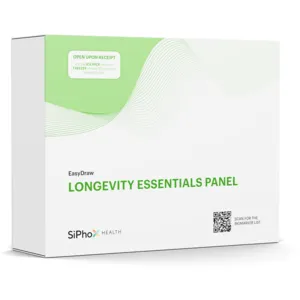
| Longevity Essentials | Vitamin D (25-OH), ferritin | $149 |
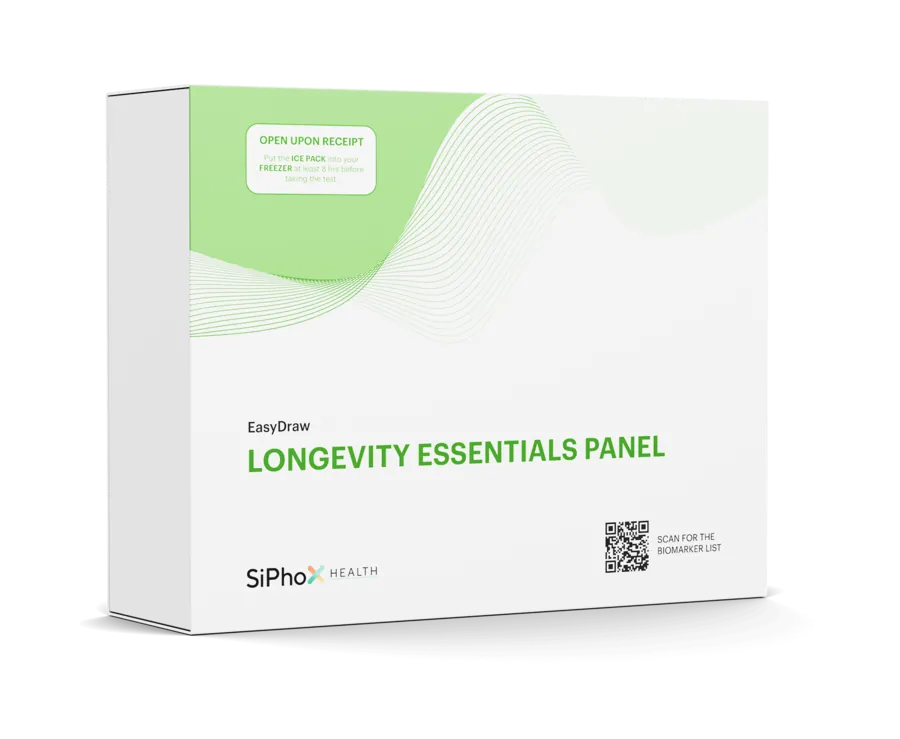
| GLP Optimization | Vitamin D, B12, folate, ferritin, iron, TIBC, UIBC, iron saturation | $224 |
| Ultimate 360 | Vitamin D, B12, folate, ferritin and the full iron panel | $274 |
Heart & Metabolic, Thyroid Focus and Hormone Focus do not include vitamin D.
| If you want to | Test | Choose |
|---|---|---|
| Check a supplement dose you already take | 25(OH)D | Longevity Essentials ($124 + $25) |
| Look for a nutrient cause of tiredness | Vitamin D, ferritin, B12, folate, iron | Ultimate 360 ($249 + $25) |
| Watch nutrients while eating less on a GLP-1 medicine | Vitamin D, B12, iron | GLP Optimization ($199 + $25) |
| Test "just to see" as a healthy adult under 75 | The Endocrine Society suggests against routine testing | Skip, or ask your doctor |
If tiredness is the reason you are testing, our blood test for fatigue guide lists the other markers worth checking, including ferritin.
A note on home samples: SiPhox's partner lab tests capillary blood collected from the upper arm. SiPhox says its results show a 95% to 99% correlation with venous draws in its own quarterly comparisons against Labcorp and Quest, but it has not published a study of the EasyDraw device, and results come without an included doctor review. If a result would change a treatment decision, confirm it with a venous test through your doctor.
Longevity Essentials
The default panel: heart, metabolic, hormone and inflammation markers in one draw.
Check price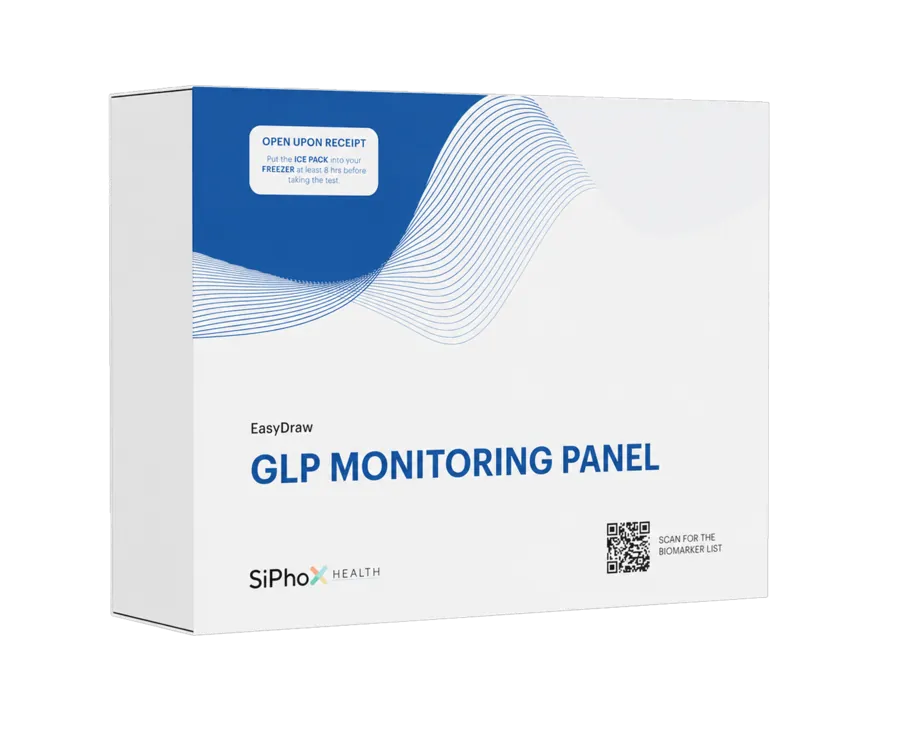
GLP Optimization
Built for people on GLP-1 medication: metabolic, liver, kidney, nutrient and iron markers.
Check price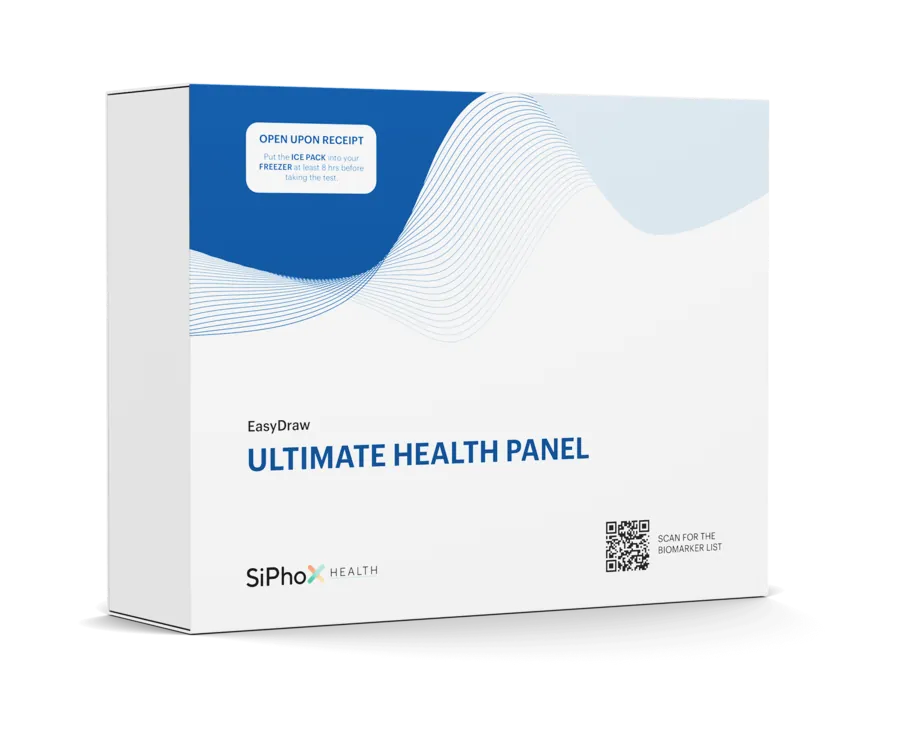
Ultimate 360
Everything on the four core panels plus iron studies, B12 and folate, GGT and PSA.
Check price
Frequently asked questions
What is a good vitamin D level in ng/mL?
20 ng/mL (50 nmol/L) or more is adequate for most people on the NIH scale. Many labs print 30 to 80 ng/mL as optimum, following the Endocrine Society's 2011 guideline, which the Society's 2024 guideline no longer endorses.
What is 30 ng/mL of vitamin D in nmol/L?
75 nmol/L. Multiply ng/mL by 2.5: 20 ng/mL is 50 nmol/L and 50 ng/mL is 125 nmol/L.
Is 20 ng/mL vitamin D low?
Not on the NIH scale, where 20 ng/mL or more is adequate for most people. Labs that follow the 2011 Endocrine Society scale report 20 to 29 ng/mL as insufficient, although the Endocrine Society's 2024 guideline no longer endorses specific cut-offs for insufficiency or deficiency.
What vitamin D level is too high?
The NIH, citing the National Academies, says levels above 50 ng/mL (125 nmol/L) may be linked to adverse effects. ARUP flags possible toxicity above 150 ng/mL. High levels almost always come from supplements.
How much vitamin D do adults over 70 need?
800 IU (20 mcg) a day, against 600 IU for younger adults. The Endocrine Society's 2024 guideline also suggests empiric vitamin D for adults 75 and older.
Sources
- NIH Office of Dietary Supplements: Vitamin D fact sheet for health professionals
- Ross AC et al. The 2011 report on dietary reference intakes for calcium and vitamin D from the Institute of Medicine. J Clin Endocrinol Metab 2011
- Holick MF et al. Evaluation, treatment, and prevention of vitamin D deficiency: an Endocrine Society clinical practice guideline. J Clin Endocrinol Metab 2011
- Demay MB et al. Vitamin D for the prevention of disease: an Endocrine Society clinical practice guideline. J Clin Endocrinol Metab 2024
- MedlinePlus: 25-hydroxy vitamin D test
- MedlinePlus: Vitamin D
- ARUP Laboratories Test Directory: Vitamin D, 25-hydroxy
- Herrick KA et al. Vitamin D status in the United States, 2011-2014. Am J Clin Nutr 2019
- SiPhox Health: panel comparison (checked 29 Sep 2026)
- SiPhox Health: Longevity Essentials panel
- SiPhox Health: GLP Optimization panel
- SiPhox Health: Ultimate 360 panel