Quick answer: under 200 mg/dL (5.2 mmol/L) is desirable for adults 20 and older, 200 to 239 borderline high and 240 mg/dL (6.2 mmol/L) or more high (NCEP ATP III; MedlinePlus). The limit is under 170 mg/dL at 19 or younger. The total is only a starting point: the split between LDL, HDL and triglycerides, plus non-HDL cholesterol, says far more about your risk.
Total cholesterol normal range
| Group | Total cholesterol | Non-HDL cholesterol | Source |
|---|---|---|---|
| Age 19 or younger | Under 170 mg/dL (4.4 mmol/L) | Under 120 mg/dL | MedlinePlus |
| Men and women 20+ | Under 200 mg/dL (5.2 mmol/L) | Under 130 mg/dL (3.4 mmol/L) | MedlinePlus |
| Borderline high, adults | 200 to 239 mg/dL | NCEP ATP III | |
| High, adults | 240 mg/dL (6.2 mmol/L) or more | NCEP ATP III |
The healthy limit does not rise with age in adults; the same under-200 target applies at 30 and at 70. To convert mg/dL to mmol/L, divide by 38.67.
MedlinePlus. A healthy result is under each value.
What is total cholesterol?
Total cholesterol adds up the cholesterol carried in all your lipoprotein particles: LDL, HDL and the triglyceride-rich VLDL. Because HDL is part of the total, two people with the same total of 220 mg/dL can have very different risk: one with HDL of 80 and LDL of 120, another with HDL of 35 and LDL of 160.
That is why modern guidelines focus on the parts. Non-HDL cholesterol (total minus HDL) counts the cholesterol in every particle that can clog arteries, and the 2026 ACC/AHA guideline sets non-HDL goals of under 130, 100 or 85 mg/dL depending on risk.
| Example | Total | HDL | Non-HDL (total minus HDL) | Against the under-130 adult limit |
|---|---|---|---|---|
| Person A | 220 mg/dL | 80 mg/dL | 140 mg/dL | Slightly above |
| Person B | 220 mg/dL | 35 mg/dL | 185 mg/dL | Well above |
| Person C | 190 mg/dL | 40 mg/dL | 150 mg/dL | Above, despite a "desirable" total |
Person C shows why a total under 200 mg/dL is not a clean bill of health on its own. You can do this sum yourself from any lipid panel.
Goals are upper limits (stay under each value) from the 2026 ACC/AHA dyslipidemia guideline, as summarized by the ACC.
What high total cholesterol means
A total of 240 mg/dL or more usually means LDL or VLDL cholesterol is raised, which increases the risk of heart attack and stroke. Occasionally a high total is driven by high HDL, which is why you need the full panel before drawing conclusions. The usual drivers of high LDL apply: diet high in saturated and trans fats, excess weight, inactivity, smoking, diabetes, kidney disease, some medicines and genes (Cleveland Clinic). A very high total, especially with LDL of 190 mg/dL or more, needs a doctor's review, since guidelines treat that LDL level as severe on its own.
Worked example: a high total pushed up by HDL
Say a 60-year-old woman gets total cholesterol of 252 mg/dL, HDL of 88 mg/dL, LDL of 140 mg/dL and triglycerides of 120 mg/dL. The total is in the 240+ high band. Subtract HDL and her non-HDL cholesterol is 164 mg/dL: 34 over the under-130 adult limit, a real gap but a smaller one than the total alone suggests. Her LDL of 140 is borderline high (130 to 159) on the ATP III scale.
What might explain it: part of the total is her high HDL, which our HDL page covers, including why above 80 mg/dL is worth a look. The rest is LDL, which Cleveland Clinic links to age, menopause, diet and genes.
Questions to take to her doctor:
- Which non-HDL and LDL goals apply at my level of risk?
- Should I add ApoB and a one-time Lp(a)?
- Is an HDL of 88 mg/dL anything to look into?
What low total cholesterol means
A low total is generally good for heart risk, and people on cholesterol-lowering treatment are often well under 200 mg/dL by design. Guidelines set no lower limit for adults. If your level drops sharply without a change in diet or medication, or comes with weight loss, mention it to your doctor so they can look for a cause.
How to improve your numbers
- Swap fats: less saturated and trans fat, a Mediterranean-style pattern (Cleveland Clinic).
- Move daily: about 30 minutes of aerobic activity.
- Weight, sleep, tobacco: the 2026 guideline puts a healthy weight, regular activity, good sleep and no tobacco first.
- Cut alcohol and sugar if triglycerides are the part that is high.
- Medication: if lifestyle changes are not enough, cholesterol-lowering drugs may be recommended based on your risk. Discuss it with your doctor.
How to test total cholesterol
Total cholesterol comes with every lipid panel. MedlinePlus notes you may need to fast 9 to 12 hours, and the 2018 guideline accepts non-fasting samples for screening. Ask for ApoB and a one-time Lp(a) alongside it.
Which at-home tests include total cholesterol
Total cholesterol is on four SiPhox panels: Longevity Essentials, Heart & Metabolic, Ultimate 360 and GLP Optimization. Thyroid Focus measures HDL, LDL and triglycerides but not the total, and Hormone Focus has no lipids.
| SiPhox panel | Biomarkers per test | Per test, with shipping | Listed as |
|---|---|---|---|
| Longevity Essentials | 31 | $149 | Total cholesterol (Heart) |
| Heart & Metabolic | 28 | $149 | Total cholesterol (Heart) |
| Ultimate 360 | 62 | $274 | Total cholesterol (Heart) |
| GLP Optimization | 46 | $224 | Total cholesterol (Heart) |
These panels also report the total cholesterol:HDL ratio, VLDL and calculated LDL, so you can work out non-HDL cholesterol yourself from the same report. Collection is at home from the upper arm with the EasyDraw device, and results come with no included doctor review, so share anything out of range with your doctor. Compare other kits on our at-home cholesterol test page or read the SiPhox review.
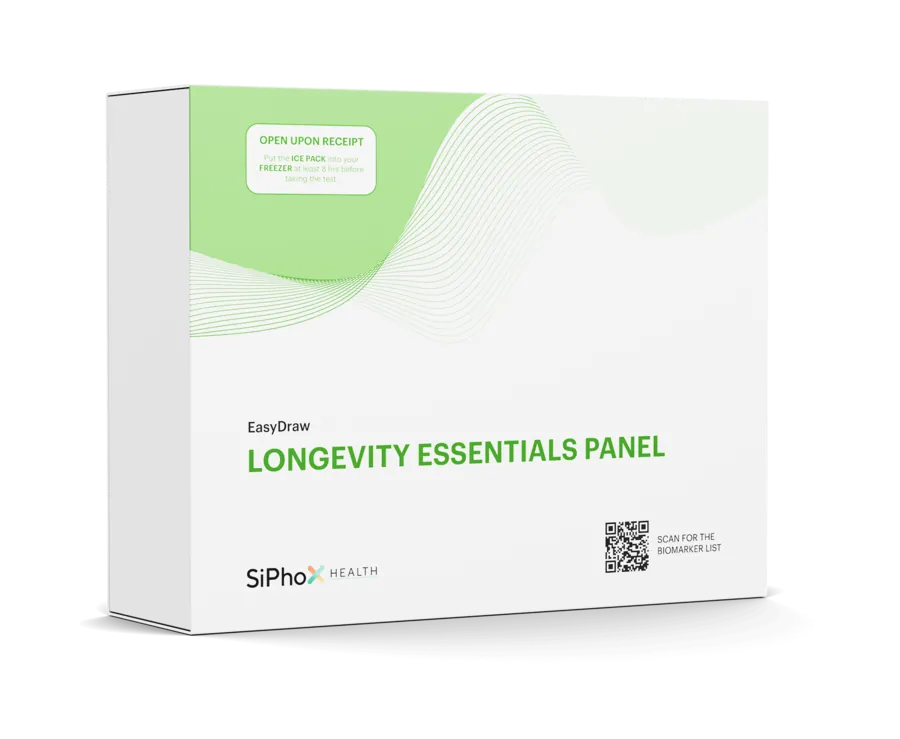
Longevity Essentials
The default panel: heart, metabolic, hormone and inflammation markers in one draw.
Check price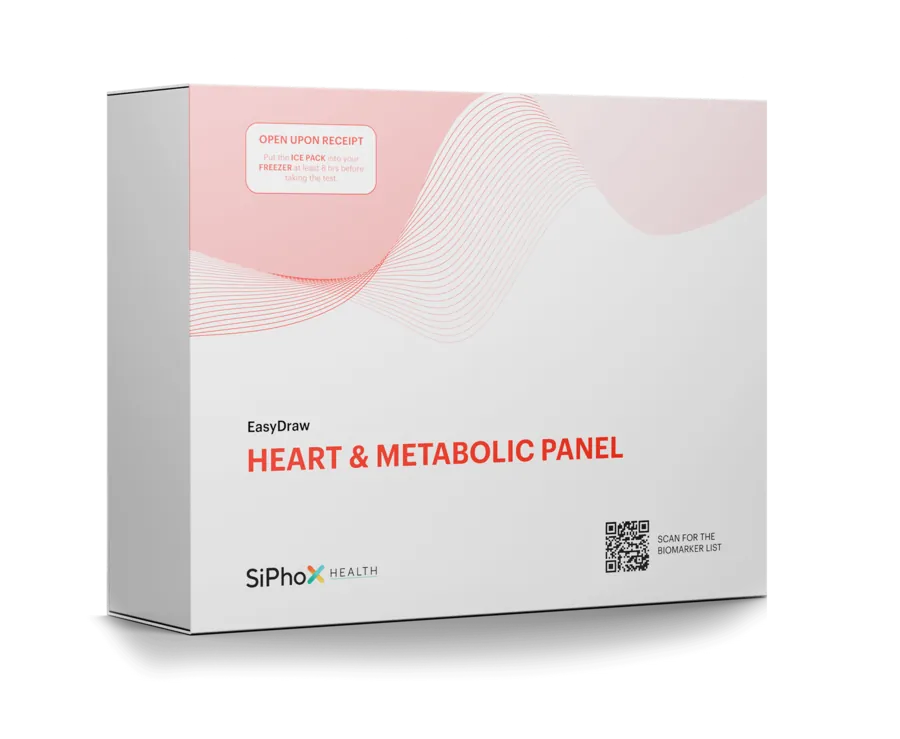
Heart & Metabolic
Lipids plus kidney and liver function: the panel for cardiovascular and metabolic risk.
Check price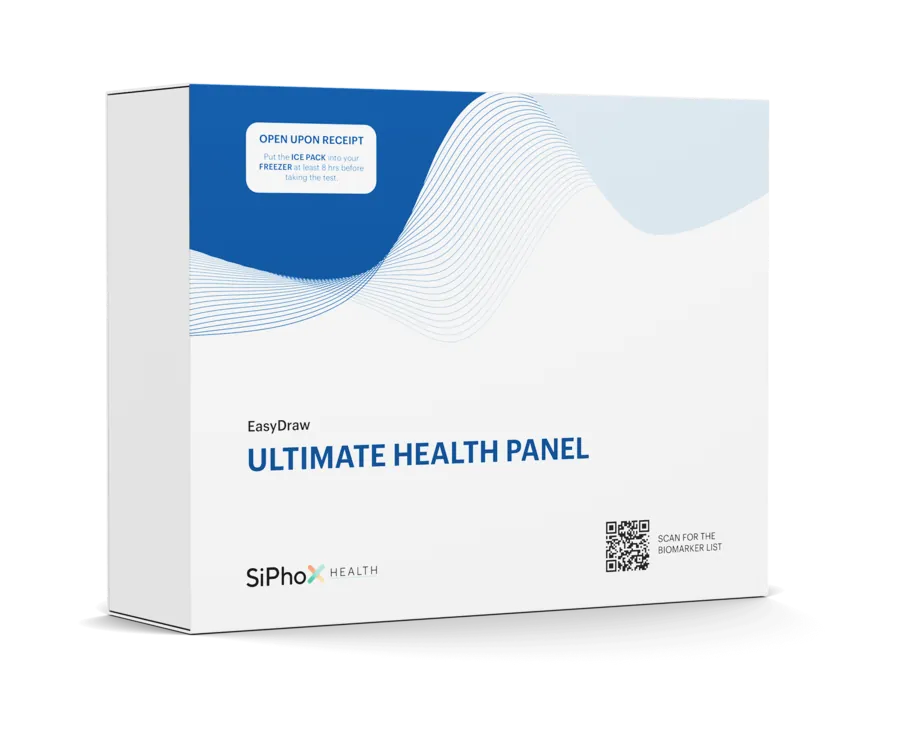
Ultimate 360
Everything on the four core panels plus iron studies, B12 and folate, GGT and PSA.
Check price
Frequently asked questions
What is a normal total cholesterol level?
Under 200 mg/dL (5.2 mmol/L) for adults 20 and older and under 170 mg/dL for people 19 and younger (MedlinePlus).
Does normal cholesterol change with age?
Not for adults. MedlinePlus uses under 200 mg/dL for all men and women 20 and older. The only split is at age 19, where the limit is under 170 mg/dL.
Is 220 total cholesterol bad?
200 to 239 mg/dL is borderline high. Whether it matters depends on the breakdown: a high HDL can push the total up without adding risk. Check LDL, non-HDL cholesterol and ApoB.
What is non-HDL cholesterol?
Total cholesterol minus HDL. MedlinePlus calls under 130 mg/dL healthy for adults, and the 2026 ACC/AHA guideline uses non-HDL goals of under 130, 100 or 85 mg/dL by risk.
Sources
- MedlinePlus: Cholesterol levels, what you need to know
- NHLBI: ATP III guidelines at-a-glance quick desk reference (NCEP)
- American Heart Association newsroom: ACC/AHA issue updated guideline for managing lipids, cholesterol (March 13, 2026)
- American College of Cardiology: Prioritizing health, how the 2026 dyslipidemia guideline changes practice (July 2026)
- American College of Cardiology: Getting to goals, applying the 2026 dyslipidemia guideline in high-risk patients (September 2026)
- Cleveland Clinic: LDL cholesterol
- SiPhox Health: panel comparison and biomarker lists (checked 29 Sep 2026)