Quick answer: the non-HDL cholesterol normal range for adults 20 and over is under 130 mg/dL (3.4 mmol/L), and for people 19 and younger under 120 mg/dL (MedlinePlus). Non-HDL is simply total cholesterol minus HDL. The 2026 ACC/AHA dyslipidemia guideline brought back numeric goals: non-HDL under 130 mg/dL for low to intermediate risk, under 100 mg/dL for high risk and under 85 mg/dL (2.2 mmol/L) for very high risk.
Non-HDL cholesterol normal range
Bars run from 0 to each goal. 2026 goals from the ACC/AHA guideline as summarized by EBSCO and Guideline Central; older goals from the NHLBI ATP III desk reference.
| Group or risk level | Non-HDL goal (mg/dL) | mmol/L | Source |
|---|---|---|---|
| Adults 20 and over, healthy level | Under 130 | Under 3.4 | MedlinePlus |
| People 19 and younger | Under 120 | Under 3.1 | MedlinePlus |
| 2026 guideline, low to intermediate risk | Under 130 | Under 3.4 | 2026 ACC/AHA |
| 2026 guideline, high risk | Under 100 | Under 2.6 | 2026 ACC/AHA |
| 2026 guideline, very high risk (after a heart attack or stroke) | Under 85 | Under 2.2 | 2026 ACC/AHA |
To convert cholesterol from mg/dL to mmol/L, divide by 38.67. The NCEP ATP III guideline first used non-HDL as a secondary target, set 30 mg/dL above the LDL goal, for people with triglycerides of 200 mg/dL or more. The 2026 guideline keeps the same 30 mg/dL gap for everyone.
What non-HDL cholesterol is
HDL is the one cholesterol-carrying particle that does not build plaque. Everything else, LDL, VLDL, IDL and Lp(a), carries one ApoB molecule per particle and can lodge in artery walls. Non-HDL cholesterol adds up the cholesterol in all of them, so it captures risk that an LDL number alone misses, especially when triglycerides are high and much of the cholesterol rides in VLDL.
It has two practical advantages: it needs no fasting (triglycerides after a meal barely affect it), and it costs nothing extra because every standard lipid panel already includes total cholesterol and HDL.
How to calculate it
Non-HDL cholesterol = total cholesterol minus HDL cholesterol. If your report shows total cholesterol 205 mg/dL and HDL 55 mg/dL, your non-HDL is 150 mg/dL. You can also think of it as LDL plus VLDL (plus the small amounts in IDL and Lp(a)): with LDL 118 and VLDL 32, the total is again 150.
| Total cholesterol | HDL | Non-HDL | Versus 130 goal |
|---|---|---|---|
| 180 | 60 | 120 | Under goal |
| 205 | 55 | 150 | 20 over |
| 240 | 45 | 195 | 65 over |
| 190 | 38 | 152 | 22 over, driven by low HDL |
What high non-HDL means
A high non-HDL means more cholesterol is travelling in plaque-forming particles, which raises the long-term risk of heart attack and stroke. The usual drivers are the same as for high LDL and triglycerides: diet high in saturated fat, excess weight, inactivity, insulin resistance and type 2 diabetes, an underactive thyroid, and inherited lipid disorders. The 2026 guideline also says ApoB testing can be useful once LDL and non-HDL goals are met, particularly with triglycerides over 200 mg/dL, diabetes or a low achieved LDL, to find leftover risk the standard panel misses.
Worked example
A 50-year-old man at intermediate risk has total cholesterol 215 mg/dL, HDL 48 mg/dL and triglycerides 160 mg/dL. His non-HDL is 215 minus 48 = 167 mg/dL (4.3 mmol/L), 37 above the 2026 goal of under 130. His calculated LDL is 215 minus 48 minus 160/5 = 135 mg/dL, and his VLDL is 32. An ApoB of 115 mg/dL would confirm the particle count is high too. If he cuts saturated fat, loses weight and his total falls to 190 with HDL 50, non-HDL drops to 140: closer, but still over. Whether he needs medication is a conversation with his doctor using his full risk estimate.
Which test to use
| If you want | Test | Where |
|---|---|---|
| Non-HDL at the lowest cost | Standard lipid panel (total cholesterol and HDL) | Any lab, or SiPhox Heart & Metabolic |
| Non-HDL plus the particle count | Lipid panel with ApoB | SiPhox Longevity Essentials or Heart & Metabolic |
| The inherited risk non-HDL does not show clearly | Lp(a), once | SiPhox Longevity Essentials, Heart & Metabolic or Ultimate 360 |
| Lipids while on a GLP-1 drug | Lipids, ApoB, HbA1c, liver and kidney markers | SiPhox GLP Optimization |
When to test and retest
- Fasting. MedlinePlus says you may need to fast for 9 to 12 hours for a cholesterol test, which is why tests are often done in the morning. Non-HDL is less sensitive to a recent meal than calculated LDL, but fasting keeps results comparable.
- After starting or changing treatment. The 2026 guideline schedules a lipid recheck 4 to 12 weeks after starting or changing lipid-lowering treatment, then every 6 to 12 months.
- Home test above 200. MedlinePlus advises telling your provider if an at-home test shows total cholesterol over 200 mg/dL.
- Same lab each time. Small differences between labs can move non-HDL by several points.
Does SiPhox report non-HDL?
Not as a named marker. None of SiPhox's six panels lists non-HDL cholesterol. But total cholesterol and HDL are both on Longevity Essentials, Heart & Metabolic, Ultimate 360 and GLP Optimization, so you can calculate non-HDL from any of those reports in seconds. Thyroid Focus reports HDL without total cholesterol, so it does not give you enough to calculate it.
| SiPhox panel | Biomarkers per test | Per test, with shipping | Listed as |
|---|---|---|---|
| Longevity Essentials | 31 | $149 | Total cholesterol (Heart) |
| Heart & Metabolic | 28 | $149 | Total cholesterol (Heart) |
| Ultimate 360 | 62 | $274 | Total cholesterol (Heart) |
| GLP Optimization | 46 | $224 | Total cholesterol (Heart) |
These panels also include ApoB, which counts the same particles non-HDL estimates, and three of them add Lp(a). SiPhox is a wellness service with no doctor review included. More in our at-home cholesterol test guide and SiPhox review.
A note on home samples: SiPhox's partner lab tests capillary blood collected from the upper arm. SiPhox says its results show a 95% to 99% correlation with venous draws in its own quarterly comparisons against Labcorp and Quest, but it has not published a study of the EasyDraw device. If a result would change a treatment decision, confirm it with a venous test through your doctor.
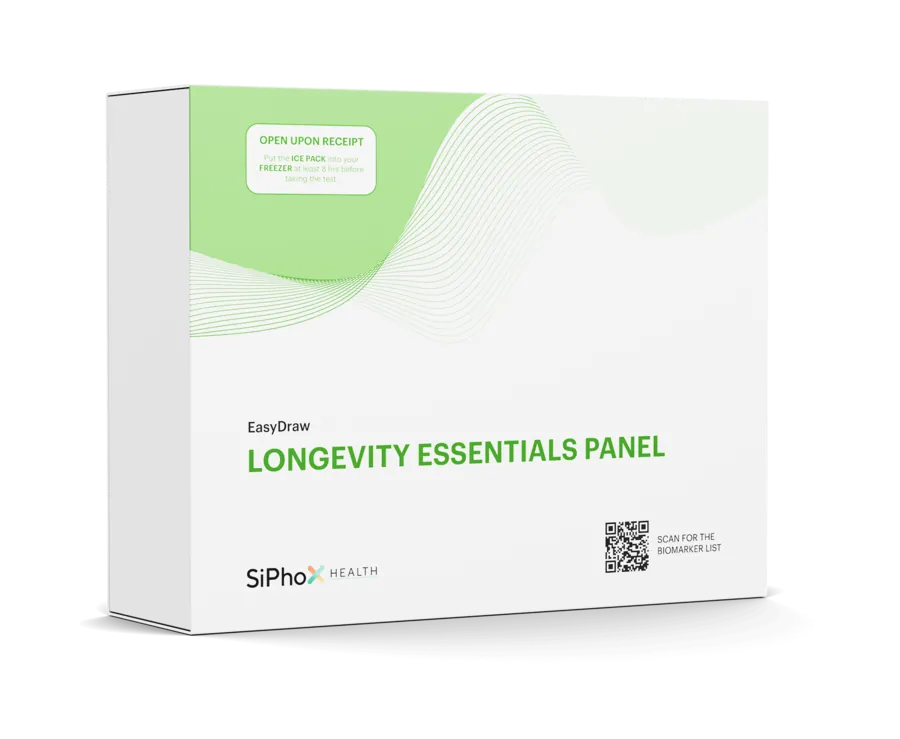
Longevity Essentials
The default panel: heart, metabolic, hormone and inflammation markers in one draw.
Check price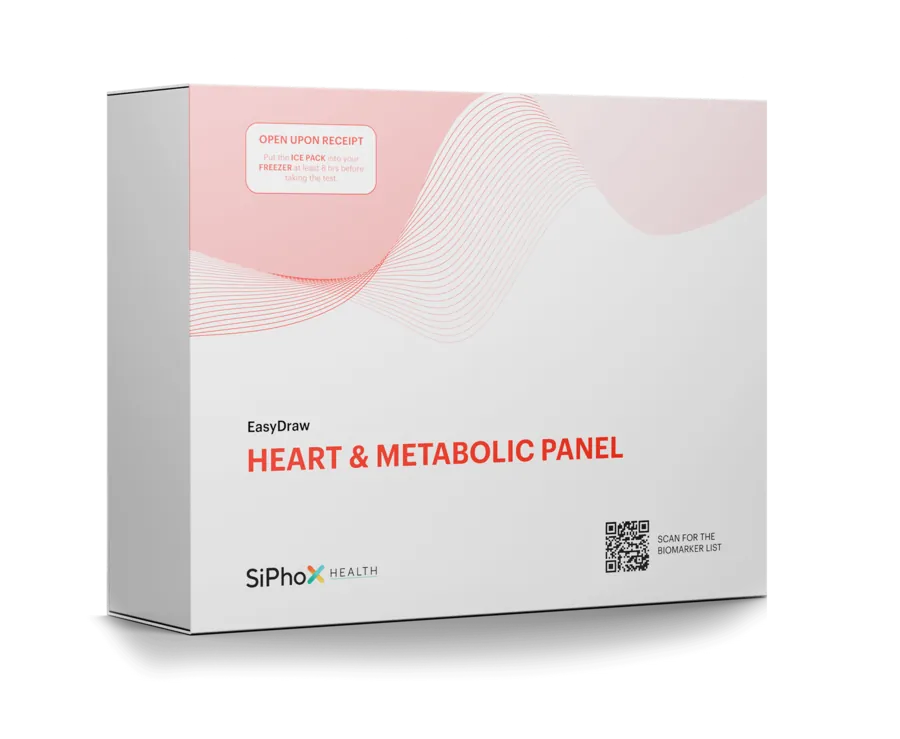
Heart & Metabolic
Lipids plus kidney and liver function: the panel for cardiovascular and metabolic risk.
Check price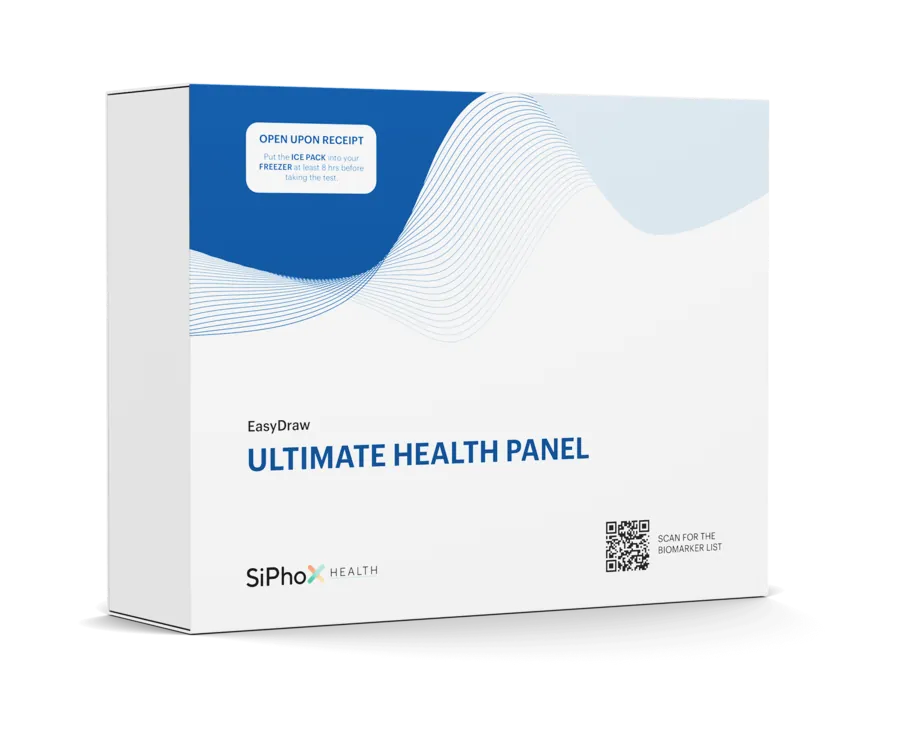
Ultimate 360
Everything on the four core panels plus iron studies, B12 and folate, GGT and PSA.
Check price
Frequently asked questions
What is a normal non-HDL cholesterol?
Under 130 mg/dL (3.4 mmol/L) for adults and under 120 mg/dL for people 19 and younger, according to MedlinePlus.
How do you calculate non-HDL cholesterol?
Subtract HDL from total cholesterol. Total 210 and HDL 50 gives a non-HDL of 160 mg/dL.
What are the 2026 non-HDL goals?
Under 130 mg/dL for low to intermediate risk, under 100 mg/dL for high risk and under 85 mg/dL for very high risk: each 30 mg/dL above the matching LDL goal.
Is non-HDL better than LDL?
It includes cholesterol in VLDL and other plaque-forming particles, so it adds information when triglycerides are high. ApoB counts those particles directly.
Does SiPhox measure non-HDL cholesterol?
Not as a named result, but Longevity Essentials, Heart & Metabolic, GLP Optimization and Ultimate 360 all report total cholesterol and HDL, so you can calculate it.
Sources
- MedlinePlus Lab Tests: Cholesterol levels: what you need to know
- NHLBI: ATP III guidelines at-a-glance quick desk reference (NCEP)
- Blumenthal RS et al. 2026 ACC/AHA multisociety guideline on the management of dyslipidemia. J Am Coll Cardiol 2026
- Guideline Central: 2026 ACC/AHA management of dyslipidemia guideline, key highlights (March 2026)
- EBSCO: Top takeaways from the updated ACC/AHA guideline on management of dyslipidemia (2026)
- Friedewald WT, Levy RI, Fredrickson DS. Estimation of the concentration of low-density lipoprotein cholesterol in plasma. Clin Chem 1972
- SiPhox Health: panel comparison (checked 29 Sep 2026)
- SiPhox Health: Longevity Essentials panel, marker list and per-cycle add-ons
- SiPhox Health: Heart & Metabolic panel