Quick answer: hematocrit is the percentage of your blood made up of red blood cells. The hematocrit normal range on MedlinePlus is 37% to 48% for men and 34% to 43% for women; the MedlinePlus CBC article uses 40% to 55% for men and 36% to 48% for women, which shows how much labs differ. A result of 42 means 42% of your blood volume is red cells.
Hematocrit normal range
MedlinePlus Medical Encyclopedia: hematocrit and complete blood count articles.
MedlinePlus notes that normal hematocrit varies with sex, age, smoking and altitude, and that it rises for several weeks after moving to a higher altitude, as the body makes more red cells to carry oxygen in thinner air.
What hematocrit measures
Spin a tube of blood and it separates into packed red cells at the bottom and plasma on top. Hematocrit is the red cell share. Because it depends on both red cells and plasma volume, hematocrit rises when you lose water as well as when you make more red cells. It is reported in the complete blood count alongside hemoglobin, and the two usually move together.
What low hematocrit means
A low hematocrit usually means anemia. MedlinePlus lists:
- Bleeding, from injury or a chronic source such as heavy periods or the gut
- Deficiency of iron, folate, vitamin B12, vitamin B6 or copper
- Destruction of red cells (hemolysis), chronic kidney disease and chronic illness
- Bone marrow problems including leukemia, other cancers, medicine or radiation toxicity
- Pregnancy, malnutrition and too much water in the body
To find which one, doctors look at ferritin, iron, B12 and folate.
What high hematocrit means
MedlinePlus calls dehydration the most common cause of a high hematocrit. Others include cigarette smoking, low blood oxygen from lung disease such as pulmonary fibrosis, congenital heart disease, right-sided heart failure, a kidney tumor, living at altitude and polycythemia vera. A high hematocrit makes blood thicker, which is why it is watched closely in people taking testosterone.
Hematocrit and testosterone therapy
Testosterone stimulates red cell production. The Endocrine Society's 2018 guideline lists an elevated hematocrit as a reason not to start testosterone therapy and tells clinicians to measure hematocrit during treatment; its guideline materials call a hematocrit above 54% erythrocytosis and recommend checking it at baseline, 3 to 6 months after starting and then yearly. If hematocrit climbs past that level, the prescriber may lower the dose, pause treatment or arrange a blood draw. Our TRT blood test guide lists the full monitoring panel.
| Timing on testosterone therapy | Check | Source |
|---|---|---|
| Before starting | Hematocrit, testosterone, PSA | Endocrine Society 2018 |
| 3 to 6 months after starting | Hematocrit and testosterone | Endocrine Society 2018 |
| Then every year | Hematocrit | Endocrine Society 2018 |
| Hematocrit above 54% | Prescriber review of dose or plan | Endocrine Society 2018 |
Worked example
A 47-year-old man starts testosterone with a hematocrit of 45%. At 4 months it is 50%, still inside the MedlinePlus CBC range of 40% to 55% but up 5 points. He tests again after a morning with plenty of water to rule out dehydration: 49%. At 12 months it is 53%, close to the 54% line, so his prescriber adjusts the plan. A quarterly home draw makes that trend visible between clinic visits, but decisions stay with the prescriber, who will use a venous CBC.
| If you want | Test | Where |
|---|---|---|
| Hematocrit with testosterone and estradiol | Hematocrit, hemoglobin, total and free testosterone, estradiol | SiPhox Longevity Essentials |
| A full red cell workup | CBC with MCV, MCH, RDW | SiPhox +${money(PRICE.cbc)} CBC add-on, or your doctor |
| To find the cause of a low hematocrit | Ferritin, iron studies, B12, folate | SiPhox Ultimate 360 or GLP Optimization |
| A reading your prescriber will act on | Venous CBC | Your doctor or a lab |
Getting a reliable hematocrit result
- Hydrate the day before. MedlinePlus calls dehydration the most common cause of a high hematocrit, so a dry morning can add a few points.
- Account for altitude and smoking. Hematocrit rises for several weeks at higher altitude, and smoking raises it too (MedlinePlus).
- Keep conditions the same between tests. Same time of day, same hydration, same lab. On testosterone therapy, note where you are in your dosing schedule so readings are comparable.
- Confirm before acting. A capillary or calculated hematocrit near 54% should be confirmed with a venous CBC before any change to therapy.
At-home tests that include hematocrit
Hematocrit is on four SiPhox panels: Longevity Essentials, Heart & Metabolic, Ultimate 360 and GLP Optimization. SiPhox labels it "HCT capillary (calc)": a calculated value from the capillary sample, not a spun or directly measured hematocrit. It is not on Thyroid Focus or Hormone Focus. The +$45 CBC add-on adds a capillary hematocrit and the full red cell indices.
| SiPhox panel | Biomarkers per test | Per test, with shipping | Listed as |
|---|---|---|---|
| Longevity Essentials | 31 | $149 | Hematocrit (calculated) (Blood) |
| Heart & Metabolic | 28 | $149 | Hematocrit (calculated) (Blood) |
| Ultimate 360 | 62 | $274 | Hematocrit (calculated) (Blood) |
| GLP Optimization | 46 | $224 | Hematocrit (calculated) (Blood) |
Because capillary and calculated values can differ from a venous CBC, treat SiPhox's hematocrit as a trend line. SiPhox is a wellness service with no doctor review included. See our SiPhox review.
A note on home samples: SiPhox's partner lab tests capillary blood collected from the upper arm. SiPhox says its results show a 95% to 99% correlation with venous draws in its own quarterly comparisons against Labcorp and Quest, but it has not published a study of the EasyDraw device. If a result would change a treatment decision, confirm it with a venous test through your doctor.
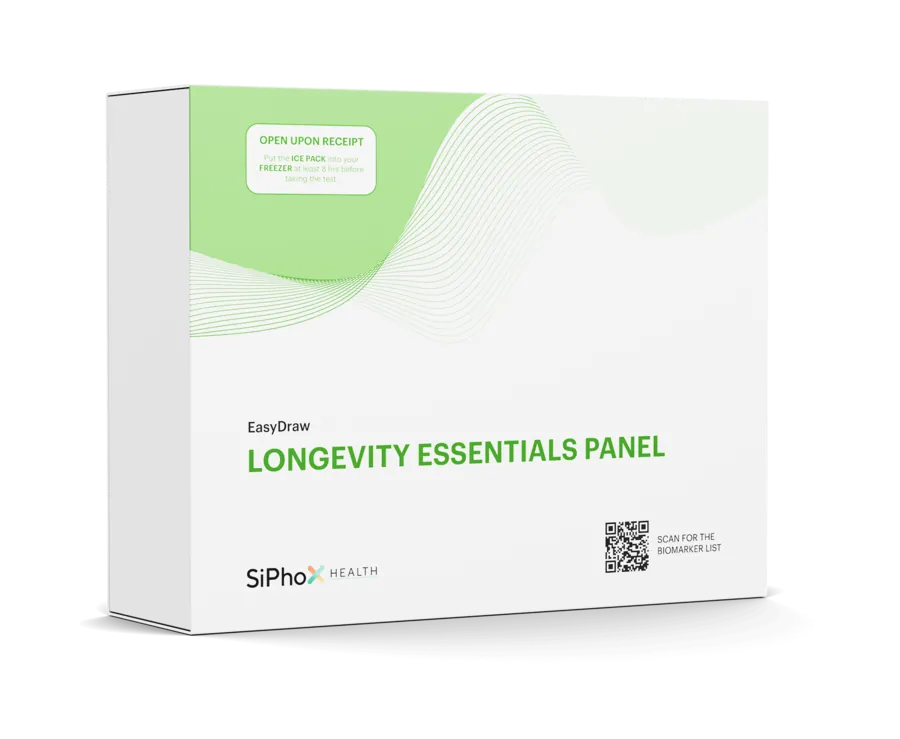
Longevity Essentials
The default panel: heart, metabolic, hormone and inflammation markers in one draw.
Check price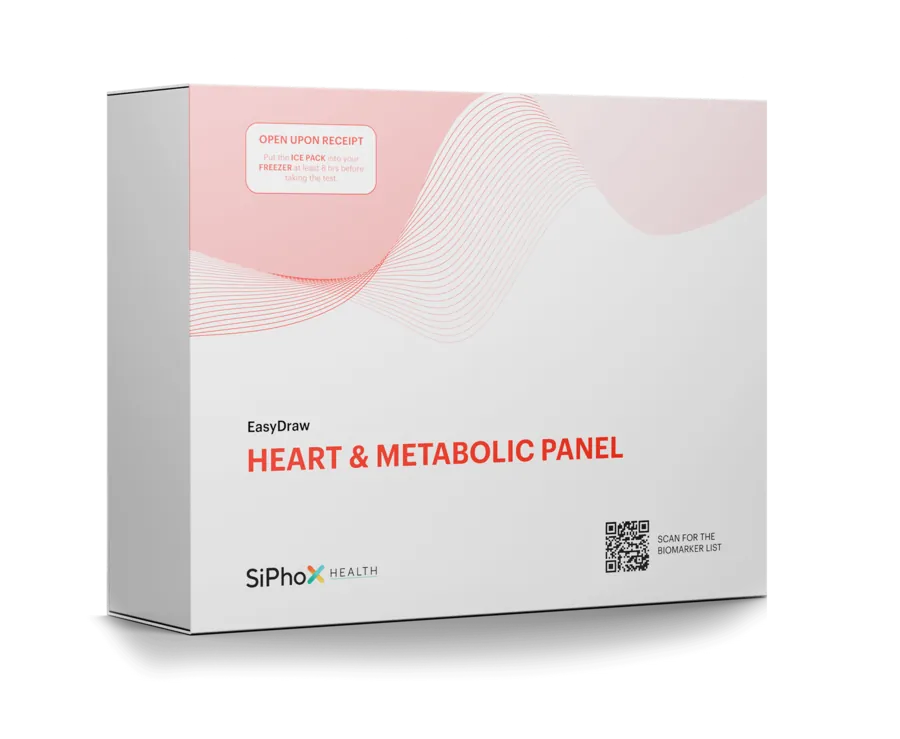
Heart & Metabolic
Lipids plus kidney and liver function: the panel for cardiovascular and metabolic risk.
Check price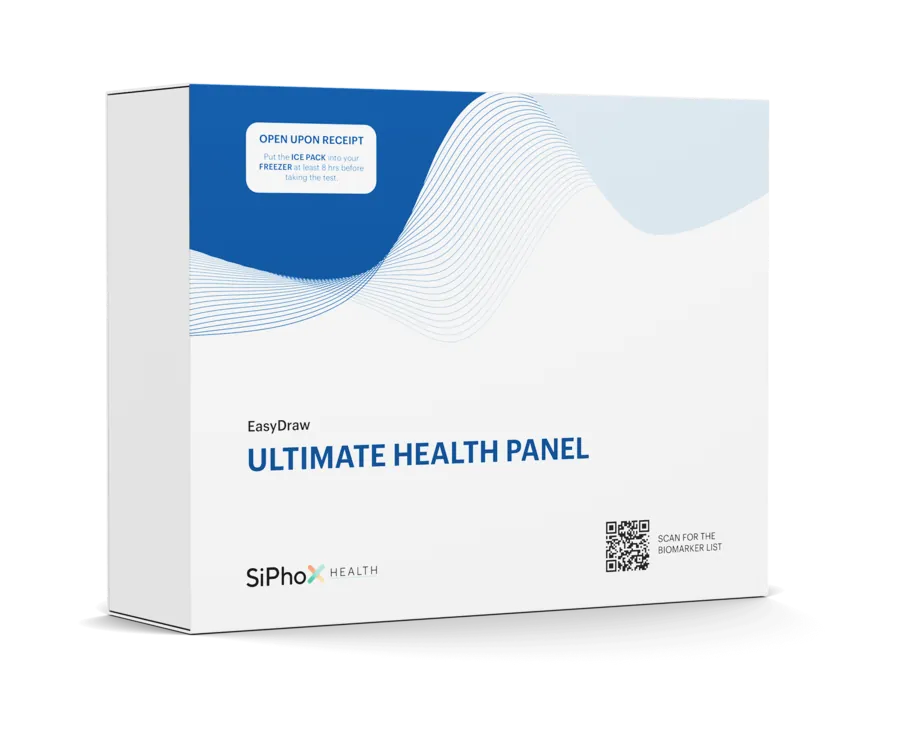
Ultimate 360
Everything on the four core panels plus iron studies, B12 and folate, GGT and PSA.
Check price
Frequently asked questions
What is a normal hematocrit?
MedlinePlus lists 37% to 48% for men and 34% to 43% for women in its hematocrit article, and 40% to 55% and 36% to 48% in its CBC article. Use your lab's range.
What causes high hematocrit?
Dehydration is the most common cause. Smoking, altitude, lung or heart disease, testosterone therapy and polycythemia vera also raise it.
What hematocrit is too high on TRT?
The Endocrine Society treats a hematocrit above 54% as erythrocytosis that needs a change to therapy. Your prescriber makes that call.
Is hematocrit the same as hemoglobin?
No. Hemoglobin is the oxygen-carrying protein in g/dL; hematocrit is the percentage of blood made of red cells. They usually rise and fall together.
Can I test hematocrit at home?
Yes. SiPhox reports a calculated capillary hematocrit on Longevity Essentials, Heart & Metabolic, GLP Optimization and Ultimate 360.
Sources
- MedlinePlus Medical Encyclopedia: Hematocrit
- MedlinePlus Lab Tests: Hematocrit test
- MedlinePlus Medical Encyclopedia: Complete blood count
- Bhasin S et al. Testosterone therapy in men with hypogonadism: an Endocrine Society clinical practice guideline. J Clin Endocrinol Metab 2018
- Endocrine Society: Testosterone therapy in men with hypogonadism, guideline presentation (2018)
- SiPhox Health: panel comparison (checked 29 Sep 2026)
- SiPhox Health: Longevity Essentials panel, marker list and per-cycle add-ons
- SiPhox Health: Heart & Metabolic panel