Quick answer: the bilirubin normal range on MedlinePlus is 0.1 to 1.2 mg/dL (1.71 to 20.5 µmol/L) for total bilirubin and under 0.3 mg/dL (under 5.1 µmol/L) for direct, or conjugated, bilirubin. Indirect bilirubin is total minus direct. To convert mg/dL to µmol/L, multiply by 17.1. A high total with a normal direct is usually harmless Gilbert syndrome; a high direct bilirubin points to the liver or bile ducts.
Bilirubin normal range
| Measure | Normal (mg/dL) | Normal (µmol/L) | Source |
|---|---|---|---|
| Total bilirubin | 0.1 to 1.2 | 1.71 to 20.5 | MedlinePlus |
| Direct (conjugated) | Under 0.3 | Under 5.1 | MedlinePlus |
| Indirect (unconjugated) | Total minus direct | Total minus direct | Calculation |
Normal ranges from MedlinePlus. The ACG guideline says total bilirubin in Gilbert syndrome is usually under 3 mg/dL and almost never above 6 mg/dL.
Ranges vary slightly by lab, and newborns follow separate rules: their bilirubin is normally higher in the first days of life.
What bilirubin is
Bilirubin is the yellow pigment left over when old red blood cells are broken down. It first circulates in an unconjugated (indirect) form. The liver then attaches it to a sugar molecule, making conjugated (direct) bilirubin, and sends it out in bile. That two-step path is why splitting the result is so useful: a problem before the liver raises the indirect part, a problem in the liver or bile ducts raises the direct part.
The ACG guideline on abnormal liver chemistries recommends fractionating any high total bilirubin into direct and indirect for exactly this reason. Bilirubin sits in the liver function test with ALT, AST and ALP.
What high bilirubin means
| Pattern | What it points to | Examples |
|---|---|---|
| High indirect, normal direct | Too much bilirubin made, or the liver attaching it too slowly | Gilbert syndrome, hemolytic anemia |
| High direct | Liver cell damage or blocked bile flow | Hepatitis, cirrhosis, gallstones or other bile duct blockage |
| High total plus high ALP and GGT | Cholestatic pattern (bile flow) | Bile duct obstruction; see a doctor promptly |
Sources: ACG guideline; MedlinePlus. MedlinePlus adds that some medicines, certain foods and strenuous exercise can raise bilirubin, and that a low bilirubin is not usually a cause for concern. Yellowing of the skin or eyes, dark urine or pale stools with a high bilirubin need a doctor the same week.
Gilbert syndrome
The ACG calls Gilbert syndrome the most common cause of a raised unconjugated bilirubin, affecting 3 to 7% of the US population. It comes from a variant in the UGT1A1 gene that slows the liver's conjugation step (MedlinePlus Genetics). It is harmless and needs no treatment.
Bilirubin in Gilbert syndrome goes up and down. MedlinePlus Genetics says mild rises tend to appear during stress on the body: dehydration, fasting, illness, vigorous exercise or menstruation. About 30% of people with it have no symptoms and find out from a routine blood test. That is worth knowing if you test fasted: a long fast can nudge the number above the range on one test and not the next.
Worked example
A 29-year-old runner tests fasted after a long training week. Total bilirubin is 2.1 mg/dL (2.1 x 17.1 = 35.9 µmol/L), direct is 0.2 mg/dL, so indirect is 1.9 mg/dL: 90% of the total is unconjugated. ALT, AST and ALP are normal. That is the classic Gilbert pattern, and a doctor may simply check for hemolysis to rule it out.
Now the same total of 2.1 mg/dL with a direct bilirubin of 1.4 mg/dL and an ALP of 250 U/L: two-thirds is conjugated and the bile-flow enzyme is high. That pattern points to the liver or bile ducts and needs a prompt medical review.
What to test next
| If your result shows | Next step | Where |
|---|---|---|
| High total, normal direct, normal liver enzymes | Retest well hydrated and not fasting too long; ask about Gilbert syndrome | Any SiPhox liver panel, or your doctor |
| High direct bilirubin | Full liver workup and imaging | Your doctor, promptly |
| You want a liver baseline | Total and direct bilirubin with ALT, AST, ALP | SiPhox Heart & Metabolic |
| You also want GGT and iron studies | Bilirubin, GGT, ferritin, iron saturation | SiPhox Ultimate 360 or GLP Optimization |
Getting a reliable bilirubin result
- Avoid a long fast before a baseline test. Fasting, dehydration, illness and vigorous exercise can all push bilirubin up in people with Gilbert syndrome (MedlinePlus Genetics). A home test after an overnight fast is normal practice; a 24-hour fast is not.
- List medicines and supplements. MedlinePlus says some medicines, certain foods and strenuous exercise can raise bilirubin, and some medicines, including birth control pills, can lower it.
- Read the direct value first. A high total with a direct under 0.3 mg/dL points away from the liver; a high direct points toward it.
- Repeat to see a pattern. A total that moves between normal and 2 to 3 mg/dL across tests, with a normal direct and normal enzymes, is typical of Gilbert syndrome, where the ACG says total bilirubin is usually under 3 mg/dL.
At-home tests that include bilirubin
Total bilirubin and direct bilirubin are both on Heart & Metabolic, Ultimate 360 and GLP Optimization. Because SiPhox reports both, you can work out indirect bilirubin yourself. They are not on Longevity Essentials, Thyroid Focus or Hormone Focus.
| SiPhox panel | Biomarkers per test | Per test, with shipping | Listed as |
|---|---|---|---|
| Heart & Metabolic | 28 | $149 | Total bilirubin (Liver) |
| Ultimate 360 | 62 | $274 | Total bilirubin (Liver) |
| GLP Optimization | 46 | $224 | Total bilirubin (Liver) |
SiPhox is a wellness service with no doctor review included. A high direct bilirubin is one result to take to a doctor rather than simply retest. More in our SiPhox review and our CMP blood test guide.
A note on home samples: SiPhox's partner lab tests capillary blood collected from the upper arm. SiPhox says its results show a 95% to 99% correlation with venous draws in its own quarterly comparisons against Labcorp and Quest, but it has not published a study of the EasyDraw device. If a result would change a treatment decision, confirm it with a venous test through your doctor.
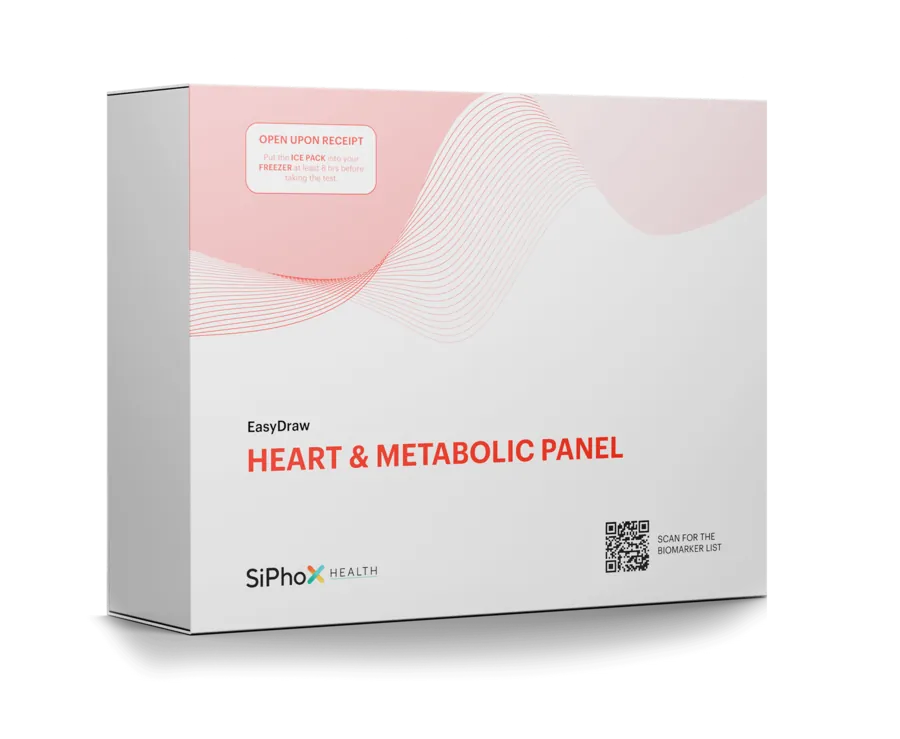
Heart & Metabolic
Lipids plus kidney and liver function: the panel for cardiovascular and metabolic risk.
Check price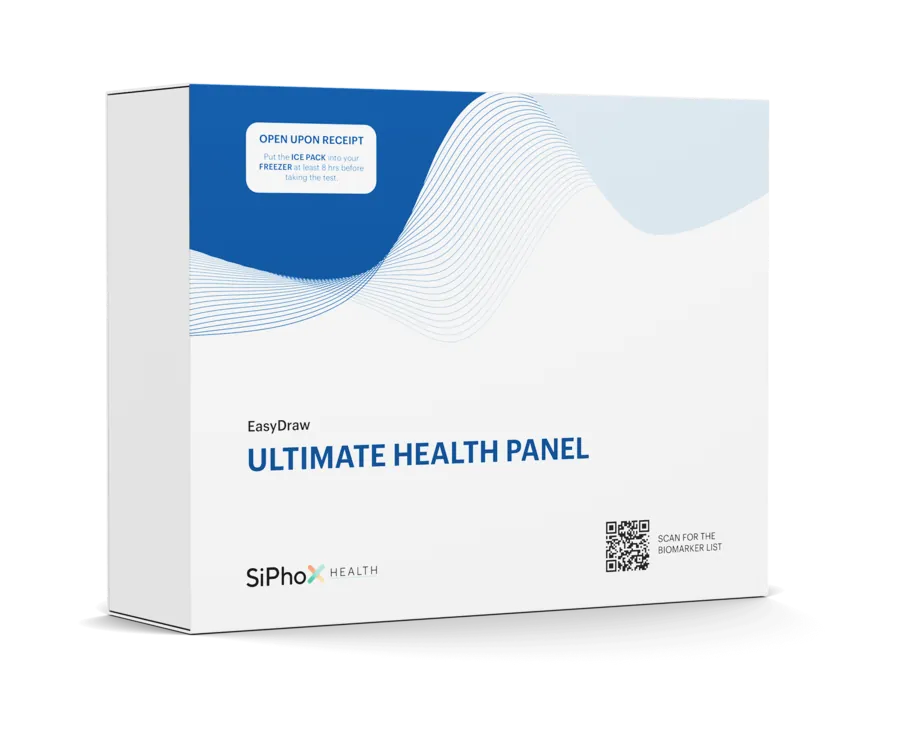
Ultimate 360
Everything on the four core panels plus iron studies, B12 and folate, GGT and PSA.
Check price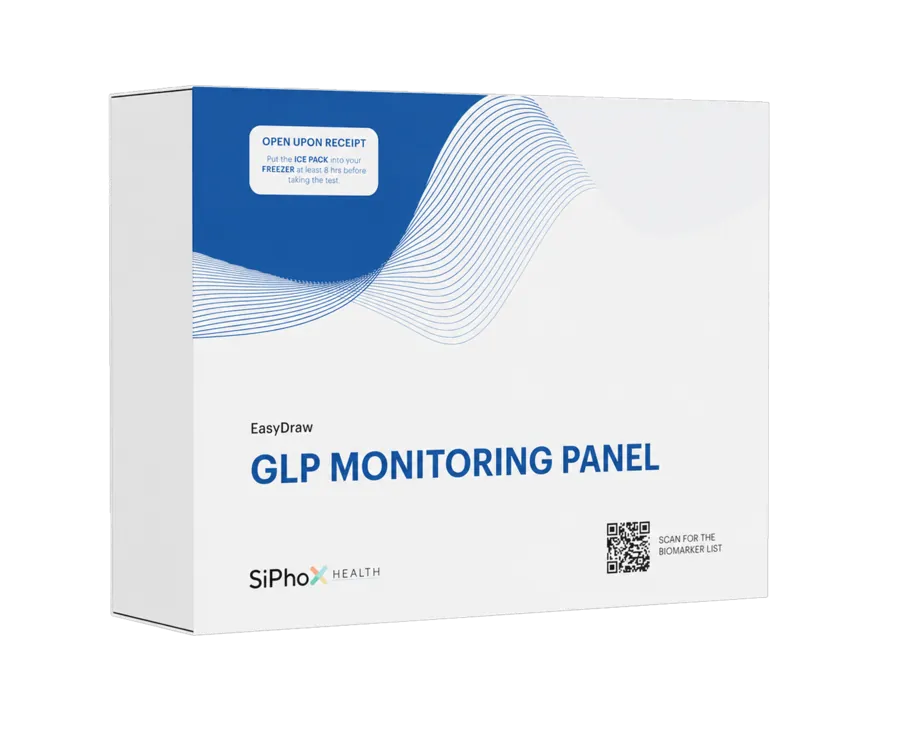
GLP Optimization
Built for people on GLP-1 medication: metabolic, liver, kidney, nutrient and iron markers.
Check price
Frequently asked questions
What is a normal bilirubin level?
Total bilirubin of 0.1 to 1.2 mg/dL (1.71 to 20.5 µmol/L) and direct bilirubin under 0.3 mg/dL (under 5.1 µmol/L), according to MedlinePlus. Ranges vary slightly by lab.
Is a bilirubin of 1.5 dangerous?
Usually not on its own. A total of 1.5 mg/dL with a normal direct bilirubin and normal liver enzymes most often reflects Gilbert syndrome. A high direct bilirubin is a different matter and needs a doctor.
What is the difference between direct and indirect bilirubin?
Indirect (unconjugated) bilirubin has not yet been processed by the liver; direct (conjugated) bilirubin has. Indirect equals total minus direct.
Can fasting raise bilirubin?
Yes, in people with Gilbert syndrome. MedlinePlus Genetics lists fasting, dehydration, illness, vigorous exercise and menstruation as triggers for mild rises.
Can I check bilirubin at home?
Yes. SiPhox reports total and direct bilirubin on Heart & Metabolic, GLP Optimization and Ultimate 360.
Sources
- MedlinePlus Medical Encyclopedia: Bilirubin blood test
- MedlinePlus Lab Tests: Bilirubin blood test
- MedlinePlus Genetics: Gilbert syndrome
- Kwo PY, Cohen SM, Lim JK. ACG clinical guideline: evaluation of abnormal liver chemistries. Am J Gastroenterol 2017
- SiPhox Health: panel comparison (checked 29 Sep 2026)
- SiPhox Health: Heart & Metabolic panel
- SiPhox Health: Ultimate 360 panel
- SiPhox Health: GLP Optimization panel